It’s Monday! What Are You Reading?

IMWAYR

I love going to conferences and workshops. They’re so invigorating. Sometimes an idea I have is confirmed, or I’m reminded of a strategy or activity I haven’t used in a while. But the best sessions are those where I learn something new that I can immediately use in my teaching and moves my thinking about a topic forward.

This happened on Saturday at the Teachers College Reading and Writing Project Saturday Reunion. Carl Anderson’s session on analyzing informational texts for teaching points to support student writing caused a noticeable shift in my thinking about these books.

Anderson, author of the classic book on conferring, How’s It Going? (Heinemann, 2000), opened his talk by reminding us that using mentor texts is essential if we want our students to write well in any genre. They have to “imagine the shape of their drafts.” In order to do this, they’ll need lots of exposure to models of the genre before they write.

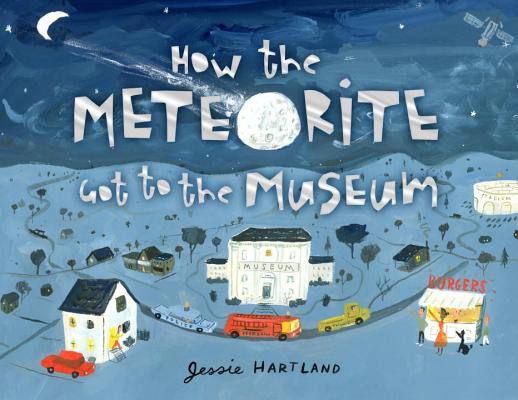
Teachers should look at possible mentor texts through several lenses, including meaning, structure, details, voice, and conventions. Anderson’s words came back to me a few hours later while I was browsing the shelves at Bank St. Book Store. Astronomy has always fascinated me, so Jessie Hartland’s new book, How the Meteorite Got to the Museum (Blue Apple Books, 2013), caught my eye. As I flipped through the pages, I realized I was reading the book differently that I would have just the day before. Many elements of the book’s structure and style popped out and grabbed my attention.

9781609052522

Told as a cumulative story in the tradition of “The House that Jack Built,” How the Meteorite Got to the Museum combines scientific facts with the daily lives of the people whose path the meteor crossed, making the story more interesting and engaging to readers. Hartland infuses the story with humor with lines like “Your car was in an interstellar collision!”

The Peekskill Meteorite’s descent to Earth is described with vivid details that include all the senses. Witnesses’ reactions are chronicled with a variety of verbs each time they’re mentioned, as is the meteorite’s journey itself. Hartland’s colorful, engaging illustrations, which remind me of Maira Kalman’s work, include diagrams, maps and other typical of non-fiction features.

All of these touches give this book a depth that will draw kids back to it again and again, a depth I might have missed if not for Carl Anderson’s ideas about analyzing mentor texts. How the Meteorite Got to the Museum is an ideal mentor text for 3rd or 4th grade students who’ve been writing informational text for a few years and are ready to stretch their writing wings and try a new text structure. And they’ll learn a few facts about meteorites along the way.

Be sure to visit Jen at Teach Mentor Texts and Kellee at Unleashing Readers to find out what other people have been reading lately. Thanks, Jen and Kellee, for hosting!

Poetry Friday: Love after Love

Poetry_Friday_Button-210

Kate Roberts and Chris Lehman have just written a new book, Falling in Love With Close Reading. For the past seven weeks, they have been hosting a blog-a-thon to celebrate their book’s publication. Last week, Kate’s contribution on her blog, Indent, was about closely reading her life. She shared a few the insights and revelations she gained by spending one day being truly observant of her actions and reactions. One of her statements resonated with me:

“Chris and I believe that the skill of reading our world closely allows us to live richer, more beautiful lives.”

This line made me think of an episode of Krista Tippett’s On Being which featured an interview with Jon Kabat-Zinn about the science of mindfulness. At the end of the interview, Zinn shared this poem.

“Love after Love”

by Derek Walcott

The time will come

when, with elation,

you will greet yourself arriving

at your own door, in your own mirror,

and each will smile at the other’s

welcome,

and say, sit here. Eat.

You will love again the stranger who was

your self.

Give wine. Give bread. Give back your heart

to itself, to the stranger who has loved you

all your life…

Read the rest of the poem and learn more about Jon Kabat-Zinn here.

Only through knowing ourselves can we be open to the love of others and fully love them in return. Thank you, Kate and Chris, for reminding me of this. Thank you for helping me find my way back to this poem. For poetry is all about reading our world closely. Poetry allows us to live richer, more beautiful lives.

Be sure to visit Cathy Mere at Merely Day by Day for more enriching poetry.

Slice of Life: Surviving a Cataclysm

sols_6

My husband and I recently attended a live performance of the NPR show, Radiolab. Titled “Apocolypto,” the thread tying the stories together was endings. The first story the hosts, Robert Krulwich and Jad Abumrad, told was about recent research on the extinction of the dinosaurs. Previous theories proposed that the dinosaurs died off slowly from starvation because the debris-filled atmosphere prevented sunlight from sustaining plant life, thus disrupting the entire food chain. Based on new evidence, some scientists now hypothesize that the dinosaurs were wiped out in a cataclysm of fire that lasted only a few hours. The sights and sounds that accompanied this tale of death and destruction made it seem even more horrific.

By Don Davis/NASA [Public domain], via Wikimedia Commons
This got me thinking about cataclysmic change. We don’t handle it well. Indeed, it is often deadly. Recent events bear this out: whole neighborhoods in New York and New Jersey are gone because of Superstorm Sandy, the recent floods in Colorado, wildfires throughout the West, earthquakes in Japan and other parts of the world. The list is long. People do recover from these events, but it takes time. These disasters leave both internal and external scars. The people and the landscapes are changed forever.

I feel like the world of education is in the midst of a cataclysm. CCSS, SBAC, and SEED (Connecticut’s acronym for our new teacher evaluation system) are causing huge upheavals across the country. Teachers are doing their best, just as they always have, to keep a steady focus on their students and what they need to learn and succeed. But it’s not easy. Every day it seems like there is some new demand that drains more time and energy away from our students.

But times of cataclysmic change and natural disasters also bring out the best in people. Communities come together to help and support one another as they get back on their feet. We have to remain supportive of each other as we navigate these changes. Instead of feeling like those dinosaurs on that really bad day eons ago, we should feel like we are part of the creation of a better education system for all children.

The physical world is in constant flux, and it’s an illusion to think that the day-to-day world of our lives is any different. Our survival depends on the attitude we bring to those daily challenges. Radiolab’s final story that evening was about two actors, both diagnosed with Parkinson’s disease at about the same time. Rather than let their disease get the best of them, they teamed up to perform Samuel Beckett’s play, Endgame. Their determination not to be crushed by their disease allowed them to overcome its devastating effects.

We can’t let ourselves be crushed by the changes we face. We have to go to school each day and support each other as we combine what is good about these new initiatives with what we know is best for students. That is how we can evolve and flourish in the aftermath of this cataclysm.

Thank you to Stacey and all her new co-bloggers at Two Writing Teachers for hosting Slice of Life Tuesdays.

It’s Monday! What Are You Reading?

IMWAYR

You know how Garrison Keillor begins his monologues with “It’s been a quiet week in Lake Woebegone?” I want to steal his line but change it: “It’s been a hectic week in my hometown.” Better yet, it’s been a hectic MONTH! I’ve missed several weeks of IMWAYR because I haven’t had much time to read and I haven’t had that much time to blog about what I have read.

Thanks to Columbus sailing the ocean blue all those years ago, however, this weekend I was able to sit down with a few picture books and just read.

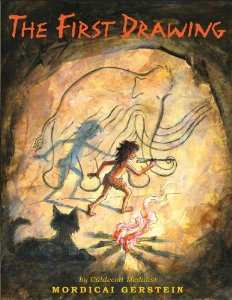
ImageFirst up was The First Drawing, by Mordicai Gerstein (Little, Brown; 2013). This book is a great example of a writer reading something in the news and asking “What if…?” Gerstein imagines an 8 year old boy living 30,000 years ago who encounters a wooly mammoth while out with his father. When he sees the mammoth in the shadows on the wall of the cave where he lives, he tries to describe it to his family. Frustrated by their inability to see his vision, he grabs a stick from the fire and begins to draw, and the mammoth comes to life for all to see.

I love that this book begins with the word “Imagine” and ends with “magic.” Capturing the often elusive images and thoughts that float through our minds through drawing is magic indeed!

11051230

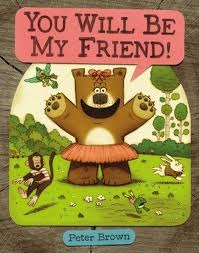
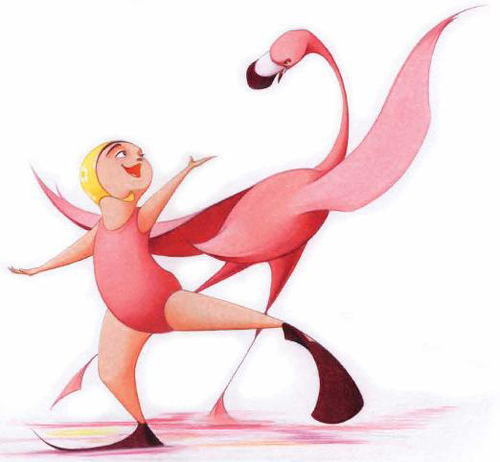
By pure coincidence, two Peter Brown titles were in my pile. YOU WILL BE MY FRIEND!  (Little, Brown) was published in 2011 and got lots of good press, but somehow I never got around to reading it. Desperate for a friend, Lucy sets out one morning determined to find one. Despite her good intentions, her day doesn’t go as planned and she’s feels “hopeless.” Just then, a flamingo wearing a bow-tie spots Lucy in her despair and asks Lucy to be his friend. On the last two pages, Lucy and her new friend take great delight in doing everything Lucy imagined she and her friend would: swimming, climbing trees, doing cartwheels, having a picnic, then a dance party.

Kids will enjoy Brown’s humorous illustrations of Lucy’s missteps along the way to finding her friend. This book would be a great mentor text for a book about making friends. On a side note, I couldn’t help noticing a resemblance between Lucy and her friend and another pair of friends 🙂

Flora-Image-31

61Y3IrTwQ-L._SY300_

The cover of Brown’s latest offering, Mr. Tiger Goes Wild (Little, Brown; 2013) is reminiscent of the jungle landscapes of  Henri Rousseau. After a lifetime of “always being so proper,” Mr. Tiger decides he’s had enough and follows his instincts to the wilderness where he goes “completely wild!” Kids will love this about Mr. Tiger. Parents and teachers will appreciate that Mr. Tiger comes back to civilization with his individuality in tact and his wildness in check.

Be sure to visit Jen at Teach Mentor Texts and Kellee at Unleashing Readers to find out what other people have been reading lately. Thanks, Jen and Kellee, for hosting!

Poetry Friday: Happy Birthday, First Lady of the World

Poetry_Friday_Button-210

“We must cherish and honor the word free or it will cease to apply to us.”

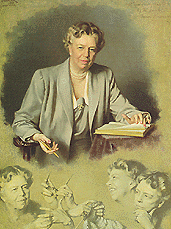
Eleanor Roosevelt was born on this day in 1884 and the United Nations has declared October 11 International Day of the Girl. No date could be more appropriate. After an unhappy childhood, Eleanor Roosevelt became a passionate, dedicated advocate for human rights around the world.

Image
public domain image from http://www.whitehouse.gov

J. Patrick Lewis honored Roosevelt and her spirit in this poem, from his 2005 collection, Vherses: A Celebration of Outstanding Women (Creative Editions).

You Learn by Living

for Eleanor Roosevelt

Who showed the world the world itself

Was awkward, shy and plain.

A high-born leader in a long,

Low decade full of pain.

A lady first, the great first lady

Looked fear in the face,

And said, There is no room for fear

When courage take its place

Read the entire poem here.

Many books have been written about Eleanor and her remarkable life. Russell Freedman’s Eleanor Roosevelt: A Life of Discovery is featured today at Anita Silvey’s Children’s Book-a-Day AlmanacEleanor, Quiet No More: The Life of Eleanor Roosevelt (Disney/Hyperion Books, 2009) is Doreen Rappaport’s picture book biography for younger readers. A list of more titles about Eleanor is available at Through the Looking Glass.

Roosevelt once said “It is better to light candles than curse the darkness.” Eleanor Roosevelt’s inspiring life story is certain to spark the imagination of readers everywhere.

Don’t forget to visit Laurie Purdie Salas at Writing the World for Kids for the weekly round up. Happy Friday, everyone!

Slice of Life: A Visit with Author Sarah Weeks

sols_6

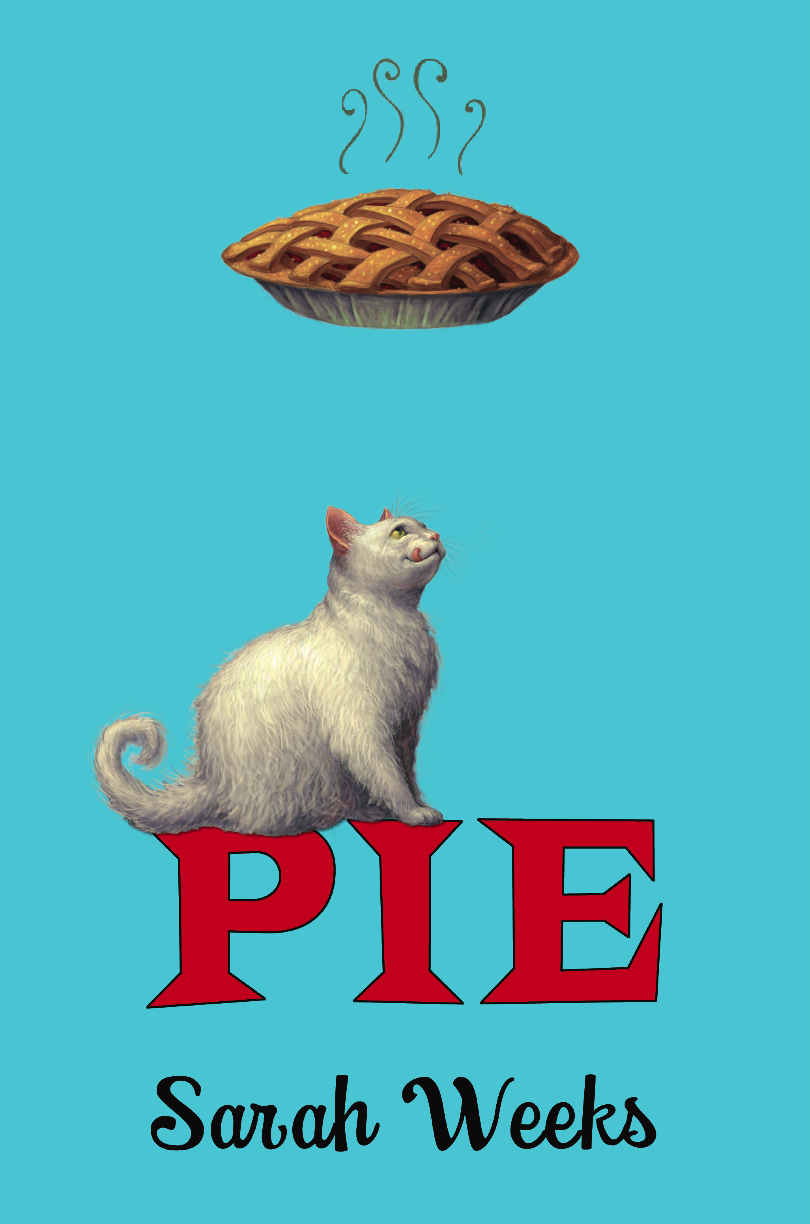
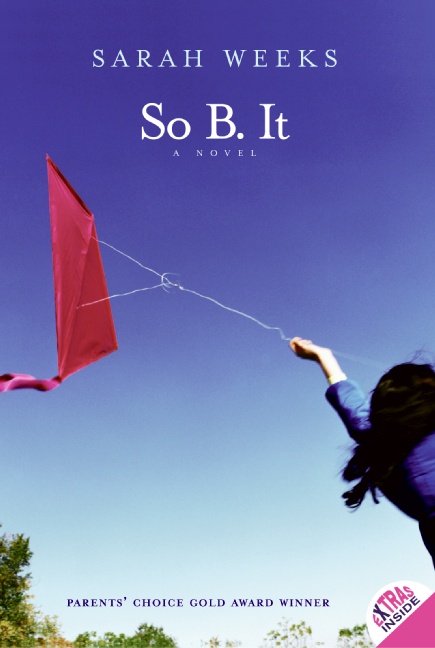
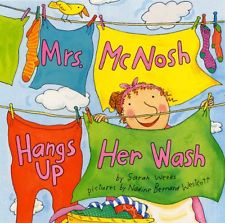
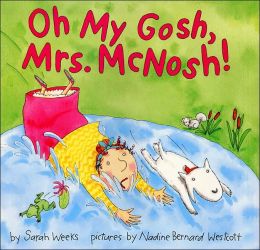
Last week, Sarah Weeks, author of the novels Pie and So B. It as well as many picture books, including Oh My Gosh, Mrs. McNosh and Ella, Of Course, visited our school. There is nothing like an author visit to excite students about reading and writing, and Sarah’s visit was a huge hit.

pie-cover1       So_B._It_by_Sarah_Weeks

In words and pictures, Sarah shared her earliest writing and how she became a published author. She talked about finding ideas for stories everywhere and the importance of being observant. The kids loved Sarah’s honesty about tackling sensitive topics such as divorce and mentally challenged people in her books. Best of all, every topic Sarah discussed was infused with humor.

mCNCNVWEZiL0T9XGwoCDLDA      9780060088583_p0_v1_s260x420

Often students are reluctant to revise their first drafts. Sarah was clear that this just isn’t an option. My colleagues and I practically cheered when she told the kids that “no editor has ever said [your manuscript] is perfect, you don’t have to change a word.”

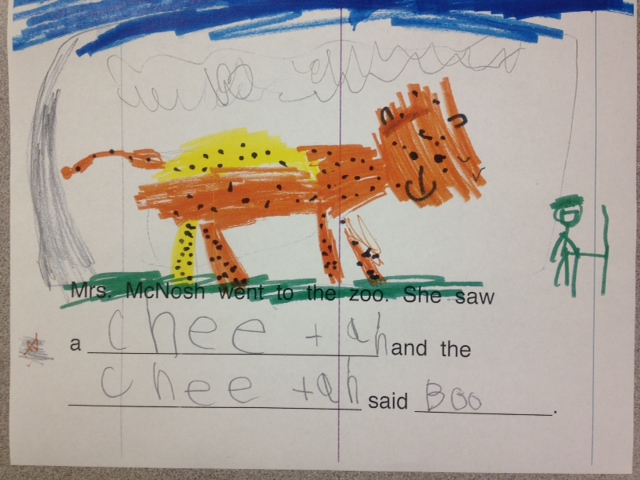
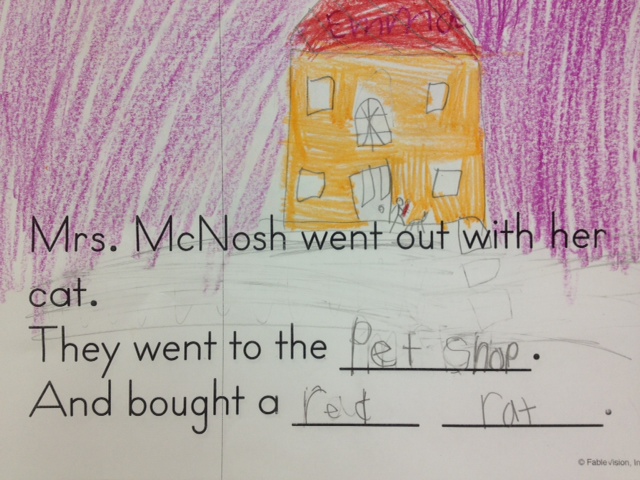
After reading all of Sarah’s books about Mrs. McNosh, our Kindergarten and first grade students created their own adventures for this wacky character.

photo-4

photo-5

Almost a week later, students throughout the school are still stopping me in the hall to ask “Do you have any more books by Sarah Weeks?” A successful author visit inspires students to stretch themselves as readers and writers. Sarah Weeks did just that.

Thank you to Stacey and all her new co-bloggers at Two Writing Teachers for hosting Slice of Life Tuesdays.
Poetry Friday: To Autumn

Image
Thank you to my sister for the photo.

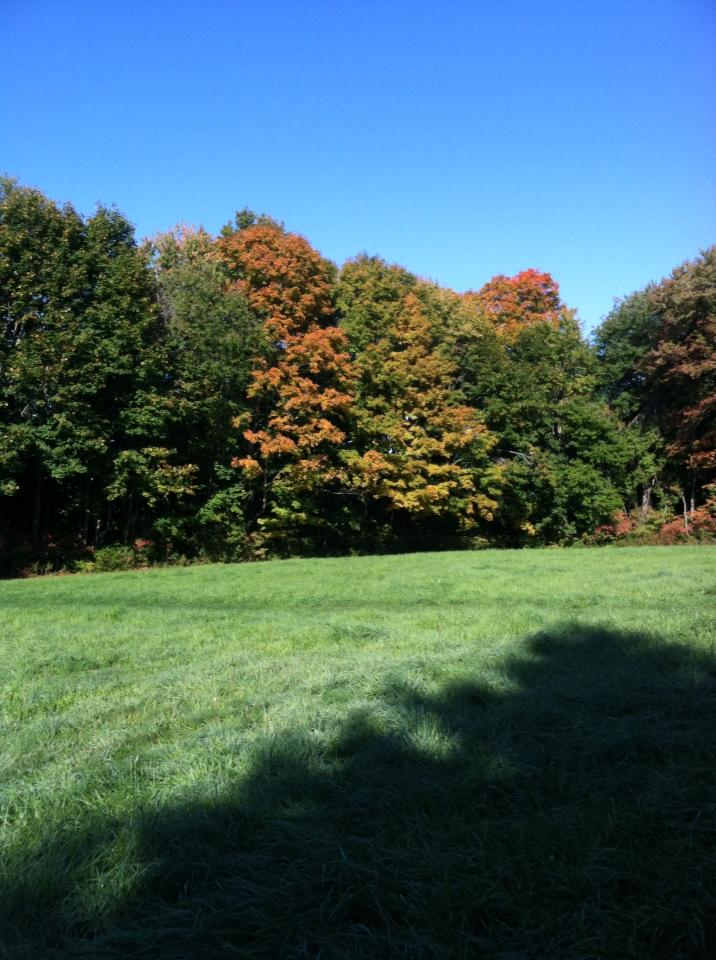
The weather has been spectacular in western Connecticut this week. The leaves have started to turn and the late afternoons have that distinctive glow of autumn, but the temperature has been in the seventies. All these summer-like days reminded me of these lines: “Until they think warm days will never cease, For Summer has o’er-brimmed their clammy cells.”

Unfortunately, these days will soon come to an end. In the meantime, I’m going to savor every warm, sunny day that comes my way.

Poetry_Friday_Button-210

To Autumn

John Keats

     1

Season of mist and mellow fruitfulness,

     Close bosom-friend of the maturing sun;

Conspiring with him how to load and bless

     With fruit the vines that round the thatch-eaves run;

To bend with apples the mossed cottage-trees,

     And fill all fruit with ripeness to the core;

          To swell the gourd, and plump the hazel shells

     With a sweet kernel;  to set budding more,

And still more, later flowers for the bees,

Until they think warm days will never cease,

       For Summer has o’er-brimmed their clammy cells.

     2

Who hath not seen thee oft amid thy store?

     Sometimes whoever seeks abroad may find

Thee sitting careless on a granary floor,

     Thy hair soft-lifted by the winnowing wind;

Or on a half-reaped furrow sound asleep,

     Drowsed with the fume of poppies, while thy hook

          Spares the next swath and all its twined flowers:

And sometimes like a gleaner thou dost keep

     Steady thy laden head across a brook;

     Or by a cider-press, with patient look,

         Though watchest the last oozings hours by hours.

     3

Where are the songs of Spring? Aye, where are they?

     Think not of them, thou hast thy music too–

While barred clouds bloom the soft-dying day,

      And touch the stubble-plains with rosy hue;

Then in a wailful choir the small gnats mourn

     Among the river swallows, born aloft

         Or sinking as the light wind lives or dies;

And full-grown lambs loud bleat from hill bourn;

     Hedge crickets sing; and now with treble soft

     The redbreast whistles from a garden-croft;

          And gathering swallows twitter in the skies.

Don’t forget to visit Dori at Dori Reads for the weekly round up. Happy Friday, everyone!

Slice of Life: A Confession

Image

This sign hangs above my kitchen door. And no, I did not tilt it for effect. The cobwebs are real, too. For 25 years, this sign has made me feel less guilty about not cleaning my house as often as I should.

But on Sunday, I reached a new low. I let a 10-month old baby crawl around on a rug that hadn’t been vacuumed in a month. I know; I’m a terrible person. To be fair, his mother didn’t tell me they were coming until about 15 minutes before they arrived. Still, I could have at least vacuumed the living room.

The frustration (and guilt) this incident caused me was forgotten as I played patty-cake with Max and my niece and I chatted about her new house. Also forgotten was the pile of work I brought home Friday afternoon and the plans for writing a blog post or two.

Maybe next weekend I’ll have more time to develop some ideas that have been percolating in my brain for the last week. For now, I’m going to go vacuum. Just in case.

sols_6

Thank you to Stacey at Two Writing Teachers for hosting Slice of Life Tuesdays!

Poetry Friday: Shel Silvertein’s “Sick”

Poetry_Friday_Button-210

Beloved children’s poet Shel Silverstein would have celebrated his 83rd birthday earlier this week. Born on Sept. 25, 1930, Silverstein is best known for his poetry collections Where the Sidewalk Ends and A Light in the Attic. But did you know he began his career as a cartoonist for Playboy?

My favorite Silverstein poem is “Sick”

sick

“I cannot go to school today,”

Said little Peggy Ann McKay.

“I have the measles and the mumps,

A gash, a rash, and purple bumps.

My mouth is wet, my throat is dry,

I’m going blind in my right eye.

My tonsils are as big as rocks,

I’ve counted sixteen chicken pox…”

Read the rest of the poem here.

Be sure to visit Amy at The Poetry Farm for the weekly round up. Happy Friday, everyone!

Slice of Life Tuesday:

sols_6

“Kind words do not cost much. Yet they accomplish much.” ~ Blaise Pascal

Last spring, at the Teacher’s College Reading and Writing Project Saturday Reunion, Lucy Calkins urged the thousands of teachers gathered at Riverside Church to be supportive of our colleagues and to treat one another with kindness through this tumultuous time in education.

The importance of maintaining this kind of positive attitude is being felt in schools across the country this fall. In Connecticut, where I teach, the state’s new teacher evaluation system is being rolled out this year. Teacher’s are now required to have five goals: two Student Learning Objectives (SLO’s), one Professional Growth Goal (linked to the Connecticut Common Core of Teaching Rubric), a whole-school goal linked to last year’s state assessment results, and a goal related to feedback from a parent survey. These have to be submitted by October 15. Needless to say, this is causing some stress.

And yet, as I meet with my colleagues each day to work on these goals, we feel a sense of accomplishment. As we read through writing samples, we learn more about our students and our writing goals become clear. We read and reread the standards, and our understanding deepens. Our unit plans begin to take shape, and we realize that we can do this. We are doing it. Together.

Thank you to Stacey at Two Writing Teachers for hosting Slice of Life Tuesdays!