I don’t usually lose things. My office, my desk, my closet may look disheveled and disorganized, but I know where everything is. So this morning when I opened the drawer in my dressing table where I keep my pins, I stopped short when I realized the pin I wanted wasn’t in its usual spot. It wasn’t anywhere in the drawer. I looked quickly in the other drawers, but I knew I wouldn’t find it. The realization that this pin was missing knocked the wind out of me and brought tears to my eyes. Elizabeth Bishop’s words filled my head: “Lose something every day…their loss is no disaster.”
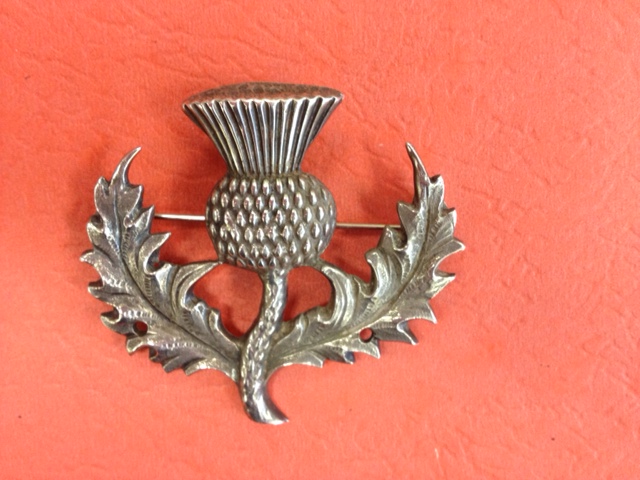
But this was a disaster. It wasn’t just any pin that was missing. This piece is precious to me because it was made from the insignia on the cap worn by an ancestor during the First Battle of Bull Run, or so the story goes. He was killed in the battle, and his daughter, my great-great aunt, left it to my grandmother, who left it to me.
I felt like I had betrayed my grandmother. The pain and sadness I felt at her death washed over me once again. I searched one more time. But now I was rushing and probably wouldn’t have found it even if it had been there.
It was getting late, and I had to leave for work. I tried not to let my distress ruin my day, but I didn’t get much accomplished. And, because I was already upset, little incidents upset me more that they would have otherwise. Finally, after a mandatory faculty meeting, it was time to head home. As I drove, I wracked my brain trying to remember when I had worn it last, which sweater it might still be pinned to. Maybe I had missed it in a pocket in my suitcase the last time I unpacked.
As soon as I was in the house, I hurried upstairs. I went through the drawer one more time, then moved onto my closet. Sweater after sweater was unfolded and tossed aside. No pin. I moved onto blazers and jackets. One after the other and still no pin. Finally, on the next to last blazer, there it was. Just like that; problem solved.
I felt a little foolish. After all, it was just a pin. My family was safe and healthy, my home intact and warm. I know people deal with much more serious problems and losses everyday. So tonight, although I’m very thankful my pin is back where it belongs, I’m more thankful for my many blessings. The art of losing isn’t one I want to master.
Don’t forget to head over to Two Writing Teachers today for more Slice of Life stories.
Last Sunday, the New York Times Book Review featured Al Gore’s review of Elizabeth Kolbert’s new book, The Sixth Extinction: An Unnatural History (Henry Holt, 2014), an examination of “what biologists call the sixth mass extinction.” Gore states that Kolbert “makes it clear that doing what is right means accelerating our transition to a more sustainable world.”
It seems to me that educating our kids about the wonders of the natural world is one way to accomplish this transition. Children are naturally curious and amazed, and we should do everything we can to build on this sense of wonder. One natural way to do that by sharing books, beautiful nonfiction picture books that celebrate “The World Around Us.”
Sing of the Earth and Sky,
sing of our lovely planet,
sing of the low and high,
of fossils locked in granite.
Sing of the strange, the known,
the secrets that surround us,
sing of the wonders shown,
and wonders still around us.
Aileen Fisher
Each one of the books shared below open a window onto nature, and will help inspire awe and wonder about our world in children of all ages.
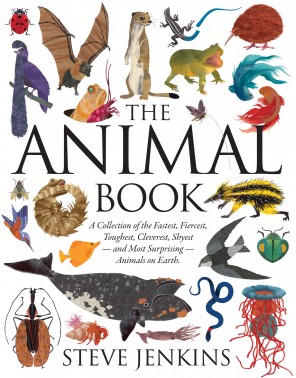
The Animal Book: A Collection of the Fastest, Fiercest, Toughest, Cleverest, Shyest–and Most Surprising–Animals on Earth, by Steve Jenkins(Houghton Mifflin, 2013)
This book is chock full of fascinating facts about animals of every kind, a book to savor and pore over. The stunning illustrations of each animal are carefully crafted in Jenkins’ signature collage technique. Jenkins provides a thorough explanation of his process in the book and in this video:
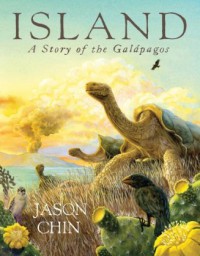
Island: A Story of the Galápagos, by Jason Chin (grades 2-4, Roaring Brook Press, 2012)
Jason Chin has created a richly detailed account of the creation of the Galápagos and how they came to be populated by so many species found only on these volcanic islands. The book ends with the arrival of Charles Darwin on the HMS Beagle and provides a brief explanation of how Darwin developed his theory of evolution based on his observations of animals during his visit to the islands.
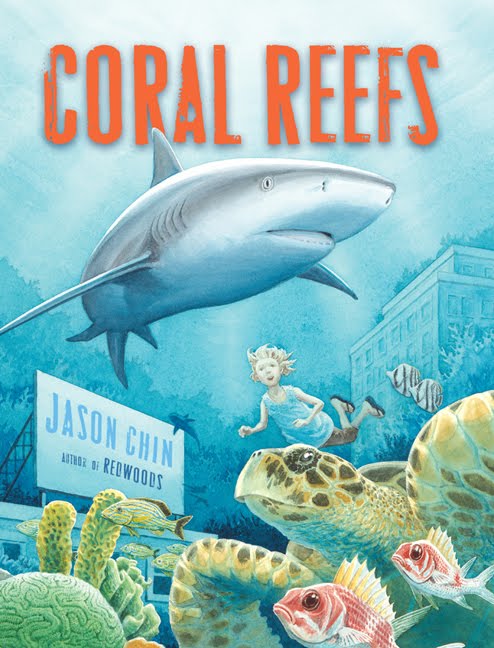
Coral Reefs, by Jason Chin (grades K-4, Roaring Brook Press, 2011)
Coral Reef begins with a girl taking Coral Reef down from a shelf in the Rose Main Reading Room of the New York Public Library. As the main character becomes immersed in her book, coral begins to appear, and soon the library is transformed into a magnificent coral reef. Chin’s text and illustrations are perfectly matched as the structure of the reef and the relationships of the animals who live in and around it are explained. An Author’s Note briefly explains the threat to coral reefs from global warming and offers suggestions for how readers can help slow this process. Chin also explains how he researched coral reefs and offers some additional resources.
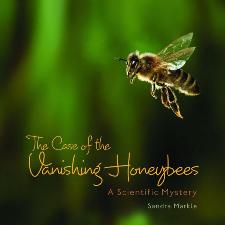
The Case of the Vanishing Honeybees: A Scientific Mystery, by Sandra Markle (grades 4-8, Millbrook Press, 2013)
Recommended by the National Science Teachers Association, Sandra Markle’s meticulously researched book explains in detail the essential role honeybees play in nature. Gorgeous photographs are clearly labeled and include explanatory captions. Markle raises the many questions scientists have about the cause of Colony Collapse Disorder and is realistic in her conclusion that honeybees are not out of danger. Suggestions for how to help honeybees are included, as well as a list of additional resources, a glossary, and index.
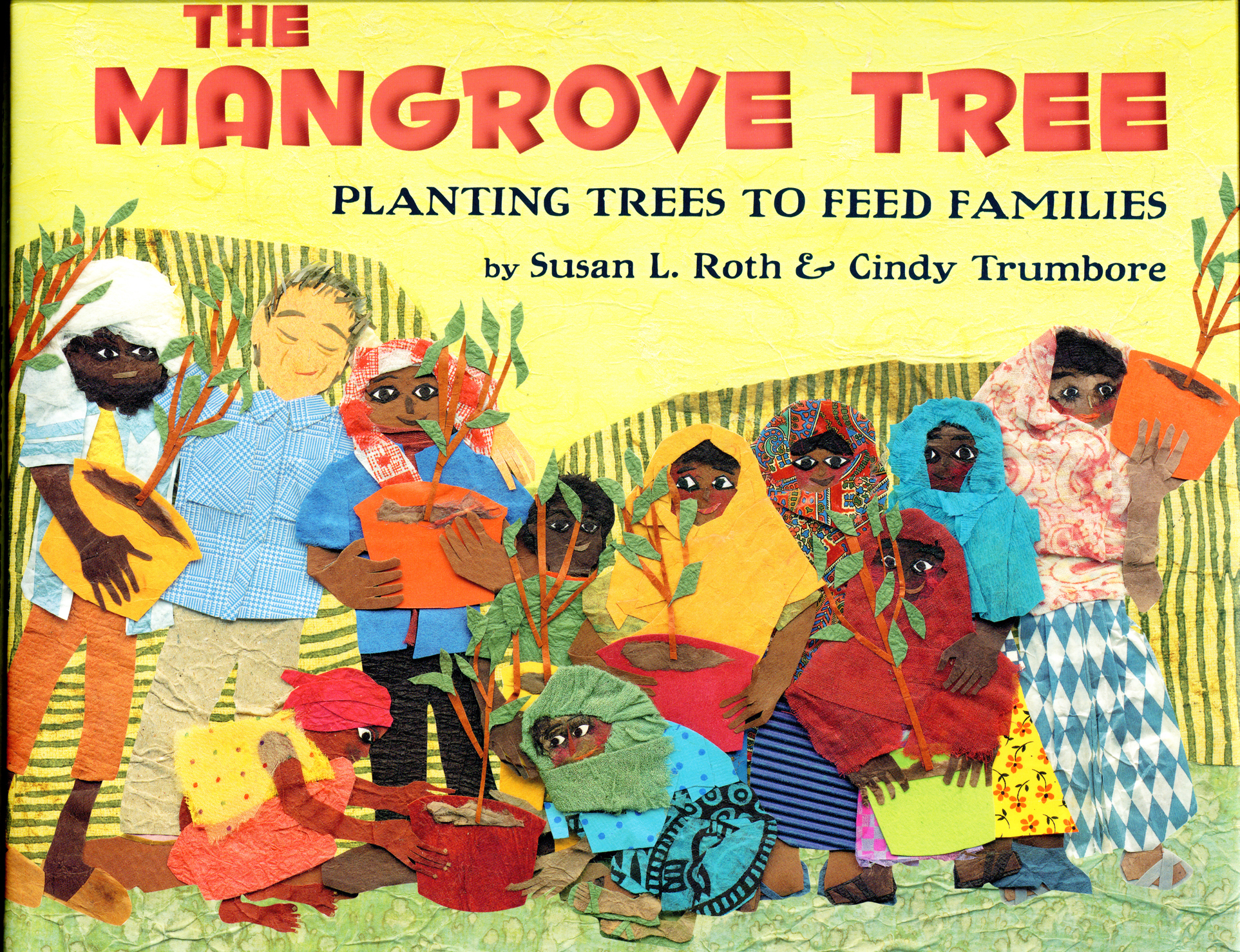
The Mangrove Tree: Planting Trees to Feed Families, by Susan L. Roth & Cindy Trumbore; collages by Susan L. Roth (grades 1 and up, Lee & Low Books, Inc., 2011)
Created by the same team behind Parrots Over Puerto Rico, winner of the 2014 Sibert Medal for the most distinguished information book published in the United States, The Mangrove Tree: Planting Trees to Feed Families describes the effort of Dr. Gordon Sato to ease the poverty and lack of food in the African country of Eritrea. The story is told in layers, the simplest of which is a cumulative rhyme a la “The Hose that Jack Built.” Sidebars explain Dr. Sato’s project in more detail, and an Afterword provides even more details as well as photographs of Dr. Sato, the mangrove trees, and the Eritreans who worked to make the project a success. A glossary, websites, and sources are also included.
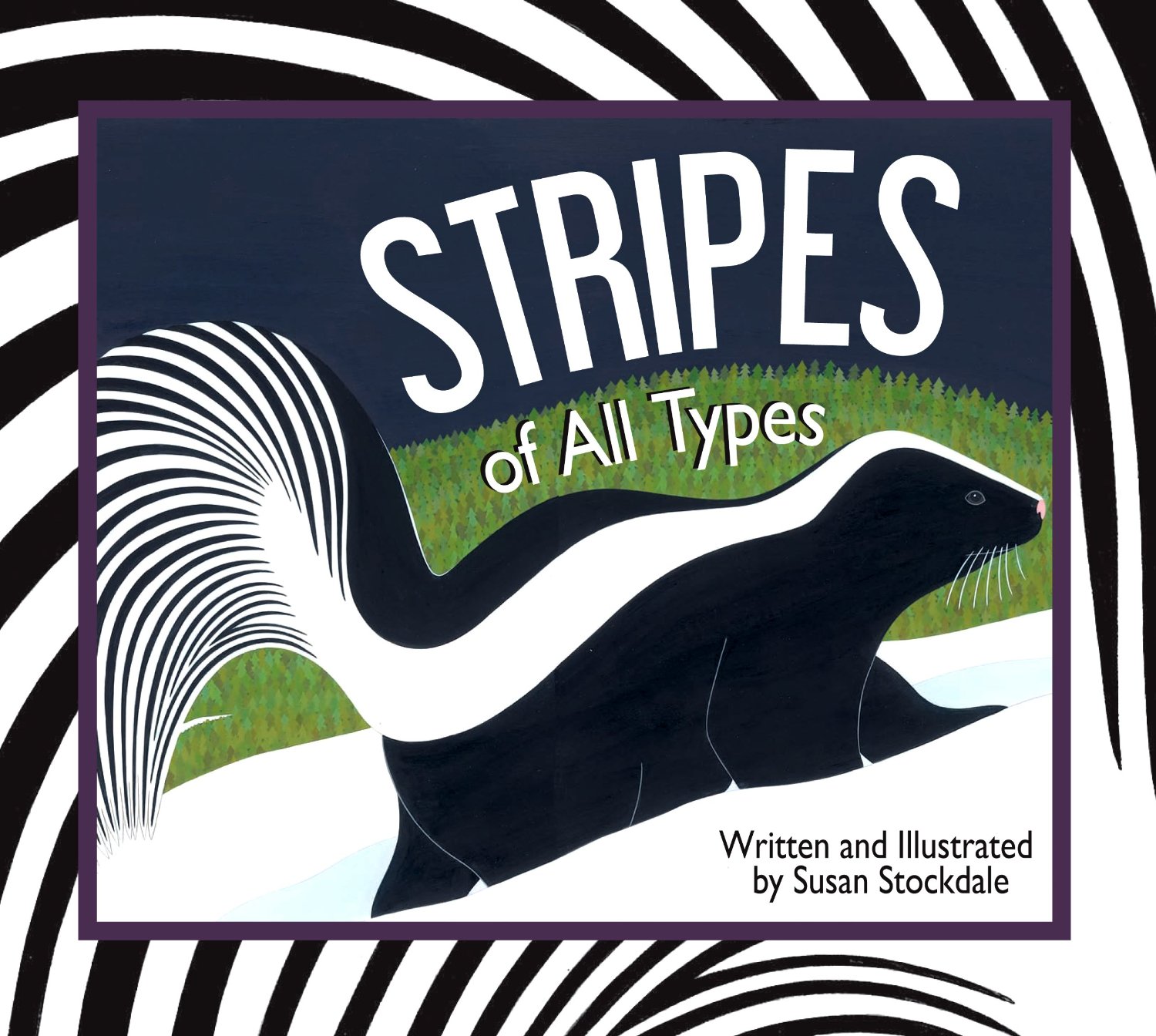
Stripes of All Types, by Susan Stockdale (Preschool-grade 1, Peachtree, 2013)
This simple rhyming text introduces young readers to a wide variety of animals whose stripes help them survive in different habitats. Stockdale’s writing is full of vivid language, and is perfect for building vocabulary. Additional information about each animal is provided at the end of the book.
Wings, by Sneed B. Collard III; illustrated by Robin Brickman (grades 2-3, Charlesbridge, 2008)
Collard’s rich, descriptive language and Brickman’s stunning collages present readers with a surprising range of information about wings found all over the world, from “steamy rain forests to the frigid North Pole.” Details illuminate the wide variety of styles of wings, how many wings particular animals have, even the various purposes for wings. A list of both print and digital resources is included, as is a glossary and a brief description of Brickman’s paper collages.
Pointy, Long, or Round: A Book About Animal Shapes, by Patricia M. Stockland; illustrated by Todd Ouren (Kindergarten-grade 3, Picture Window Books, 2005)
Here’s another book organized around a trait many different animals have in common. Stockland’s text is simple yet descriptive, and provides details about how these animals use their shape for protection or survival. Additional details related to each animal’s shape can be found in side bars, which are cleverly incorporated into the illustrations.
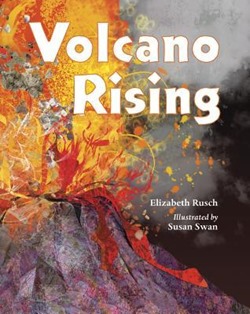
Volcano Rising, by Elizabeth Rusch; illustrated by Susan Swan (grades 1-4) Charlesbridge, 2013)
Volcano Rising explains what volcanoes are, how they work, and that “volcanoes are not just destructive. Much more often, volcanoes are creative.” This overview is told using one font style. Specific examples of each type of volcano, such as the creation of Paricutín, a volcano in Mexico that grew to a height of 1,300 feet in just nine years, are provided in a different font. Back matter includes a glossary, resources the author used, and books for further reading.
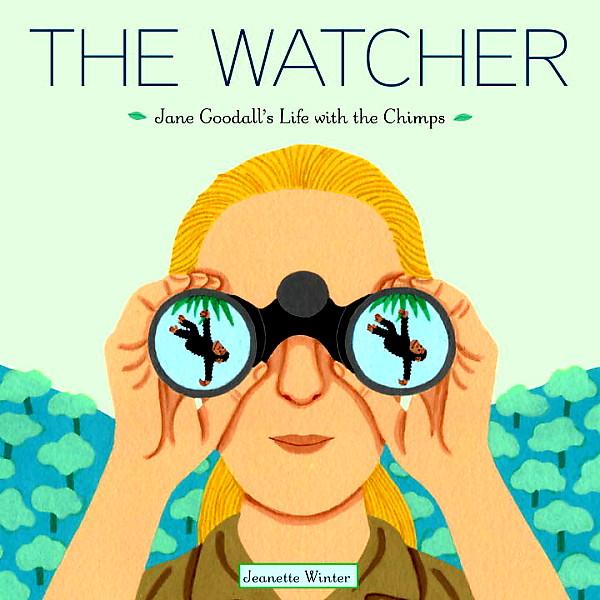
The Watcher: Jane Goodall’s Life with the Chimps, by Jeanette Winter (Preschool-grade 3, Schwartz + Wade Books, 2011)
When Jane Goodall first went to Africa, she “wanted to learn things that no one else knew, uncover secrets…” She did just that during her years studying the chimps of Gombe. Winter writes in language that is both simple and accessible, yet evokes Jane’s sense of wonder in all that she sees. She ends her account of Goodall’s inspiring life story with these words: “Jane carried with her the peace of the forest…and opened a window for us to the world of chimpanzees.”
Nonfiction Picture Book 10 for 10 is a “celebration of nonfiction picture books” organized by Julie Balen, Cathy Mere, and Mandy Robek. Many bloggers shared lists of their favorite nonfiction picture books on Wednesday, and a list of their posts can be found on Julie’s blog. My post is a little late because of internet issues, so I decided to combine it with Poetry Friday. Be sure to visit Karen Edmisten for the Poetry Friday Round Up. Thank you to all these ladies for devoting their time to make cyberspace a rich and inspiring place to visit.
Intrepid isn’t a word I would use to describe myself. And yet, I feel intrepid this week. As I write this, I’m sitting in a hotel room in New York City watching the snow. From this height, I can’t see the street, but I can hear the traffic rushing by on Broadway. I still can’t quite believe I’m here.
I feel incredibly lucky because this week I’m attending the Teachers College Reading and Writing Project Mini Institute on Content Area Literacy. After just one day, everything I learned yesterday is swirling around in my brain like the snow outside my window.
Harvey “Smokey” Daniels opened the Institute yesterday morning with an inspiring keynote on what’s missing from the CCSS. “Where’s engagement? Where’s curiosity and creativity? Choice and responsibility? Social justice? Where’s the fun?” he wanted to know.
I’ve often wondered that myself. Daniels suggested that our curriculum should be inquiry based. Turning the curriculum into questions the kids “can’t resist answering,” and creating opportunities for them to do authentic, purposeful work would go a long way toward ramping up the level of engagement AND achievement.
Daniels also questioned the omission of writing as a thinking tool, or “writing to learn.” He stressed the importance of giving our students opportunities to put their thoughts and ideas into words every single day. Teachers can engage students with this work by having “written conversations.” These can be between students or between the students and teacher or other adults. Writing letters is one way to give students an opportunity to express their feelings and develop their voice.
After Harvey’s session, the day was filled with more learning from the incredible staff developers at TCRWP. Amanda Hartman shared strategies for combining reading and writing units with content area teaching. From Lauren Kolbeck I learned more strategies that use literacy skills to support the work of young scientists. And finally, Alexis Czerterko shared ways to incorporating literacy in a unit of study on the American Revolution.
At the end of the day, I felt empowered by everything I had learned. I was energized to begin applying the strategies shared throughout the day to my own teaching. But I’m also excited to learn more. I’m excited about stretching myself as an educator so I can help my students be curious and passionate about their learning. I want to support them as they take risks and follow their dreams. I want them to be intrepid.
Don’t forget to head over to Two Writing Teachers today for more Slice of Life stories.
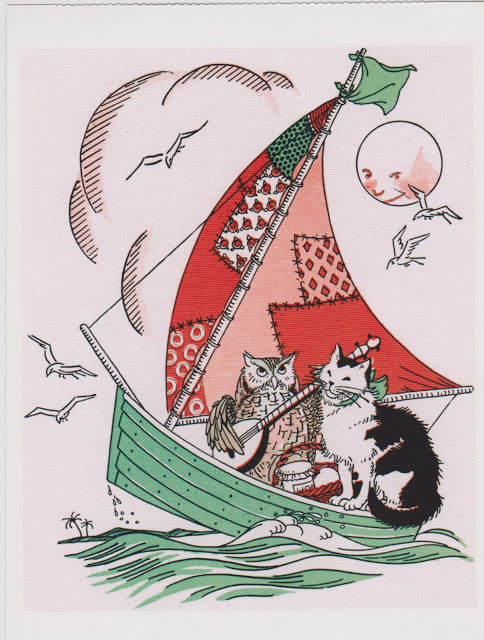
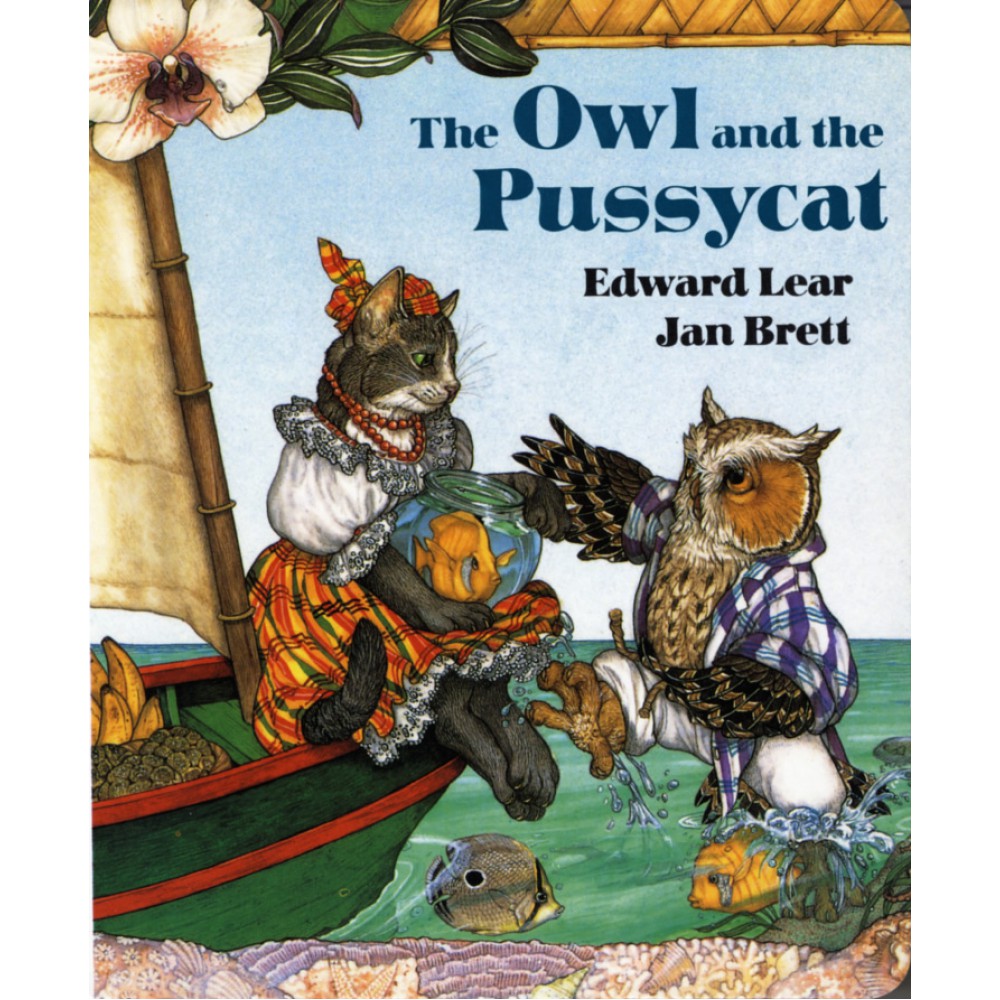
Happy Valentine’s Day, everyone! Over the past few days, I considered many favorite love poems to share today. Something from Shakespeare? Maybe a Beatles song, in honor of the 50th anniversary of their first visit to America. In the end, I did stick with a Brit I’ve loved since childhood. Edward Lear’s silliness has always appealed to me, and “The Owl and the Pussy-cat” is one of my all-time favorites.
Marguerite Davis
The Owl and the Pussy-Cat
by Edward Lear
The Owl and the Pussy-cat went to sea
In a beautiful pea-green boat,
They took some honey, and plenty of money,
Wrapped up in a five-pound note.
The Owl looked up to the stars above,
And sang to a small guitar,
“O lovely Pussy! O Pussy, my love,
What a beautiful Pussy you are.
You are,
You are!
What a beautiful Pussy you are!”
Pussy said to the Owl, “You elegant fowl!”
How charmingly sweet you sing!
O let us be married! too long we have tarried:
But what shall we do for a ring?”
They sailed away, for a year and a day,
To the land where the Bong-Tree grows
And there in a wood a Piggy-wig stood
With a ring at the end of his nose,
His nose,
His nose,
With a ring at the end of his nose.
“Dear Pig, are you willing to sell for one shilling
Your ring?” Said the Piggy, “I will.”
So they took it away, and were married next day
By the Turkey who lives on the hill.
They dined on mince, and slices of quince,
Which they ate with a runcible spoon;
And hand in hand, on the edge of the sand,
They danced by the light of the moon,
The moon,
The moon,
They danced by the light of the moon.
When I was little, my mother read this poem to me from a Childcraft book of children’s poems. My own children loved poring over Jan Brett’s richly detailed illustrations for the poem. Do you have a favorite version of Lear’s classic poem?
Whether on the edge of the sand or by the light of the moon, be sure to dance on over to Teacher Dance, where Linda has the Poetry Friday Round Up. Wishing you joy this Valentine’s Day!
Merriam-Webster defines “apology” as “an expression of regret for having done or said something wrong.” I truly did regret burning my sandwich. And although I wasn’t thinking about “This is Just to Say,” at the time, some part of my brain made the connection to William Carlos Williams’ famous poem of apology. You can read more about poems of apology at Joyce Sidman’s website, where she talks about the origins of her book, This is Just to Say: Poems of Apology and Forgiveness (Houghton Mifflin, 2007). For apology poems with a lighter touch, don’t miss Gail Carson Levine’s Forgive Me, I Meant to Do It(HarperCollins, 2012).
Please be sure to visit Renée LaTulippe at No Water River for the Poetry Friday Round Up.
Today is Reading to the Core’s second birthday! It seems completely appropriate that today is Tuesday, the day I usually participate in Slice of Life, a weekly writing challenge hosted by Two Writing Teachers. During my first year of blogging, I posted a grand total of eleven times. But last year, I committed myself to blogging, and this commitment has led to many positive changes in my writing and my life.
My life is much richer because of the connections I’ve made through blogging. It was a thrill to met several “slicers” personally during the past year, and I’ve also forged many online friendships. The stories shared by this community run the gamut from hilarious to heart-breaking, and they have inspired me in countless ways.
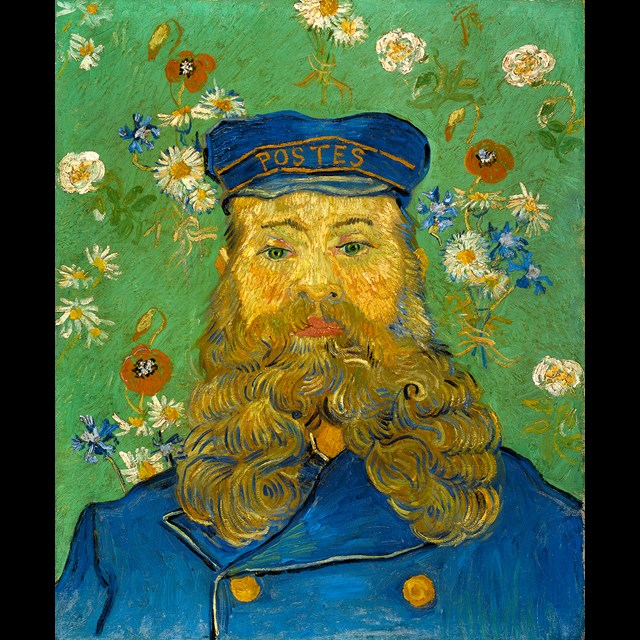
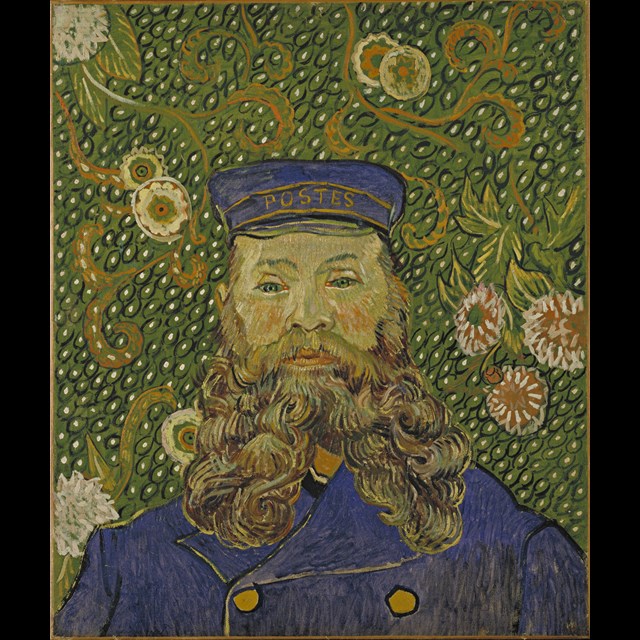
Not long ago, I visited the Philips Collection in Washington, D.C. to view “Van Gogh Repetitions,” a show devoted to Van Gogh’s artistic process. I never realized that there were different versions of some of Van Gogh’s most famous paintings (five different versions of “The Postmaster” alone!). The changes from painting to painting were sometimes dramatic, but more often were subtle, barely noticeable if you weren’t paying close attention.
It seems to me this is the pattern of life, and this has been true of my writing over the past two years. Most changes were minute, and often recognizable only in hindsight. Other changes were seismic; real breakthroughs for me as a writer. Taking part in last March’s daily Slice of Life Challenge was one of these watershed moments for me. I truly felt that I was part of a community, and this made me more confident about sharing my writing. I even branched out and began taking part in other memes, It’s Monday! What are You Reading? and Poetry Friday in particular.
Being a teacher who writes has improved my teaching, both with my students and the teachers I work with. I can help them through the hard parts (and as Katie Wood Ray would say, “they’re all hard.”) because I’ve worked through the hard parts myself. I can show them drafts full of cross-outs and arrows and say, “See, it can be done.”
This generous online community has also enriched my teaching. Blogs and tweets are full of ideas, resources, and book suggestions. My students have Skyped with authors, enjoyed books you’ve shared in give-aways, and benefited in countless ways from your collective brilliance.
So even though it’s my blog’s birthday, today I’m celebrating all of you, my PLN, my friends. Thank you for two exciting and inspiring years. I’m looking forward to many more!
Don’t forget to head over to Two Writing Teachers today to read what others are celebrating today.
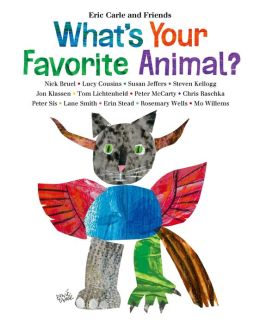
Take a five year-old’s favorite question, add Eric Carle’s joyous spirit and thirteen of the most accomplished illustrators working in children’s literature today and you have What’s Your Favorite Animal? (Henry Holt, 2014). This book is a glorious celebration of animals and art. Each artist responded to this important question with a short piece of writing and an illustration. The writing ranges from heartfelt recollections of childhood pets to whimsical imaginary pets. Nick Bruel’s Bad Kitty even gets to add her two cents.
The writing that accompanies each illustration is rich with description and rationale. Peter Sís describes “…many families coming with their carps to the river and blue fish swimming toward the ocean. This gave us all hope!” Chris Raschka’s keen observation of the lowly snail gives readers a new appreciation of an animal who’s often overlooked: “But all her life she works her craft, adding to it day by day, until, when she dies, she leaves us something of great beauty.”
These words could describe the work of these artists, who have given the world so much beauty through their books. It seems fitting, then, that proceeds from What’s Your Favorite Animal? are being donated to The Eric Carle Museum of Picture Book Art. The Carle, dedicated to inspiring “a love of art and reading through picture books,” is one of my favorite museums. (Read more about my last visit here.)
What’s Your Favorite Animal? is a perfect mentor text for young writers making their first attempt at opinion writing. The CCSS calls for both Kindergarten and first grade writers to “write opinion pieces.” What better topic than animals, something every child has an opinion about?
I also found this book on my most recent trip to the bookstore:
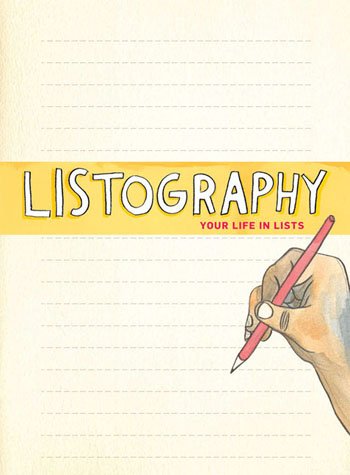
Listography: Your Life in Lists Chronicle Books, 2007
Lisa Nola, creator of this book/journal explains in a note that the book “is designed to help you create your autobiography.” But I was drawn to Listography for a different reason. It’s ideal for using with kids when they complain, “But I don’t know what to write about.” WARNING! Don’t just hand this book to students; adults are definitely the target audience. Rather, choose an appropriate page and write the topic on the board. Like What’s Your Favorite Animal?, everyone has favorite toys, games, and songs.
This book appealed to me on another level, though. I don’t usually need lists like this for ideas of what to write about. Rather, I can see using this book and these list ideas to get to know my own characters better. I have seen many writing exercises that do just this. But the idea of having this whole volume filled with these lists really appeals to me. I’m hoping they’ll help me find, to use Ray Bradbury’s perfect metaphor, what’s “hidden under the trapdoor on the top of my skull.” Or, in this case, my character’s skull.
Be sure to visit Jen at Teach Mentor Texts and Kellee at Unleashing Readers to find out what other people have been reading lately. Thanks, Jen and Kellee, for hosting!
Our fifth graders are in the midst of an informational reading/writing unit focused on inventions and inventors. While the students read mostly nonfiction during this unit, we also share several poems from Joyce Sidman’s remarkable book, Eureka! Poems about Inventors (Millbrook Press, 2002). In this volume, Sidman, winner of the 2013 NCTE Award for Excellence in Poetry for Children, celebrates in verse the invention of paper, hot air balloons, velcro, and more.
“Food of the Gods” describes the history of chocolate, from Quetzalcoatal dropping “ripe yellow pods of cacao” to Francois-Louis Cailler, who, in 1819,
“…seized upon them,
mixed and ground and tempered,
and by some clean and wholesome magic,
made of them a food–
a wafer of heaven,
a smooth slab of heart’s delight.”
For more about Eureka! as well as a Reader’s Guide and links to information about inventors, visit Joyce’s website.
In the past, the fifth grade teachers and I have talked about having the kids write their own inventor/invention poems, but we’ve never managed to find the time. I had my own eureka moment when I read Dana Murphy’s post about erasure poetry over at Two Writing Teachers last week. Suddenly, I knew this was the way to have our students craft poems about the inventors and inventions they’re studying. This technique is also a great way for students to practice zeroing in on important details and main ideas.
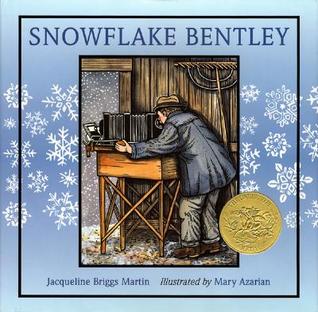
Here is my attempt at erasure poetry to use as a model with students. I chose Jacqueline Briggs Martin’s Snowflake Bentley (Houghton Mifflin, 1998), one of my all-time favorite books to share with students, as my subject. Mary Azarian’s stunning woodcut illustrations for the book won the Caldecott Medal. Although Wilson Bentley wasn’t an inventor like Gutenberg or Elijah McCoy, he did develop the process to photograph snowflakes and became world-famous for his miraculous pictures.
I worked in my notebook, jotting down lines that seemed meaningful as I read the book. As I reread, I thought about the importance of particular events and made decisions about including them in my poem. This kind of thinking can be challenging for students, and writing erasure poems will be an engaging way from them to practice these important skills.
The Snowflake Man
~Wilson Bentley~
born February 9, 1865
Jericho, Vermont
A boy who loved snow,
snow as beautiful as butterflies,
studied the icy crystals
through an old microscope.
Saw intricate patterns,
no two the same.
He wanted to find a way
to save snowflakes,
and tried drawing snow crystals,
but they always melted.
At sixteen,
he read about a camera with a microscope.
“I could photograph snowflakes,” he thought.
At seventeen,
his parents spent their savings
on that camera.
Mistake by mistake,
He would not quit.
Finally, in the second winter,
he figured out
how to photograph snowflakes.
Neighbors laughed when
he waited hours
to find just the right crystal.
Willie said the photographs
would be his gift to the world.
He wrote and gave speeches,
became famous,
and published a book.
A book of his best photographs,
of his treasures in snow.
Photo by Wilson A. Bentley; Smithsonian Institution from United States (Snowflake Study Uploaded by PDTillman), via Wikimedia Commons Please be sure to visit Tricia at The Miss Rumphius Effect for the Poetry Friday Round Up.
Mid-year goal meetings are coming up, and many teachers at my school are in a panic over the new reflection questions they have to respond to and the lesson plan that is required to be included in their portfolio as an “artifact.” I’ve been meeting with them over the past week, answering their questions and helping them as much as I can. But the paperwork still seems overwhelming when added to our daily responsibilities. This is why I was so happy to find this video about productivity at Brain Pickings Curated by Maria Popova, Brain Pickings is “a human-powered discovery engine for interestingness, a subjective lens on what matters in the world and why, bringing you things you didn’t know you were interested in — until you are.” Popova’s posts are full of wit and wisdom, and if you haven’t discovered her website, you’re in for a treat!
.
I love this video because it’s succinct and full of helpful advice. And even though many of the suggestions are common sense, I feel better knowing that I am not the only person who needs to be reminded about the importance of habit and routine.
Now if you’ll excuse me, I have some reflections to write!
As always, thank you to everyone at Two Writing Teachers for hosting the Slice of Life every Tuesday. Be sure to stop by to read more Slices!
Last spring, during a poetry writing unit, a 5th grade student asked me to read a poem she had written. “I’d love to,” I told her as she handed me her notebook with pride. I knew this girl to be a good student and a strong reader, so I was quite surprised to read what she had written. It was mostly about pickles, but her poem was full of forced rhymes and then no rhymes. I told her that her love of pickles was coming through loud and clear. Then I asked her about some of the more questionable rhymes.
“What do smelly feet have to do with sweet pickles?” I wondered
“Nothing, but sweet and feet rhyme,” she said matter-of-factly.
“I wonder if there are any other words that rhyme with sweet that have more to do with pickles than feet.”
“Probably, but today I just feel silly and want to write a silly poem.”
“Fair enough. Let’s look at it again tomorrow and see if you still feel that way. Writers often see their work differently after a day or two,” I said.
She wasn’t convinced, and she didn’t change the poem.
Over the years, I’ve had plenty of students who were unwilling to revise their writing. It seems as if getting anything down on paper is torture enough. Then to have to make changes is just insulting. Part of me empathizes with them. I know it’s hard to get our thoughts down in the first place. But I also know how much better writing can be after the second or third revision.
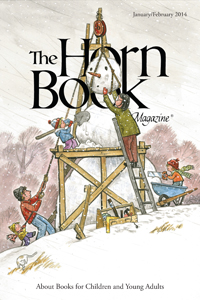
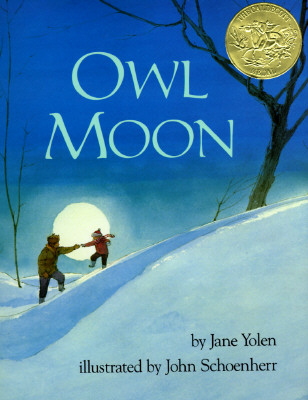
I wish I’d had Jane Yolen’s article from the current issue of The Horn Book to share with my reluctant reviser. In it, Yolen muses over different forms her Caldecott-Award winning picture book, Owl Moon, might have taken. A sonnet? No, too short. What about as a rap? Definitely not. She states that “a writer has to make choices [about] how to tell a story. But when a writer finds the right voice, everything comes together.” (pg. 46)
Writers do make choices. But I feel that our students don’t really understand that this means more that just thinking of words that rhyme. As Yolen goes on to say, finding this voice for our writing takes “hard work, inspiration, even perspiration.” (pg. 50)
So why did my young poet short-change herself and her poem? In this case, I think she just needed more time. Time to build the habit of writing every day so being asked to write didn’t feel like punishment. Time to experience the joy of finding just the right word, the perfect expression of her feeling. Time to play with different versions of her poem to find out if silly really was the right tone. Sometimes we may get lucky and stumble onto the right form on our first try, as Yolen feels she did with Owl Moon. But in most cases, we need to sweat over our writing before sharing it. Only then can we sit back and have a pickle.
Thank you to everyone at Two Writing Teachers for hosting the Slice of Life every Tuesday. Be sure to stop by to read the hard work of many devoted writers.






![By Smithsonian Institution from United States (Snowflake Study Uploaded by PDTillman) [see page for license], via Wikimedia Commons](https://readingtothecore.com/wp-content/uploads/2014/01/wilson_a-_bentley_snowflake_1890.jpg)
 Reading to the Core