Poetry Friday: “I Am Poetry”

poetry-friday-1-1

I have spent the past week at the Teachers College Reading and Writing Project’s Summer Reading Institute. My brain is bursting with all I have learned from my amazing section leaders and the keynote speakers. My senses are overwhelmed by the sights and sounds of New York City in August. My life is richer because of people I have met and friends I have made. It has been a glorious week.

How could I possibly choose a poem to share today that reflects my week? By focusing on one small piece of my experience.

Each teacher was given a book at the beginning of the week to use as a mentor text for the work of the Institue. I received Becoming Naomi León (Scholastic Press, 2004) by Pam Muñoz Ryan. I have loved every book I’ve read by Ryan, but somehow, I had missed this beautiful story about a young girl finding her true self. Pam Muñoz Ryan’s writing is so lyrical, I wondered if she’d written any poetry. A quick search reminded me about The Dreamer, Ryan’s lovely book about the young Pablo Neruda and led me to this poem:

“I Am Poetry”

by Pam Muñoz Ryan

I am poetry,

waiting to seize the poet.

I ask the questions

for which all answers

exist.

I choose no one.

I choose every one.

Come closer…

…if you dare.

I am poetry,

lurking in dappled shadow.

I am the confusion

of root

and gnarled branch.

I am the symmetry

of insect,

leaf,

and a bird’s outstretched wings.

Read the rest of the poem here.

If you haven’t read Becoming Naomi León, The Dreamer, or any of Ryan’s other novels for children, read one today. You’ll be glad you did. 

Please be sure to visit Heidi at My Juicy Little Universe for the Poetry Friday Round Up.

Slice of Life: Recipe for a Perfect Summer Day

11454297503_e27946e4ff_h

Last week I was lucky enough to spend four wonderful days at a lake in northern Wisconsin with my son, daughter-in-law, and her family. Inspired by the beauty surrounding me, and a poem I read recently by Laura Purdie Salas, I decided to write a recipe poem about my visit to Lake Minocqua.

photo-2

“Recipe for a Perfect Summer Day”

Take one lake filled with calm, clear water,

sun-warmed and sparkling.

Surround it with towering pine trees,

where bald eagles nest and perch.

Fill it with musky and largemouth bass,

walleye and northern pike.

Add:

pairs of loons, warbling their mournful cry,

graceful herons, still as statues on the shore,

iridescent dragonflies, darting over the surface.

Mix in families and friends who spend the day:

swimming and kayaking,

biking or hiking;

your choice.

Top with a campfire,

toasted marshmallows,

and gooey, chocolatey s’mores,

under a star-filled sky.

© Catherine Flynn, 2014

Thank you, as always, to StaceyTaraDanaBetsyAnna, and Beth for hosting Slice of Life each Tuesday. Be sure to visit Two Writing Teachers to read more Slice of Life posts.
Picture Book 10 for 10: Friendship Favorites

pb 10 for 10 015

“…nothing breaks this golden strand

spun by heart and not by hand.”

Clare Mishica

Picture Book 10 for 10 is the brainchild of Cathy Mere of Reflect & Refine: Building a Learning Community and Mandy Robeck of Enjoy and Embrace Learning. During this annual event, now in its fifth year, teachers, librarians, and book lovers create lists of 10 essential picture books. Cathy and Mandy collect and share these lists, and everyone is richer because of their efforts. Be sure to visit their blogs to see their lists, and check out links to other lists. Thank you, Cathy and Mandy, for organizing this celebration of children’s literature! This is my third year joining in the fun. Last year, I devoted my list to favorite books by Jane Yolen, and the year before, I shared favorite wordless picture books.

Last month, Jillian Heise and Kim McSorley wrote about their “Top Ten Favorite Picture Book Friendships” for Nerdy Book Club. Their list included many of my favorites, especially several of Mo Willems Piggy & Elephant books, Flora and the Flamingo, by Molly Idle and Deborah Freedman’s The Story of Fish and Snail. But their list got me thinking about picture book friendships from the past, stories that my own children loved when they were small and stories that I’ve shared with my students throughout my teaching career. Here, in no particular order, are some of my favorites.

Amos & Boris  by William Steig (Farrar, Straus, and Giroux, 1971)

9780374302788_xlgI adore this timeless tale of friendship between a mouse and a whale. I spouted off about this book about a year ago. You can read more about it here.

Rugby & Rosie, by Nan Parson Rossiter (Dutton, 1997)

51N8MPC5A6L._SX258_BO1,204,203,200_

This is a classic boy-and-his-dog tale with a twist. Rugby and the nameless narrator are always together: on the way to the bus, after school, and “he sleeps beside my bed at night.” Rosie, a puppy being trained as a guide dog, soon arrives and quickly becomes part of the family. Rossiter’s story follows the friends throughout the year of Rosie’s training and how the family deals with their sadness after Rosie’s inevitable departure.

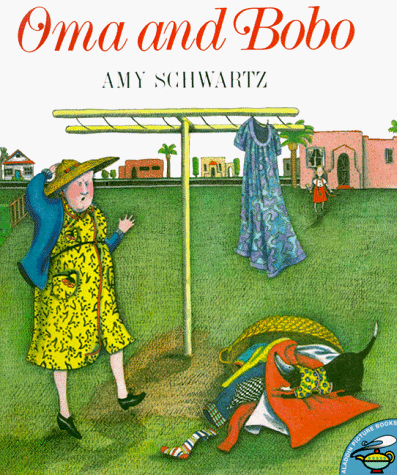
Oma and Bobo by Amy Schwartz (Bradbury Press, 1987)

665429Alice is thrilled when her mother tells her she can have a dog for her birthday. She finds Bobo at the local animal shelter. When Alice asks her grandmother, Oma, what she should call the dog, Oma replies, “Trouble, Bother, and Nuisance.” Of course Oma’s feelings change by the end of the book and she plays a key role in Bobo’s success at obedience school.

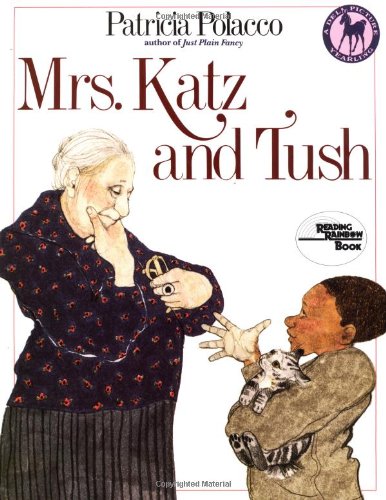
Mrs. Katz and Tush, by Patricia Polacco (Bantam Books for Young Readers, 1992)

517fcurW8NL

Patricia Polacco is a master at telling tales of friendship, and this story of an elderly woman and her young neighbor is a classic. Strangers at the beginning of the book, Larnel, Mrs. Katz, and her kitten, Tush quickly become friends. Larnel learns much from Mrs. Katz about caring, family, and tradition.

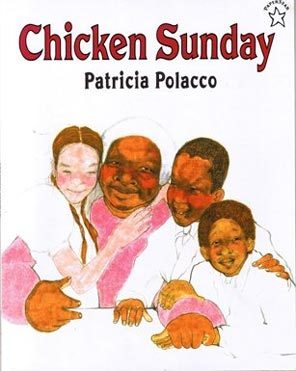
Chicken Sunday, by Patricia Polacco (Philomel Books, 1992)

2008583594

Another classic tale of intergenerational and multicultural friendship. As in many of her other books, Polacco combines illustration with family photographs, which give this book a very personal dimension. Kids love speculating about who’s who in the pictures on Miss Eula’s sideboard.

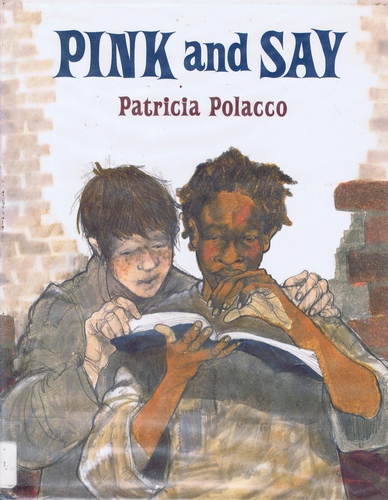
Pink and Say, by Patricia Polacco (Philomel Books, 1994)

715Y+itb7rL

Polacco tells this heart-breaking true story of two young Union soldiers with honesty and sensitivity. At the end of the book, Polacco shares how this story has been passed down through her family for generations. Thank you, Patricia Polacco, for sharing it with us.

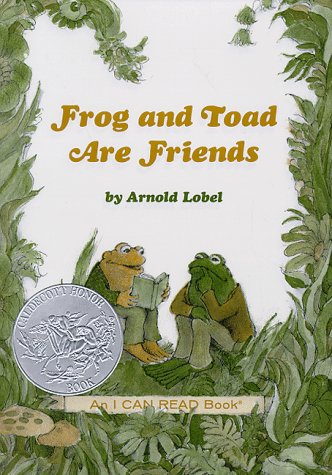
Frog and Toad are Friends, by Arnold Lobel (Harper Trophy, 1970)

Frog_and_toad_cover

Is there anyone who doesn’t love Frog & Toad? In this perennial favorite, Lobel depicts Frog and Toad weathering the everyday trials and tribulations of friendship with humor and compassion.

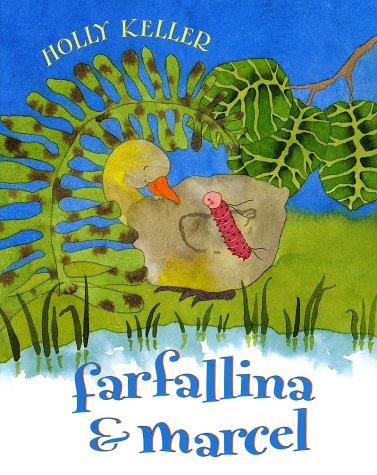
Farfallina & Marcel, by Holly Keller, (Greenwillow Books, 2002)

9780066239323

Holly Keller’s gentle tale follows the friendship between Farfallina, a caterpillar, and Marcel, a goose, and how they withstand separation and BIG changes.

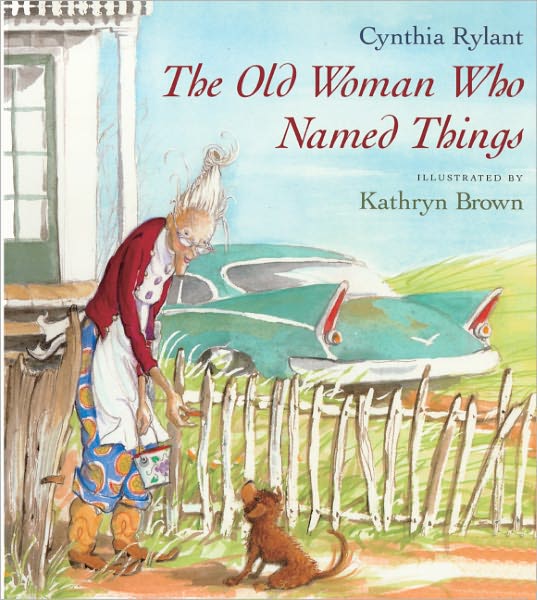
The Old Woman Who Named Things by Cynthia Rylant, illustrated by Kathryn Brown. (Harcourt, 1996)

old-woman-who-named-things

The old woman of the title has outlived all her friends and makes up for her loneliness by only giving names to things that will outlive her. But when a shy, brown dog arrives at her gate, the old woman reconsiders the wisdom of this decision. Rylant explores our universal need for companionship with tender understanding.

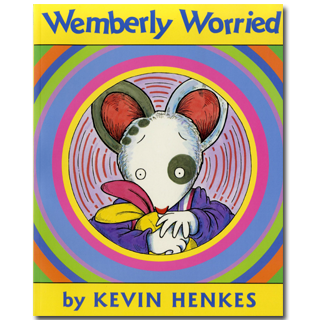
Wemberly Worried, by Kevin Henkes (Greenwillow Books, 2000)

8-19-Wemberly-Worried

Poor Wemberly worries about everything. Her family tells her she worries too much, but this doesn’t stop her. Wemberly’s list of worries gets even longer when she starts school. But when she makes a new friend, Jewel, her worries are forgotten. Wemberly Worried is a fine example of Henkes’s mastery of capturing the feelings of preschool and primary kids.

There are so many other books I could have included on this list. What’s your favorite tale of friendship?

Poetry Friday: “The Picnic”

poetry-friday-1-1

“The Picnic”

We brought a rug for sitting on,

Our lunch was in a box.

The sand was warm. We didn’t wear

Hats or shoes or socks.

Waves came curling up the beach.

We waded. It was fun.

Our sandwiches were different kinds.

I dropped my jelly one.

by Dorothy Aldis

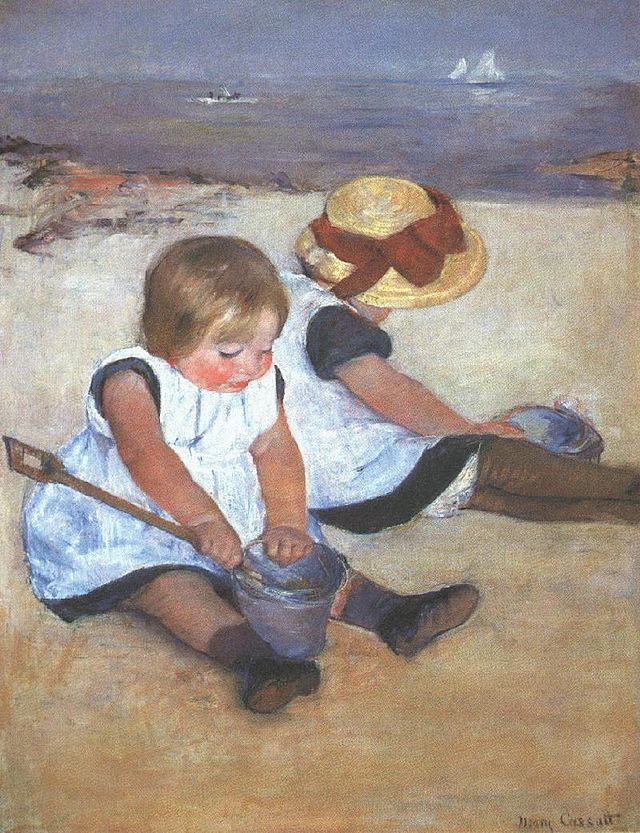
I discovered this poem years ago in Jack Prelutsky’s wonderful anthology, Read-Aloud Rhymes for the Very Young. (Knopf, 1986) And although Dorothy Aldis wrote it almost 100 years ago, children can relate to this simple depiction of a picnic at the beach just as easily today as they did then. First graders love this poem, and the concrete details help those kids who don’t automatically visualize learn to create images from a poet’s words.

"Cassatt Mary Children on the Beach 1884". Licensed under Public domain via Wikimedia Commons - http://commons.wikimedia.org/wiki/File:Cassatt_Mary_Children_on_the_Beach_1884.jpg#mediaviewer/File:Cassatt_Mary_Children_on_the_Beach_1884.jpg
“Cassatt Mary Children on the Beach 1884”. Licensed under Public domain via Wikimedia Commons

Hope you all have time for one more picnic at the beach before summer ends! Please be sure to visit Mary Lee at A Year of Reading for the Poetry Friday Round Up.

Slice of Life: Becoming Fearless

11454297503_e27946e4ff_h

“Play around. Dive into absurdity and write. Take chances. You will succeed if you are fearless of failure.” 

Natalie Goldberg, Writing Down the Bones: Freeing the Writer Within

I highlighted these lines in my copy of Goldberg’s wise and funny book years ago. But I feel like I’m just beginning to truly understand their implication in terms of what is possible for me as a writer.

Why did it take me so long to come to this understanding? Maybe I’m a slow learner. More likely is the fact that I’ve been writing a lot this summer. And through the process of becoming more immersed in the story I’m working on, I have become fearless. Okay, less fearful.

But there’s more to it than just writing more. Two experiences from the past month have played a huge role in helping me get to this point.

Thanks to a conversation Melanie Meehan and Betsy Hubbard had on Twitter a few months ago, I am now part of an online critique group. I cannot overstate how lucky I am to work with Melanie, Stacey, and Julie. They are incredibly supportive and kind, but also offer meaningful suggestions and advice. Another benefit of being part of this group is reading my partners’ amazing writing. Melanie, Stacey, and Julie are all talented writers, and I’ve already learned so much from the pieces they’ve shared with the group.

My experience at art camp earlier this month also helped me be more comfortable to “play around” and “take chances” in my writing. One of the activities that I found especially helpful was creating an “analog drawing” of a problem. In analog drawing, only lines are used to express emotion, among other things. As I sketched my problem, I realized I was creating a narrow doorway with a border that looked very much like battlements. “Is this how I approach problems?” I wondered, appalled at the thought. I began to sketch other doorways, doorways that opened wider and were less rigid. As I continued to draw, I came to the realization that these narrow doorways were impacting my writing.

So it was with these two experiences in mind that I was able to not, in Natalie Goldberg’s words, be “tossed away…by [the] fiasco” of this line in my first draft of a story about a girl whose mother has just died:

“Holly was devastated that she would be separated from her two best friends.”

As my husband might say, “Well, no s*&t, Sherlock.” As soon as I read this line, I knew my critique partners would point out its many weaknesses immediately. I really didn’t want them to even see this lame line. I also thought of my drawing of the opening doors. Why was I afraid to find out how Holly dealt with this devastation?  Just write. Dive in and see where this line leads.

After an hour of revision, one short sentence had become two pages of action and dialogue that reveal much about Holly and her mother. These are the lines (which still need plenty of work) that replaced the original, obvious statement of Holly’s feelings:

“Holly stared in disbelief at the lists taped up on the glass doors. Tears filled her eyes as she turned away and ran from the parking lot toward the playground. “Arrrgh!” she screamed as she jumped onto bottom rung of the jungle gym. Her hands clung to the cold metal of the bars as if they were all that kept her from falling into a giant black cave.”

In her book The Artist’s Way, Julia Cameron writes that we are “creating pathways [into our] consciousness through which the creative forces can operate.” I realize now that I had to write the first line in order to create the pathway to get to the second line. Uncovering deeper understandings about these characters and their story isn’t always possible without a surface level understanding of who they are. Put another way, just as artists have to sketch the outline of a subject before they can add layers of color that create nuance and depth in their drawing or painting, writers have to start with a general idea of what their writing is about before they can add the nuance and depth that creates memorable characters.

While I’m happy about the writing I’ve done over the past month, I’m unsettled by the implications of how I arrived at these insights for teaching. Having the luxury of filling my days with reading, writing, drawing, and thinking about what interests me, at my pace, is not an opportunity we give our students very often, if ever. Children need the time to play and explore, to discover what is possible, not just in writing, but in all areas of their lives. They also need the kind of supportive and nurturing environment my critique group has given me. Finding a way to provide these conditions is critical for anyone, young or old, to create the pathways into their consciousness that will awaken them to all the possibilities within themselves.

Thank you, as always, to StaceyTaraDanaBetsyAnna, and Beth for hosting Slice of Life each Tuesday. Be sure to visit Two Writing Teachers to read more Slice of Life posts.
Poetry Friday: Flowers of the Ocean

poetry-friday-1-1

When I was a kid, my family always spent a week camping in Rhode Island. We spent many days at the beach, but we also spent time at Beavertail State Park in Jamestown. My parents loved to sit and watch the waves crashing over the rocks and the ships in the bay. My favorite part of being at Beavertail was examining the many tide pools that dotted the rocks when the tide was out. I imagined that I was a marine biologist, studying the seaweed and mollusks that braved the harsh conditions of these rocky oases.

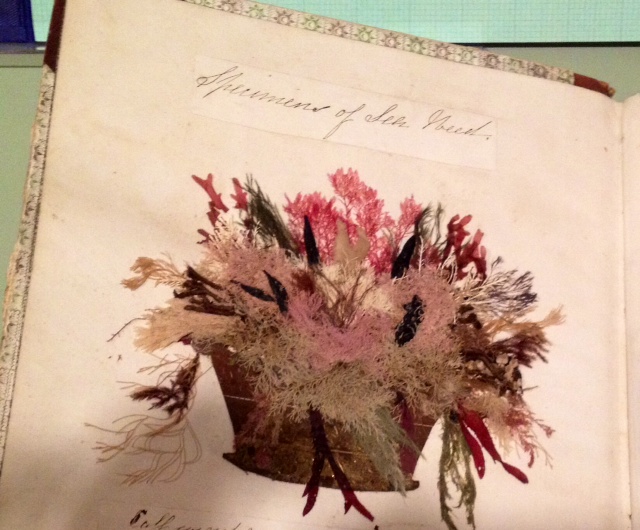
I was reminded of these tide pools last week when a friend and I visited the Yale Center for British Art to see “‘Of Green Leaf, Bird, and Flower’: Artists’ Books and the Natural World,” an exhibit which celebrates the work of “self-taught naturalists and artists [who] recorded and observed the natural world around them from the sixteenth century to the present.” The variety of artistic responses and creativity on display was stunning. In addition to traditional sketches and watercolors, there were collages, works of cut paper, dioramas, and mixed media.

Specimens of Sea Weed, ca. 1840 Yale Center for British Art
Specimens of Sea Weed, ca. 1840
Yale Center for British Art

I found this collage of sea weed specimens especially charming. Apparently creating this kind of sea weed collage was a popular activity in the 19th century, and E.L. Aveline’s poem, “Flowers of the Ocean, often accompanies such pieces. The poem appeared in The Mother’s Fables, in Verse, Designed, Through the Medium of Amusement, to Convey to the Minds of Children Some Useful Precepts of Virtute and Benevolence in 1812. The title page of this volume urges readers to “Find tongues in trees, books in running brooks/Sermons in stones, and good in every thing.” Not bad advice, and the artwork in this exhibit demonstrates that many people followed it faithfully.

Flowers of the Ocean

Call us not weeds—we are flowers of the sea;

For lovely, and bright, and gay-tinted are we,

Our blush is as deep as the rose of thy bowers;

Then call us not weeds—we are Ocean’s gay flowers.

Not nursed like the plants of a summer parterre,

When gales are but sighs of an evening air;

Our exquisite, fragile, and delicate forms

Are nursed by the ocean, and rocked by its storms.

by E.L. Aveline

“Of Green Leaf, Bird, and Flower” is on display until August 10. If you’re near New Haven, it’s worth the trip. Please be sure to visit Janet and Sylvia at Poetry for Children for the Poetry Friday Roundup.

Poetry Friday: Dirge Without Music

poetry-friday-1-1

Dirge Without Music

by Edna St. Vincent Millay

I am not resigned to the shutting away of loving hearts in the hard ground.

So it is, and so it will be, for so it has been, time out of mind:

Into the darkness they go, the wise and the lovely. Crowned

With lilies and with laurel they go; but I am not resigned.

Lovers and thinkers, into the earth with you.

Be one with the dull, the indiscriminate dust.

A fragment of what you felt, of what you knew,

A formula, a phrase remains, –but the best is lost.

The answers quick and keen, the honest look, the laughter, the love–

They are gone. They are gone to feed the roses. Elegant and curled

Is the blossom. Fragrant is the blossom. I know. But I do not approve.

More precious was the light in your eyes than all the roses in the world.

Down, down, down into the darkness of the grave

Gently they go, the beautiful, the tender, the kind;

Quietly they go, the intelligent, the witty, the brave.

I know. But I do not approve. And I am not resigned.

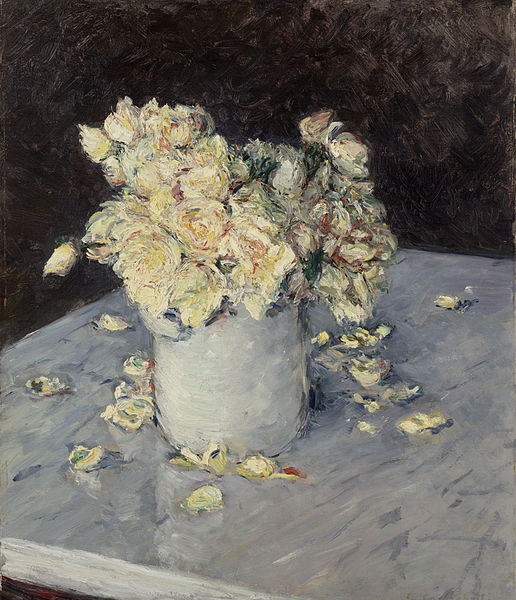
Yellow Roses in a Vase, 1882 Gustave Caillebotte Dallas Museum of Art, The Eugene and Margaret McDermott Art Fund, Inc., via Wikimedia
Yellow Roses in a Vase, 1882
Gustave Caillebotte
Dallas Museum of Art, The Eugene and Margaret McDermott Art Fund, Inc., via Wikimedia

Please be sure to visit Linda at Write Time for the Poetry Friday Round Up.


Slice of Life: Cultivating Creativity

11454297503_e27946e4ff_h

I am not an artist. But over the past year or so, drawing has been nudging its way into my brain. At NCTE, Linda Rief spoke about incorporating several different art techniques into a poetry project. Linda’s presentation inspired Vicki Vinton to invite readers of her blog, To Make A Prairie, to do “something creative” in response to a poem they love. So when I was offered the opportunity to attend an art “camp” for adults, I jumped at the chance. For the past two days, I have been sketching and painting and making collages.  This experience has been everything I hoped it would be and more.

One of yesterday’s activities found us out in the garden, gathering images. It was a classic summer day: bright blue sky, puffy white clouds, insects buzzing from flower to flower, birds chirping from the tree tops. It was lovely just to sit and soak in the beauty of the moment. Our teacher instructed us to do just that, but to write and/or sketch the images surrounding us.

Back in the studio, we were given time to turn our thoughts into haiku, then time to capture the image in watercolor or colored pencil.

I drafted two poems based on my observations:

1.

serene summer day

breezes whisper through pine boughs

lilies trumpet joy

photo-5
First try–tiger lilies are hard to draw!

2.

hidden sweetness

clover blossoms pink as dawn

bees hover and buzz

This experience has been quite an eye-opener, and I’ve had some interesting insights into my writing process through drawing. Driving to the studio yesterday, I was filled with anxiety about this experience. Now I wish I had more than four days to continue to forge what Julia Cameron, in The Artist’s Way, calls “pathways into [my] consciousness through which creative forces can operate.”

Thank you, as always, to StaceyTaraDanaBetsyAnna, and Beth for hosting Slice of Life each Tuesday. Be sure to visit Two Writing Teachers to read more Slice of Life posts.
Time to Stop and…Sniff?

Some of my most productive thinking is done while I’m walking my dog, Lucy. She was up to her usual tricks as we walked along this morning, taking her time to sniff what seemed like every inch of our route. Her pokiness made me think of this post from very early in my blogging life. So I decided to repost it for Throwback Thursday. Hope you make time to let your mind meander today!

Catherine Flynn's avatarReading to the Core

It occurred to me recently as I was urging my dog on for a brisk, calorie-burning walk that she had no desire to burn any calories. Her purpose, utterly opposed to mine, was to meander along in a general forward direction, stopping whenever she felt like it to examine and savor a scent left behind by some creature. As I had this thought, I also realized that if I continued to pull her along, I would spoil a glorious morning by rushing through it. So I let Lucy wander along and sniff, pausing while she was rooting around in a particularly delectable odor. During these breaks in the action, so to speak, I began to think that what she was doing was exactly what I want my students to do: become so thoroughly engaged in the text that they lose sight of everything around them, that they focus on one…

View original post 276 more words

Slice of Life: Opening Our Imagination

Last week, I spent two days working with middle school teachers on curriculum revisions. We got a lot accomplished and had some very productive discussions. But on Monday, one teacher commented about how sorry she was that she couldn’t do any creative writing anymore. This surprised me, because in my mind, creative writing and narrative writing go hand-in-hand. 

When I asked her why she felt this way, she had difficulty explaining. “It’s just not the same. We just don’t have time.” She went on to explain a project that she had done in the past, but skipped this year. In previous years, she had displayed an assortment of pictures she’d gathered from magazines. Each kid chose one that intrigued him or her, then wrote a story to go along with the picture. The finished story was shared with the class, and the students had to guess which photo inspired the story. 

This really upset me. This is exactly the kind of writing kids should be doing more of, not less! So the next morning, I rounded up a collection of post cards from art museums and clippings from magazines and newspapers. These were laid out on the table when the teachers arrived. The teacher laughed when she saw them because she knew exactly what I was thinking. 

Everyone chose a picture and wrote for ten minutes, telling the story they imagined their picture contained. We each got right to work and stayed completely engaged with our writing the entire time. In fact, I think everyone could have kept writing.

We shared, complimenting specific writing moves others had tried. The variety of techniques was impressive, considering the size of our small group.

After this, I read the CCSS narrative writing standards for grade 8. Our work touched on them all except “Provide a conclusion that follows from and reflects on the narrated experiences or events,” and that was because we had only worked for a short time. I pointed out that we now had writing that could also be used to address the language and vocabulary standards. 

My colleague still didn’t seem convinced. “This will take too long,” she said.

“This only took about 15 minutes,” I said.

“Why don’t you start class with this? You know, do it as a warm up,” another teacher suggested.

“They don’t have to finish it, it doesn’t have to become a polished piece,” added a third teacher.

Those were the words she needed to hear. The words that helped her realize that any writing time is better than no writing time. Her students could return to these pieces if they choose to, or not.

Coincidentally, Vicki Vinton had just written a lovely tribute to Maxine Greene, “a champion of the imagination and the arts in education,” on her blog To Make a Prairie. In it she, shared these wise words of Greene’s:

“Opening ourselves to encounters with the arts awakens us, prepares us for deeper living because our imagination is at work, and with imagination, a possibility of our transformation.”

I shared these words with my colleagues when we finished our writing. Everyone agreed that their imagination had been sparked in some unexpected way, and that this was an activity they would turn to again and again. The possibilities are endless.

Young Woman with Ibis, by Edgar Degas Metropolitan Museum of Art
Young Woman with Ibis, by Edgar Degas
Metropolitan Museum of Art

This is the painting I chose to write about. I want to know why this woman looks so wistful, and I want to know more about the birds by her side. Whatever the answers turn out to be, I know my life will be richer because I opened myself to these questions.

Please be sure to visit the Two Writing Teachers blog to read more Slices of Life. (This is my first attempt to post by phone. My apologies for any errors.)