It’s Monday! What Are You Reading?

IMWAYR

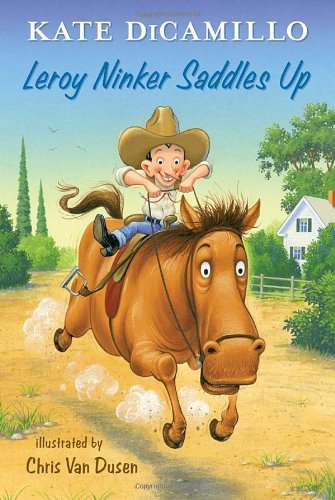
Leroy Ninker Saddles Up (Candlewick Press, 2014) by Kate DiCamillo

Mercy Watson was a staple in my first grade classroom, so I was excited to learn that Leroy Ninker was back with his own adventure. Leroy has repented his thieving ways is now a man with a dream. Inspired by the westerns he watches while working at the Bijou Drive-In Theater, he dreams of being a cowboy. The Bijou’s ticket seller, Beatrice Leapaleoni, encourages Leroy to follow that dream. She urges him to wrestle fate to the ground and get himself a horse.

Leroy does just that. He meets Maybelline, a big horse with a loud whinny, and it’s love at first sight. Silliness ensues, but as in all Kate DiCamillo stories, love overcomes all obstacles. Leroy and Maybelline even end up on Deckawoo Drive for breakfast with Mercy Watson. On the menu? Hot buttered toast, of course.

Leroy Ninker Saddles Up is a perfect read aloud for first or second grade. Mercy Watson fans will enjoy reading Leroy’s adventure with Maybelline on their own. This book is filled with sage advice (“Be a straightforward communicator,” Patty LeMarque tells Leroy.) and self-discovery (Leroy “never imagined he could string so many words together at once.”) But most of all it is a book filled with love, “word after beautiful word…”  
 0763663395.01.LZZZZZZZ  513Q6i-sQFL._SX258_BO1,204,203,200_

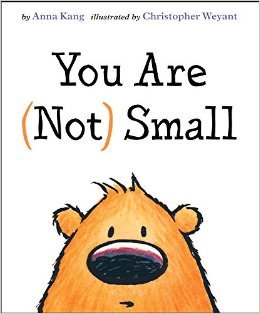
Somehow I missed the debut of You Are (Not) Small (Two Lions, 2014) by Anna Kang and illustrated by Christopher Weyant, last summer. Thankfully, it won the Geisel Award last Monday, so when I saw it at the library over the weekend, I recognized it and brought it home.

Using just a handful of words, Kang’s text and Weyant’s illustrations work together to convey important lessons on differences and perspective. These concepts work on many levels, giving this book wide appeal. Younger readers will easily understand the literal meaning of these differences, and older readers will be able to infer a deeper meaning. Everyone will love that when the characters finally do find common ground, they celebrate by sharing a meal. After all, everyone loves to eat!

In classic picture book fashion, the final page presents a new possibility, opening the door for children to create their own You Are (Not)… story.

Don’t forget to visit Jen at Teach Mentor Texts and Kellee at Unleashing Readers to find out what other people have been reading lately. Thanks, Jen and Kellee, for hosting!
Poetry Friday: Mary Oliver’s “White Eyes”

poetry-friday-1-1

“White Eyes”

by Mary Oliver

In winter

all the singing is in

the tops of the trees,

where the wind-bird

With its white eyes

shoves and pushes

among the branches.

Like any of us

He wants to go to sleep,

but he’s restless–

he has an idea,

and slowly it unfolds

from under his beating wings

as long as he stays awake.

But his big, round music, after all,

is too breathy to last.

Read the rest of the poem here.

Don’t miss Krista Tippet’s recent interview with Mary Oliver at On Being.

Be sure to visit Liz Steinglass for the Poetry Friday Round Up!

Slice of Life: John Rocco’s Blizzard

11454297503_e27946e4ff_hIt’s been snowing for much of the past week, wreaking havoc with assessment schedules, mid-year goal meetings, and learning in general. On the other hand, I have had plenty of time to read, which is always a good thing.

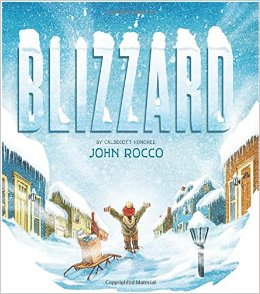
John Rocco’s Blizzard (Disney-Hyperion, 2014) has been out since October, but I didn’t read it until last week. Rocco was ten when the Blizzard of ’78 buried most of southern New England under forty inches of snow. This picture book memoir is an adventure story that all kids will love, whether or not they’ve experienced record-setting snow storms. But as I reread this wonderful story, I realized that this book is a great mentor text, one that will inspire kids to write about their own epic weather adventures.

61TeuiKZunL._SX258_BO1,204,203,200_

The simplicity of Rocco’s language is deceiving. He has done a terrific job choosing just the right word and detail to truly bring this story to life. When John and his sister finally get outside after the snow stops, they realize that walking is “like trying to move through white quicksand.” When John makes his list of necessities before he heads to the store, “candy bar” is the only starred item. And when he returns from his adventure, he tells his family about his “perilous journey.”

Rocco’s word choice also make this book a good choice for an activity like one Lynne Dorfman and Diane Dougherty describe in their recent book, Grammar Matters: Lessons, Tips, and Conversations; Using Mentor Texts, K-6 (Stenhouse, 2014, a must-read for any K-6 teacher). They suggest gathering nouns and the active verbs they’re paired with to spur kids thinking about replacing worn-out words with more vivid choices. Also, Rocco’s uncluttered declarative sentences are perfect for introducing compound and complex sentences. There is even a great example of parallel structure, beginning when John realizes that “I was the only one who had memorized the survival guide.”

The  visual humor of Rocco’s illustrations and his ingenious use of text features give Blizzard an added depth of meaning. The passing days of the week are each spelled out in clever ways that blend into the scenes. “Tuesday,” for example, is spelled out by a squirrel scurrying across the roof. The old-fashioned cash register totals $19.78, and there are clues about John’s fascination with frozen landscapes scattered throughout the book. The fold-out map of John’s trek to the store is a wonder, and I can imagine some kids spending lots of time poring over this winter wonderland.

Blizzard  belongs in every K-3 classroom library, and I can imagine 4th and 5th graders who will love it, too. First and foremost, read this book for the wonderful story that it is. Then go back and take a closer look. You and your students will be richly rewarded. I can’t wait to share this book with my students, if it ever stops snowing!

Thank you to StaceyTaraDanaBetsyAnna, and Beth for this space for teachers and others to share their stories each Tuesday. Be sure to visit Two Writing Teachers to read more Slice of Life posts.

It’s Monday! What Are You Reading?

IMWAYR

Why do we love fantasies? Psychologists have all sorts of explanations about confronting our fears safely, etc., But sometimes it’s simply that a story comes along that just pulls us in and we escape into that world.

9781770495913_p0_v1_s260x420

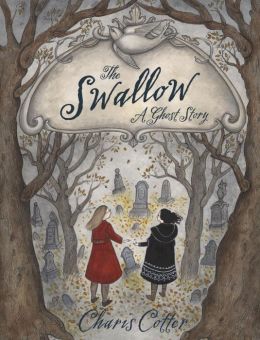
The ability to write such a story is a true gift, a form of magic itself. Charis Cotter has this gift. Her latest book, The Swallow: A Ghost Story (Tundra Books: 2014), is the story of two lonely girls, both of whom introduce themselves by saying they don’t fit in. Polly is eager to be friends with Rose, the new girl next door. Rose, on the other hand, is reluctant to get involved with “one of the dreadful Lacey children who live next door.”

Polly and Rose each narrate their own version of events, and as the book opens, their stories parallel each other. Polly hates having so many brothers and sisters and having to “share everything until there’s nothing left for me. Rose feels she’s “bewitched” because no one, not her parents, teachers or classmates, pays any attention to her. But as Polly and Rose’s friendship deepens, their stories, and their mysteries, become intertwined. Ultimately, they both learn that it’s much easier to face our fears with a friend at our side.

I don’t want to give anything away about the ghost in the title. What I do want to tell you is that this is a beautifully written testament to the power of love and friendship.

21469109

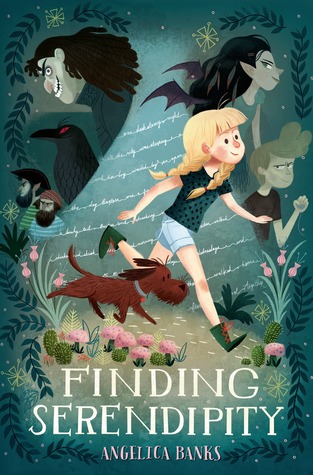
Love and friendship are also at the heart of Angelica Banks new book, Finding Serendipity. (Henry Holt, 2015; Review copy from NetGalley, available February 3, 2015) Summer vacation is just beginning, and Tuesday McGillicuddy is can’t wait for her mother, world-famous author Serendipity Smith, to finish the final adventure of Vivienne Small, a fairy-like creature who lives in the Peppermint Forest and plots “ingenious ways [to] outsmart her archrival, the monstrous Carsten Mothwood.”

Tuesday is worried, though when her mother doesn’t come home for dinner. When she wakes up late at night and realizes Serendipity still isn’t home, she resolves to find her mother. Sitting at her mother’s typewriter trying to find the end of Vivienne’s story, Tuesday begins to write. As she writes her story, a mysterious silver thread begins to spool itself out from the words and wraps itself around Tuesday. Soon, she and her dog, Baxterr, are swept out the window and up into the sky.

Middle grade readers will be swept right along with them. The adventure that follows includes a mysterious fog-filled land, a wise Librarian, near-drownings, and pirates. Along the way, Tuesday learns about being brave and staying true to her friends and herself.

Finding Serendipity is really a love letter to the magic of writing. Angelica Banks (aka Australian authors Heather Rose and Danielle Wood) has created a world where “stories have a power of their own” that take readers and writers on amazing adventures. Readers will discover that writing “might appear to be magical, but the magic comes from nowhere but within you.”

Both of these books do what fantasy does best: expand our horizons and help us see the world in a new way. Both are terrific choices for read-alouds or indpendent reading.

Don’t forget to visit Jen at Teach Mentor Texts and Kellee at Unleashing Readers to find out what other people have been reading lately. Thanks, Jen and Kellee, for hosting!

Slice of Life: Reading Before the Blizzard

11454297503_e27946e4ff_h

Yesterday, in an effort to get everyone home safely before the snow began, we had an early dismissal. Usually this means a four-hour day, but with a blizzard bearing down, the powers that be decided school would end at 11:30, leaving us with a three hours.

What can be accomplished in three hours? With the right book, plenty!

My schedule this week includes introducing the “Contrast & Contradiction” signpost (from Beers & Probst’s excellent Notice & Note: Strategies for Close Reading) to our fourth grade students. Our shortened day gave me just the right amount of time to read Eve Bunting’s One Green Apple, the text we’ll be using in our lessons, to both classes. Despite the excitement generated by the impending storm, the kids were mesmerized as I read this lovely story of a girl who has just arrived in America. Farah doesn’t speak English and is worried about other cultural differences between her and her new classmates. But over the course of the story, she begins to see that there might be a place for her in this strange country. I told the kids ahead of time that I was simply reading the story, that we’d ask questions and share thoughts later. It was such a peaceful way to start the day.

Then I met with a third grade student who is working hard but making s-l-o-w progress. I worry about her every day. Finding books she can read independently that aren’t too babyish is a challenge. I’ve heard much praise for Shannon and Dean Hale’s The Princess in Black lately and knew I had to get this book for this student. So when I saw it on the shelf at Target on Sunday, I snatched it up. Words can’t describe the look on her face when I handed this book to her. As I gave it to her, I said something like, “…if you love it.” Her response? “I love it already.”

There was just enough time to meet with both of my first grade students, and they each read a Rigby leveled reader that was “just right” for them. I watched with pride and respect as they worked through unfamiliar words, using multiple strategies to decode these words. Are they where they “should be” at this point in first grade? No. Will they “meet grade level expectations” in June? Probably not. But they are on their way, and I was happy to give them a chance to practice and polish their skills with an engaging book that pushed them but didn’t frustrate them.

And what did I do when I got home? Read a book, of course!

Thank you to StaceyTaraDanaBetsyAnna, and Beth for this space for teachers and others to share their stories each Tuesday. Be sure to visit Two Writing Teachers to read more Slice of Life posts.

IMWAYR: One Plastic Bag & The Red Bicycle

IMWAYR

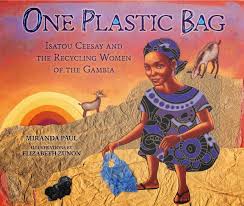
One Plastic Bag: Isatou Ceesay and the Recycling Women of the Gambia (Millbrook Press, 2015; available February 1st) Review copy provided by NetGalley

imgres

Plastic bags are ubiquitous the world over, but in Isatou Ceesay’s village in Gambia they are causing serious problems. Goats eat them, then become ill when they can’t digest them. Water collects in the piles of discarded bags, giving mosquitoes pools for breeding. Isatou comes up with a plan to recycle the bags by crocheting them into purses. Not only is the village clean again, but the purses provide income for the villagers.

Isatou Ceesay is an inspiring role model, and Miranda Paul has done an excellent job making her story accessible to young readers. One Plastic Bag clearly explains the problems caused by discarded plastic bags. Not only will children everywhere be motivated to recycle bags, they’ll be inspired to think outside the box when searching for solutions to problems. Elizabeth Zunon’s collage illustrations, which include pieces of plastic bags, complement the text perfectly.  An Author’s Note includes how Paul came to write One Plastic Bag, as well as a map, timeline, pronunciation guide, and a list of books for further reading.

One Plastic Bag has its own website where you can meet Isatou Ceesay, Miranda Paul, Elizabeth Zunon, and others. You can also learn more at Julie Danielson’s lovely blog, Seven Impossible Things Before Breakfast, which featured an extensive selection of Elizabeth Zunon’s artwork for One Plastic Bag back in November.

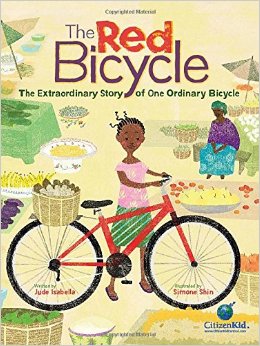
The Red Bicycle: The Extraordinary Story of One Ordinary Bicycle (CitizenKid, division of Kids Can Press, 2015; available March 1st) Review copy provided by NetGalley

6185Q9gFiOL._SY344_BO1,204,203,200_

Jude Isabella and Simone Shin’s “extraordinary story of one ordinary bicycle”  is a perfect book to pair with One Plastic Bag. Young Leo has worked hard and saved his money to buy a bicycle. He rides “Big Red” everywhere and takes such good care of it that even after a few years, it “looks almost brand new.” The problem is that Leo has outgrown his beloved bike, and wants to make sure its new owner will love it as much as he has. The owner of the local bike shop tells Leo about an organization that is collecting bicycles to ship to villages in Africa. Leo gets Big Red ready for its trip across the ocean, shown on a map by a dotted red line. When Big Red arrives in Burkina Faso, Alisetta is excited to get such a beautiful bike. The whole village cheers her on as she joyously learns to ride her new bicycle. Big Red makes life easier for Alisetta and her family by helping them get their sorghum crop to market. After Big Red is damaged in an accident, it’s recycled again. Now an ambulance, Big Red gets health workers to remote villages and sick patients to clinics where they get the care they need.

Readers will be inspired to help get bicycles to African villagers, and information about organizations that collect bicycles or money to transport them is included at the end of the book. Ideas for follow-up activities and facts about Burkina Faso are also included.

Both of these books will be great additions to any K-5 unit on recycling and can be used to inspire opinion writing about the importance of recycling. They will provide children with a look at daily life in Western Africa, increase their  awareness of the importance of recycling, and show them realistic ways they can get involved in these important efforts. 

Don’t forget to visit Jen at Teach Mentor Texts and Kellee at Unleashing Readers to find out what other people have been reading lately. Thanks, Jen and Kellee, for hosting!
Poetry Friday: What Does A Seashell Know?

poetry-friday-1-1

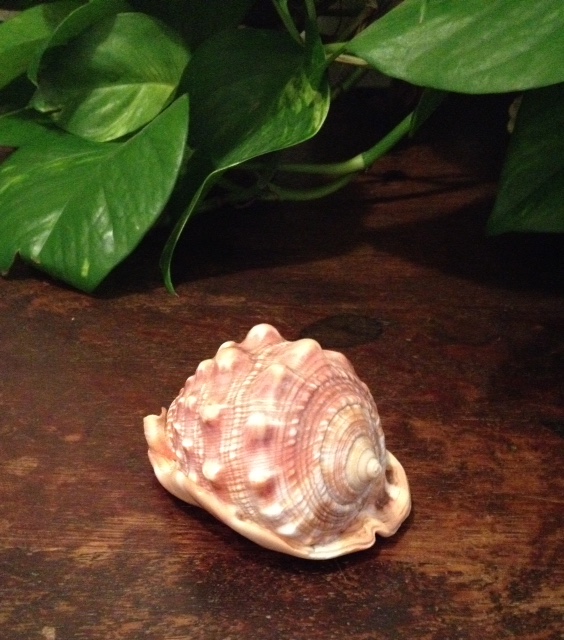
My grandmother gave me my first seashell when I was about five years old. Since then, these treasures from the sea have fascinated me. My grandmother was not a sentimental person; she endured many hardships, including raising three children through the Depression, during her long life. But she was a generous person, not only with material objects, but also with her time, and especially her knowledge. An eighth-grade graduate, she nevertheless was a storehouse of information which she willingly and often shared with her family. Rachel Carson once said that “if a child is to keep alive his inborn sense of wonder, he needs the companionship of at least one adult who can share it, rediscovering with him the joy, excitement, and mystery of the world we live in.” My grandmother was this person to me.

The red helmet shell my grandmother gave me when I was five.

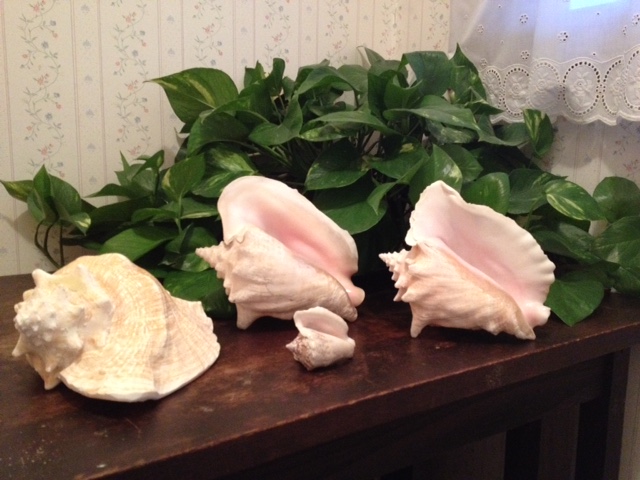
When she became bedridden in her late eighties, my mother, sister, cousins, and I faced the daunting task of emptying her house. Most of the shells that I had loved studying as a child became mine. I’ve shared them with my kids and my students, and I have them scattered throughout my home. An arrangement here, a basket there, a single magnificent conch on a table. I think of my grandmother every time I look at them.

So when Michelle, of Today’s Little Ditty, announced Joyce Sidman’s challenge two weeks ago to write a “Deeper Wisdom” poem, I didn’t even have to think about the subject of my poem. But I had so many ideas, and I really struggled with this. There are many earlier, very different versions. As I worked on this today, I realized that the title really should  be “What Do Mollusks Know?” but that doesn’t have the same appeal, does it?

What Do Seashells Know?

What Do Seashells Know?

To turn their bones inside out,

and spin a swirling castle,

armed with turrets and spikes.

What Do Seashells Know?

To nestle within lustrous walls,

tinged pink, like the sky at dawn,

safe inside their sea-borne home.

© Catherine Flynn, 2015

My collection of conchs.

Please be sure to visit Tara at A Teaching Life for the Poetry Friday Round Up!

Slice of Life: Cure for a Cold

11454297503_e27946e4ff_h

Cure for a Cold

Take one long weekend,

add lots of naps (cat curled up on lap optional);

mix in regular servings of hot tea and ginger ale,

chicken soup and toast;

sprinkle with at least one book, one old movie AND

the latest episode of Downton Abbey.

Feel better by Monday!

My weekend in a nutshell. I did work on my writing yesterday, but nothing came together that’s ready to share. I felt well enough to go to work today, but I’m ready to call it a night. Stay healthy, everyone!

Thank you to StaceyTaraDanaBetsyAnna, and Beth for this space for teachers and others to share their stories each Tuesday. Be sure to visit Two Writing Teachers to read more Slice of Life posts.

Poetry Friday: Wacky, Wild, and Wonderful: 50 State Poems by Laura Purdie Salas

poetry-friday-1-1

I first discovered the work of Laura Purdie Salas in 2008 when she wrote a series of poetry books for Capstone Press. Tiny Dreams, Sprouting Tall: Poems About the United States and Lettuce Introduce You: Poems About Food were perfect for two units my colleagues and I were revising. Since that time my students and I have enjoyed Stampede: Poems to Celebrate the Wild Side of School (Clarion, 2009), Bookspeak: Poems About Books (Clarion, 2011), and most recently, A Rock Can Be… (Millbrook, 2015). (A complete list of Laura’s books can be found here.) So last spring, when Laura put out a call for teachers to collaborate with her on her latest poetry project, I jumped at the chance. I was thrilled to be chosen to create activities for Wacky, Wild, and Wonderful: 50 State Poems.

I loved every minute of working with Laura on this project. These poems, rich in imagery and figurative language, inspired many extension and enrichment activities. They celebrate the diversity of our ecosystems and geologic formations, as well as bring our history to life. I learned about landmarks I’d never heard of, and started planning trips to some of them! Laura graciously gave me permission to share some of her wonderful poems from this collection today. I hope you enjoy them as much as I do!

“Indiana: Time to Walk the Dogwood”

Black-Eyed Susan rings the Bluebells—
“Dinnertime! Come eat!”
Sweet William drinks his Milkweed
with a sweet Mayapple treat.
They eat their toast with Buttercups
and have a lovely talk.
Then dinner’s done and they must take
their Dogwood for his walk.
William wears his Dutchman’s Breeches,
white and pressed and neat.
Susan’s Yellow Ladyslippers
snuggle up her feet.
Dogwood chases Cardinals flashing
red and wild and bright.
His Fleabane’s bad, he needs a bath—
another busy night.
It’s time to watch the Shooting Stars
against the darkened sky.
William plants a kiss on Sue—
Another day’s gone by.

© Laura Purdie Salas, all rights reserved, 2015

This poem, with its bouquet of Indiana wildflowers brought to life, begs to be illustrated. My art skills weren’t up to the task, but I’m sure there are plenty of young artists whose are!

Laura used an impressive variety of poetic forms in this collection. “America the Beautiful” is one of my favorite patriotic songs, so I especially loved “Colorado: Pink Lady (A Poem for Two Voices)” I can’t wait to hear our fourth graders performing this poem!

Long hike down through misty clouds,

O beautiful for spacious skies,

A dizzying descent

For amber waves of grain,

Rocks, ravines, and evergreens—

For purple mountain majesties

That clean-scrubbed pine tree scent

Above the fruited plain!

Pikes Peak, the watchman of the west,

America! America!

You rise from plains below

God shed his grace on thee

Rosy granite etched with ice

And crown they good with brotherhood

You wear the sunset’s glow

From sea to shining sea!

America,

America

Land beautiful

and free.

© Laura Purdie Salas, all rights reserved, 2015

Pike's Peak, (Library of Congress, Public domain, via Wikimedia Commons)
Pike’s Peak, (Library of Congress, Public Domain, via Wikimedia Commons)

This is a must-have collection for any classroom learning about the United States. Laura’s engaging poems will make students’ research about the states more meaningful and memorable. Click here for information on how to get your copy of Wacky, Wild, and Wonderful: 50 State Poems.

Thank you, Laura, for letting me share your work here today, and for giving me the opportunity to be part of this terrific poetry collection!

Be sure to visit Irene Latham at Live Your Poem for the Poetry Friday Round Up, and you can read North Carolina’s poem today on Laura’s blog.

Slice of Life: Finding Words that Fit

11454297503_e27946e4ff_h

I’ve been knitting for about 15 years or so. Hats, scarves, mittens; you name it, I knit it. I love the sense of accomplishment I get from creating something soft and warm out of beautiful yarn. I don’t tackle patterns with a lot of technical stitches or color patterns, but I can adapt patterns and usually knit my way out of any messes I might get myself into.

So I was pretty frustrated over the weekend when the hat I’d spent a couple of hours knitting didn’t fit. I reread the pattern to make sure I hadn’t missed a step, but I hadn’t. The hat just didn’t fit.

What to do? I really didn’t want to tear the whole thing out, although there was no pressure to finish this hat. I decided to try making the ribbing longer, but that didn’t work.

Now I’d spent about four hours on this hat. My irritation was mounting. I knew it was time to put this project aside for a while before I made a decision about tearing everything out and starting over.

I stewed over the hat through dinner and while I cleaned the kitchen. I thought about the pattern, the yarn, adding on to the ribbing. All of these choices were guided by my knowledge and experience. I’ve spent years reading magazines, studying patterns, and talking to expert knitters. I’ve played with different weights and textures of yarn. Yet this seemingly simple hat pattern got the best of me. This fact was frustrating, but not the end of the world. I’ll tear the hat out and try again. Maybe I’ll adjust the pattern so it will fit, or maybe I’ll use a different pattern altogether. I have lots of options.

This whole experience got me thinking about what we expect of our students when we ask them to write. We expect them to make decisions about words and structures, details and sentence length. I know we think we’re supporting them and giving them the practice they need, but are we? Or has the pressure we feel to get everything done by yesterday caused us to make decisions we know aren’t in the best interest of our students?

Have we given them the time they need to pore over books, to study how authors put sentences together, and really talked with them about the power of our words? Or have we judged every word choice and sentence structure? Have we made them change their words to conform to our vision of what their writing should be like?

These questions are really a reminder to myself. I know the conditions kids need to grow and succeed. But I also need to remember what it feels like to have a vision that’s just out of reach. It may be that I need a cheerleader with an encouraging word to keep me going. Or maybe I just need time to figure it out. And that’s what kids need. They need time, lots of time, to play and experiment until they find the right combination of words that are the perfect fit for them.

Thank you to StaceyTaraDanaBetsyAnna, and Beth for this space for teachers and others to share their stories each Tuesday. Be sure to visit Two Writing Teachers to read more Slice of Life posts.