Slice of Life: NCTE in Pictures

11454297503_e27946e4ff_h

Two full days (plus breakfast on the third) at NCTE in Minneapolis filled my brain and my heart with enough  wisdom, friendship, and love to last several months. I’ve spent several hours over the past two days reading my notes, processing ideas, Googling references, trying to process my thoughts and weave a coherent narrative that captures the essence of my NCTE experience. I met so many authors I idolize, so many smart, funny teachers who work so hard, then so generously share their ideas and experiences with others. Each session is worthy of a separate blog post, but that will have to wait for another day. In the meantime, here’s a quick photo recap of some highlights from my NCTE experience.

IMG_3571
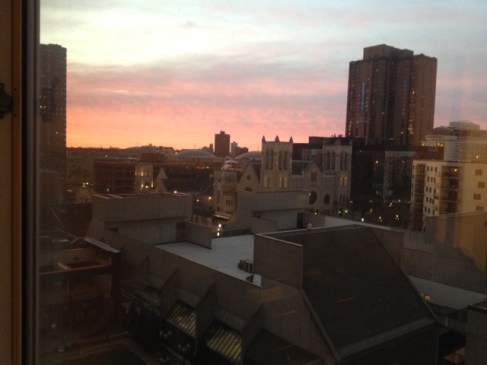
The view from my hotel on Friday morning.
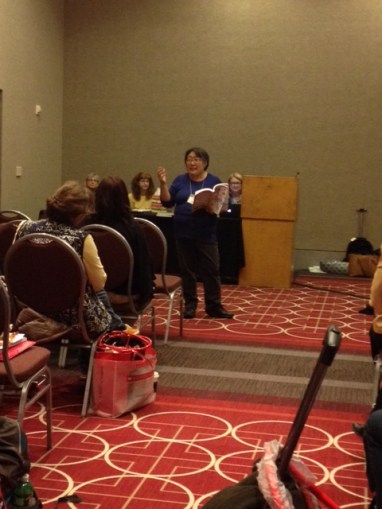
Janet Wong, Sylvia Vardell, Susan Marie Swanson, and Laura Purdie Salas leading a session on poetry, of course!
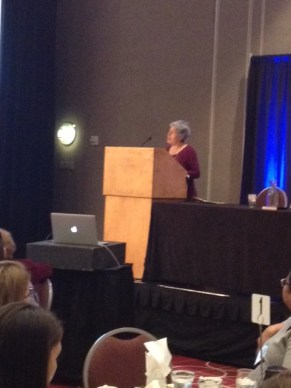
Marilyn Singer sang to the audience when she accepted her award for Excellence in Children's Poetry!
Marilyn Singer sang to the audience when she accepted her award for Excellence in Children’s Poetry.
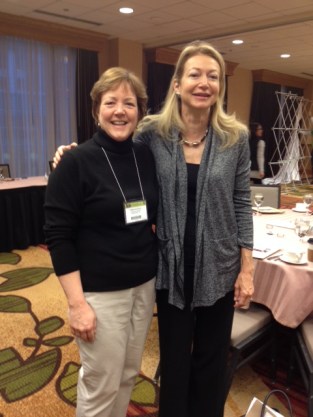
With Georgia Heard at the Wonderopolis Breakfast.
Meeting poet Georgia Heard!
With fellow Slicers at the Wonderopolis Breakfast.

Thank you to StaceyTaraDanaBetsyAnnaBeth, Kathleen, and Deb for this space for teachers and others to share their stories each Tuesday. Be sure to visit Two Writing Teachers to read more Slice of Life posts.

Poetry Friday: Hello from Minneapolis!

poetry-friday-1-1

This morning I’m in Minneapolis for NCTE’s Annual Convention. I’m looking forward to seeing poetry friends old and new at the Children’s Book Award Luncheon tomorrow, where Marilyn Singer will be honored with the Excellence in Poetry for Children Award.

Many wonderful poets live in Minnesota, so I thought it would be fun to do a mini-round up of three of my favorite poets from this beautiful state.

58f00c6bef2bbd23d537263795e0ffb3

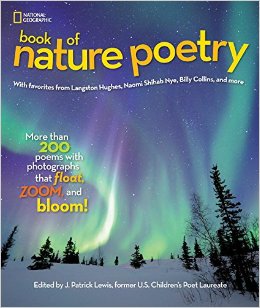
First up is Laura Purdie Salas. Laura has written two picture book poetry collections, and her work has appeared in many anthologies, including the stunning new National Geographic Book of Nature Poetry. Last year I had the honor of writing the activity guide for Laura’s Wacky, Wild, and Wonderful: 50 State Poems, part of her “Painless Classroom Poems” series. Laura graciously allowed me to share these poems with you today.

“Minnesota: The Birth of Old Man River”

A lake creates a lazy stream
That flows through pines and slips away,
Then picks up barges, logs, and steam,
Becomes a mighty waterway.

Walk on rocks across this sliver,
Cross the current, slow and mild.
It will grow to Old Man River
Though for now it’s still a child.

© Laura Purdie Salas, 2015

“Things to Do If You Are a Tree”
by Laura Purdie Salas

Wake up to geese honks and puddle splashes.
Grow a leafy shirt.
Hug birds’ nests and lost kittens.
Stretch toward summer sun.
Shade the backyard.
Drink plenty of rain.
Gulp nitrogen from the soil.
Eat a kite for dessert.
Dance with the wind.
Knit a scarlet fall sweater.
Drop your leaves to protect chipmunks and snakes.
Set your alarm clock for spring.
Settle in for a snowy winter sleep.

© Laura Purdie Salas

Joyce Sidman, a past recipient of NCTE’s Excellence in Poetry for Children Award, was born in Connecticut, but now calls Minnesota home. Her gorgeous picture book poetry collections have won numerous awards and honors.

“Grass”
by Joyce Sidman

I grow in places
others can’t,

where wind is high
and water scant.

I drink the rain,
I eat the sun;

before the prairie winds
I run.

Read the rest here.

Although she’s not a children’s poet, many of Joyce Sutphen‘s poems evoke the beauty of nature and are very accessible to young readers. Sutphen is currently Minnesota’s Poet Laureate.

“Some Glad Morning”
by Joyce Sutphen

One day, something very old
happened again. The green
came back to the branches,
settling like leafy birds
on the highest twigs;
the ground broke open
as dark as coffee beans.

The rest of the poem can be found here.

Please be sure to visit Tricia Stohr-Hunt’s lovely blog, The Miss Rumphius Effect, for the Poetry Friday Roundup.

Slice of Life: Every Picture Tells a Story

11454297503_e27946e4ff_h

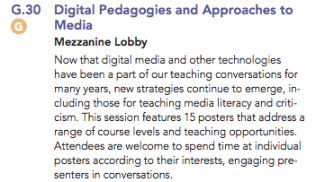
On Thursday, I’ll be heading to Minneapolis for my third NCTE Annual Convention. The previous two conventions have energized and inspired me. It’s such a thrill to meet nationally known educators and authors. I’ve also had a great time meeting fellow Slicers, bloggers, and Twitter friends. This year, my anticipation is even greater because I’ll be presenting “Every Picture Tells A Story” during a poster session on Saturday morning.

Screen Shot 2015-11-17 at 1.20.42 PM  Screen Shot 2015-11-17 at 12.31.45 PM

                                                                                  Screen Shot 2015-11-17 at 12.27.34 PM

Many years ago, when I first read Keane & Zimmerman’s Mosaic of Thought (Heinemann, 1997) and Strategies that Work, by Harvey & Goudvis, I was inspired to find ways to provide my students with additional practice using comprehension strategies to develop their understanding of texts. I also realized that  many kids who struggle with decoding weren’t getting enough opportunities to utilize the strategies. They were exerting so much energy decoding, they had nothing left for the higher level thinking needed for a deep understanding of their reading.

So I began incorporating art into my reading instruction as a way to give kids with decoding difficulties chances to practice and feel successful with comprehension strategies. It was quickly apparent that all students would benefit from learning to “read” the art. I’ve used paintings and illustrations to help first graders develop their retelling skills and third graders practice inferring and drawing conclusions. WPA photographs were a huge help when sixth graders were building background knowledge before reading Bud, Not Buddy. The possibilities for using art and photographs in the classroom are endless.

Paintings, illustrations, and photographs are also perfect for close reading. Strategies spelled out in recent books such as What Readers Really Do: Teaching the Process of Meaning Making (2012), by Dorothy Barnhouse and Vicki Vinton, Falling in Love with Close Reading, by Christopher Lehman and Kate Roberts, and Notice & Note: Strategies for Close Reading, by Kylene Beers and Robert L. Probst can all be introduced and practiced using art. After gathering details and developing ideas, students can also work on incorporating details that support their thinking into their writing, something our students always find challenging.

Constructing meaning from visual images has grown in popularity over the past ten years or so. There are many books and articles that offer additional ideas and suggestions for incorporating  them into the curriculum. Later this week, I’ll be sharing some of these resources, as well as a lesson I recently taught in fifth grade.

Hope to see you in Minneapolis! Thank you to StaceyTaraDanaBetsyAnnaBeth, Kathleen, and Deb for this space for teachers and others to share their stories each Tuesday. Be sure to visit Two Writing Teachers to read more Slice of Life posts.


Poetry Friday: Driving at Night

poetry-friday-1-1

Have you even gone looking for one poem and discovered a new-to-you poet in the process? That’s how I found “Driving at Night,” by Sheila Packa. I instantly fell in love with Packa’s evocation of Sunday drives. Suddenly, I was in the back seat of my mother’s Chevy, watching the world go by.

“Driving at Night
by Sheila Packa

Up north, the dashboard lights of the family car
gleam in memory, the radio
plays to itself as I drive
my father plied the highways
while my mother talked, she tried to hide
that low lilt, that Finnish brogue,
in the back seat, my sisters and I
our eyes always tied to the Big Dipper

Read the rest of the poem here.

Be sure to visit Katya Czaja at Write. Sketch. Repeat. for the Poetry Friday Round Up.

Slice of Life: Cultivating a Passion for Writing

11454297503_e27946e4ff_h

A few weeks ago, on her superb blog, Vicki Vinton asked “What are you doing to cultivate passion in readers and writers in your rooms?”

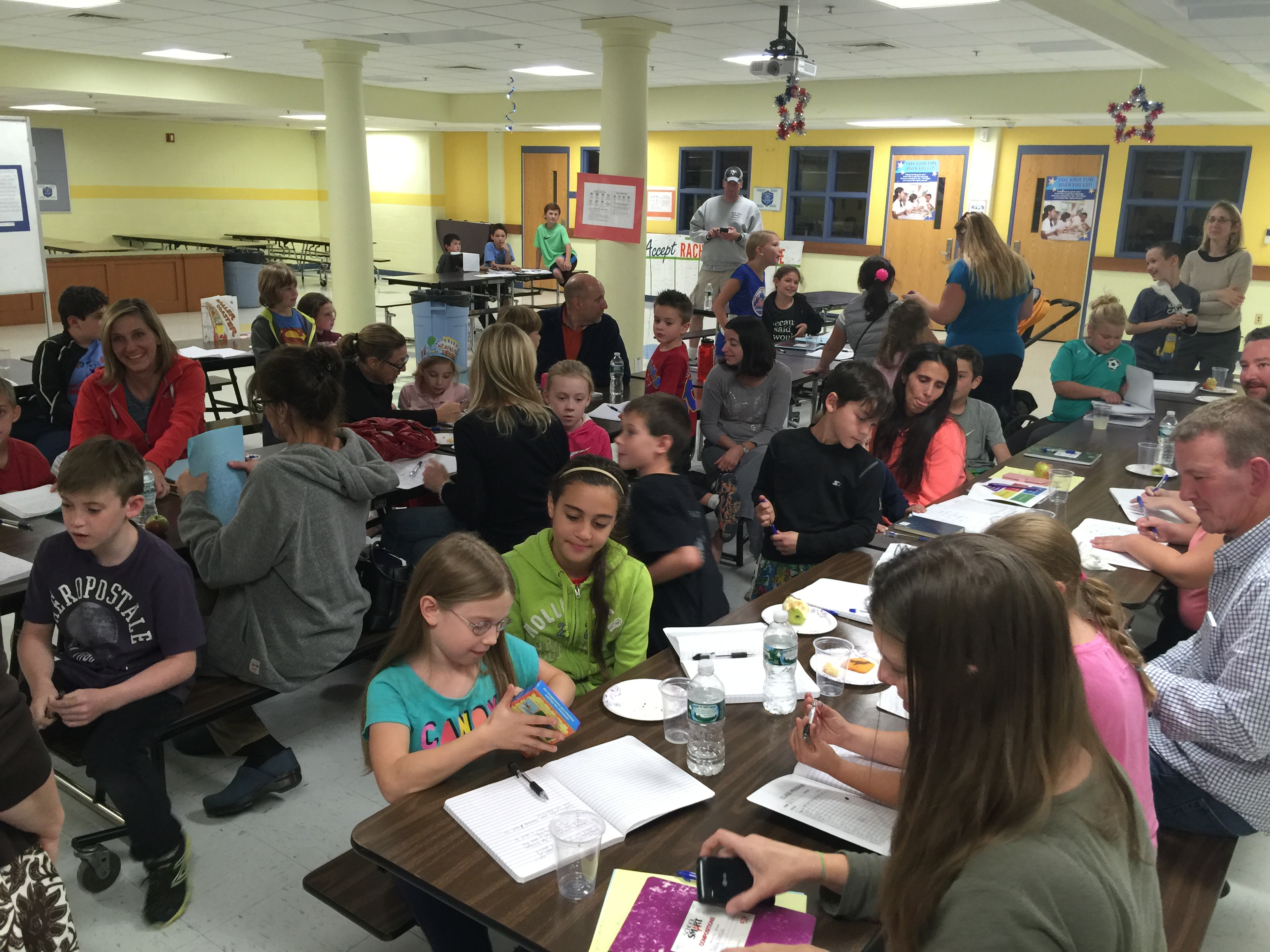
One way I try to cultivate passion is to wear my love for reading and writing on my sleeve. Another is to hold Family Writing Nights. Last winter, inspired by Dana Murphy’s presentation at NCTE, I organized our first writing night, which you can read about here. It was a big success, and many people asked if we could have another FWN. I’d hoped to squeeze it in last spring, but the schedule filled up quickly and there were too many conflicts. So this year I decided to hold our first writing night in the fall, followed by another in February.

File_004

The turnout wasn’t quite as high as last year’s event, but we still had an enthusiastic crowd.

Ralph Fletcher says that “memories are like a fountain no writer can live without.” Hoping to spark some summer memories, I began the evening by reading Marla Frazee’s exciting Roller Coaster (HMH Books for Young Readers, 2006). This gem of a small moment story recalls a child’s first time on that amusement park ride that everyone loves or loves to hate. Either perspective makes a good story!

I also shared a tip I learned recently from Shanna Schwartz shared at a TCRWP Writing Units of Study workshop. She suggested encouraging writers to use their body as a kind of memory map. Shanna said to have kids (or adults) start at the top of their head and ask if they have a story about their hair. I know I have my share of  disastrous hairstyles! Maybe they have a story about a time they cut their hair, or a time they cut someone else’s hair. Moving down, is there a story about a loose tooth? What about that broken arm? Are they wearing a t-shirt they got on vacation or with the name of their favorite sport team? Once you start asking these questions, the list of possible stories is endless!

At the end of the evening, one dad came up to me to say how much he had enjoyed the evening. He told me he’d had a pretty stressful day, and that sitting down to write had relaxed him and relieved some of his stress. The next day, several students brought their notebooks to school to share what they’d written after they got home.

That’s the kind of enthusiasm we hope for in all of our students. It’s incredibly gratifying to help others find their voice as a writer. That’s why I’ll continue to organize Family Writing Nights, doing everything I can to encourage writers of all ages.

Thank you to StaceyTaraDanaBetsyAnnaBeth, Kathleen, and Deb for this space for teachers and others to share their stories each Tuesday. Be sure to visit Two Writing Teachers to read more Slice of Life posts.

Poetry Friday: Witchcraft

poetry-friday-1-1

If you read The New York Times last Sunday, it was hard to miss the fact that Stacy Schiff has a new book coming out. The Witches: Salem, 1692 (Little, Brown) published Tuesday, just in time for Halloween, “delivers an almost novelistic, thrillerlike narrative of those manic nine months,” according to Alexandra Alter.

This period in history has never interested me too much, but after reading the reviews, I’ve added this book to my “to be listened to” list. (Have to save my precious reading time for fiction and poetry!) So imagine my surprise when I found this a few days later as I was reading from The Complete Poems of Emily Dickinson:

1583

Witchcraft was hung, in History,
But History and I
Find all the witchcraft that we need
Around us, every Day—

I love Dickinson’s sly use of the word “hung” and how she alludes to Mother Nature, that most mysterious witch of all.

Illustration for "The Green Forest Fairy Book" by Loretta Ellen Brady, By Alice B. Preston, 1920 (http://www.gutenberg.org/ebooks/35458) [Public domain], via Wikimedia Commons
Illustration for “The Green Forest Fairy Book” by Loretta Ellen Brady, By Alice B. Preston, 1920 (http://www.gutenberg.org/ebooks/35458) [Public domain], via Wikimedia Commons

Happy Halloween, everyone! Be sure to visit Jone at Check It Out for the Poetry Friday Round Up.

Poetry Friday: Oceans of Leaves

poetry-friday-1-1

“When we write, we should play with what pleases us,” Lester Laminack advised the audience at the Connecticut Reading Conference earlier this month. These words have been in my head as I’ve thought about what to write for Carol Varsalona’s “Finding Fall” Poetry Gallery. Once again, Carol has invited teachers, writers, and poets to contribute a seasonal poem, which she will assemble into a stunning visual gallery.

Autumn is a perennial favorite for poets, so finding a new angle is quite a challenge. Then, when I was walking my dog last week, I noticed how she sought out the piles of leaves collected along the roadside. She was having just as much fun in the leaves as I used to when I was little. I had found a topic that pleased me, a topic I could play with. Here is the result.

Oceans of Leaves

When autumn leaves transform
lawns into orange and yellow oceans,
our dog races through the piles
swelling and drifting across the yard.
Like a dolphin, diving in and out
of foamy ocean waves,
she plunges
into heaps of maple leaves
that rustle and crunch
under her sagging belly.
A smile of joy spreads across her face
as she catches the perfect wave
and rides the golden surf.

© Catherine Flynn, 2015

Please be sure to visit Jama Rattigan at Jama’s Alphabet Soup for the Poetry Friday Round Up.

Poetry Friday: National Geographic Book of Nature Poetry

poetry-friday-1-1

I treated myself to an early birthday present on Tuesday, and bought a copy of J. Patrick Lewis’s latest anthology, National Geographic Book of Nature Poetry. What a treasure! Like it’s companion volume, National Geographic Book of Animal Poetry, it is filled with stunning photographs and beautiful, evocative poetry. And it’s exciting to see the work of so many Poetry Friday regulars in this collection! Congratulations to Matt, Kelly, Charles, Mary Lee, Julie, B.J., Laura, Amy, April, and Janet! (So sorry if I missed anyone!) And what would a collection of nature poetry be without poems by Rebecca Kai Dotlich, Georgia Heard, Marilyn Singer, Naomi Shihab Nye, Jane Yolen, and more. I know I’ll be savoring this book for weeks to come.

51ResORj5rL._SX258_BO1,204,203,200_

Many classics are also included, and I was happy to see this old favorite:

“The Morns Are Meeker Than They Were”

The morns are meeker than they were,
The nuts are getting brown;
The berry’s cheek is plumper,
The rose is out of town.

The maple wears a gayer scarf;
The field a scarlet gown.
Lest I should be old-fashioned,
I’ll put a trinket on.

by Emily Dickinson

unnamed
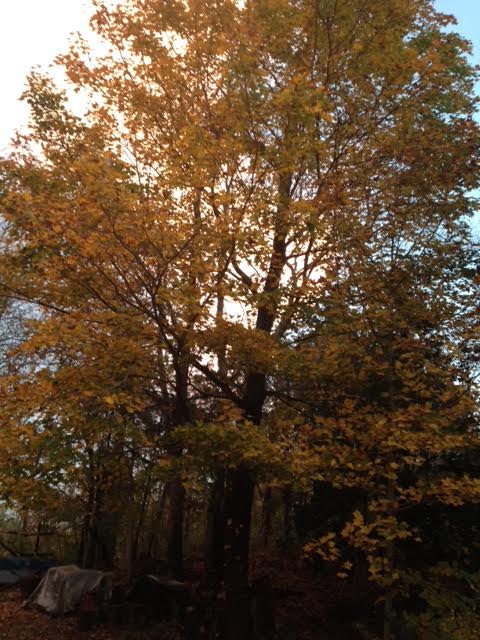
One of our maple trees, wearing its “gayer scarf” in the morning sun.

If you haven’t gotten a copy of this gorgeous book yet, don’t delay! In the meantime, be sure to visit Amy Ludwig VanDerwater, whose wonderful poem “Petrified Forest” is included in the book, at The Poem Farm for the Poetry Friday Round Up.

SOL: Choose Kind

11454297503_e27946e4ff_h

“When given the choice between being right or being kind, choose kind.”
Dr Wayne W. Dyer

I was reminded of this famous precept last Friday evening at the airport. My son and I were flying to Phoenix for my daughter-in-law’s memorial service. I arrived at Michael’s apartment in plenty of time for our 8:10 flight, and by 5:00 we were standing on the curb waiting for the car he had ordered.

We waited. Michael called the car company and they assured him that the car was “minutes away.” We waited. No car. He called again.

“What! They’re not there yet? I’m sending another one,” the dispatcher said.

Another 15 minutes. Now we were worried. We waited five more minutes and knew we couldn’t wait any longer. We got in my car and headed for the Belt Parkway. At 6:00. On a Friday evening. Before a long weekend. Traffic was moving at a snail’s pace.

While Michael was driving, I was on my phone looking for other flights in case we missed ours. Nothing. There were no other flights leaving from anywhere in the New York area that would get us to Phoenix in time for the service. Finally we decided that I would drop Michael off at the terminal so at least he would make the flight.

After I dropped him off, I parked in JetBlue’s short-term parking garage. The trek from this garage to the terminal is a long one, and I ran as fast as I could. By 7:40, sweating and out of breath, I got to the check in counter. I explained to the man that I had given my credit card to my son so he could get his boarding pass and could he please help me. He gave a cursory glance to his computer and said, “You’re late. Check in is closed.”

I tried to be calm and said, “I know I’m late, but I have to get on that plane.”

“You’re too late.” With that he turned from me to another customer.

Frantic, I ran to the other end of the terminal, hoping to get a different answer from a different person. With the clock ticking, I explained the situation once again. This time, the woman very calmly picked up the phone, then started typing. I held my breath as she continued to talk to the person at the gate. Within minutes, I had a boarding pass in my hand and she was walking me to the part of security where late arrivals are moved to the head of the line.

I think I thanked her at least 20 times during our short walk. People in line ahead of me with later flights let me go ahead of them, and I got through security in record time.

Running once again, I arrived at the empty gate at 8:00. The attendants there assured me the plane wasn’t leaving without me and I didn’t have to run. The flight attendant on the plane took my suitcase, stowed it for me, then showed me to my seat.

The look on my son’s face when he saw me walking down the aisle was full of amazement and relief. Because I was so late, my seat had been changed, so I couldn’t sit next to him. But that was okay. We were both on the plane.

After all that, we ended up being delayed. They were still refueling and stowing the checked baggage after I was in my seat. We made it to Phoenix and the memorial service was lovely. But I would have been devastated if I hadn’t been there to support my son through yet another very difficult day.

I’m not sure why the first person I talked to was so unwilling to help me. In the end, it doesn’t really matter. I’m just grateful that someone was willing to help me. And I hope the next time someone asks him for help, he’ll do the right thing, and choose kind. 

Thank you to StaceyTaraDanaBetsyAnnaBeth, Kathleen, and Deb for this space for teachers and others to share their stories each Tuesday. Be sure to visit Two Writing Teachers to read more Slice of Life posts.

Slice of Life: A Day at Teachers College

11454297503_e27946e4ff_h

Four days of conferences in three different locations in one week sounds like too much, doesn’t it? But I did it, and survived! From a day at Teachers College with six colleagues for a day-long immersion into the Writing Units of Study to the Connecticut Reading Conference with Peter Johnston, Lester Laminack, Christine Hertz, Mary Howard, and Linda Hoyt, my brain felt like it was ready to explode as I drove home Friday afternoon. But in a good way!

Our day at Teachers College was a huge success. I spent the day with my two first grade colleagues learning more about writing workshop in K-2 from the amazing Shanna Schwartz, while four teachers from our school spent the day learning about 3-5 writing workshop with Lucy Calkins. Needless to say, we had plenty to talk about on the drive home.

3-5 teachers loved meeting Lucy Calkins.

I took nine (!) pages of notes, so I’m not going to attempt to distill them all into one post. Rather, here are a few of my key takeaways.

“Writing Workshop Bill of Writers”
“We apprentice children in the life of a writer”

All children have the right to…

Time to write
Units based in authentic genres
Knowledge of conventions
Skills and strategies for writing
Understanding of the writing process
Collaboration

In other words, our students deserve nothing less than to do “what real writers do in a writing life.”

Shanna stressed the importance of collaboration and feedback, and I love this idea: “Our best writing is the writing we work on on our own and with feedback from others. Feedback is a gift.”

On revision, Shanna had this to say: “Revision is a complement we give our best work.” Isn’t that a wonderful idea?

The importance of read alouds and mentor texts was also emphasized: “A writer can’t write what they haven’t heard or read.” and “Read alouds help readers/writers think about what writing can sound like.”

Shanna also talked about the importance of beginning the year with narrative writing. She explained that narrative is the “first way we exist in the world” and that “when we meet people, we tell them our story.” Shanna reminded us that “story is the first kind of reading we do.” Finally, she pointed out that “story is the building block of every other kind of writing…small stories are often included in informational and opinion writing.”

When conferring with children, Shanna suggested we begin by saying, “Tell me about what your working on in this story.” After listening to the writer’s response, “think about what will make this writer stronger and more independent.” She also urged us to “give compliments that are productive by noticing a behavior and tell them the effect that behavior” has on their writing. This type of praise will “encourage them to do it again,” and thus help them become more independent. Independence is the goal, after all.

If there was any common thread to all I learned last week, the idea of independent learners is it. As Lucy Calkins wrote in A Guide to the Reading Workshop: Primary Grades (Heinemann, 2015), “the goal…is not only to teach kids to read [and write], but to help them grow up to be people who value reading [and writing].

By the way, look who got a shout-out:

FullSizeRender-2

Pretty good company, don’t you think?

Thank you to StaceyTaraDanaBetsyAnnaBeth, Kathleen, and Deb for this space for teachers and others to share their stories each Tuesday. Be sure to visit Two Writing Teachers to read more Slice of Life posts.