School ended last week and I spent a good part of last weekend reading and relaxing. As I sorted the stacks of books I’ve accumulated over the past few months, I found Searching for Stars on an Island in Maine, by Alan Lightman. In her rave review, Maria Papova called Lightman’s book “a splendid read in its entirety,” and I ordered it immediately.
The intersection of science and spirituality is endlessly fascinating to me, and Lightman’s poetic approach to the universe captivated me at once. One line was in my mind when I went for a walk at dawn the other day: “All is in flux.” I hope Mr. Lightman won’t mind that I “borrowed” his line to begin this poem.
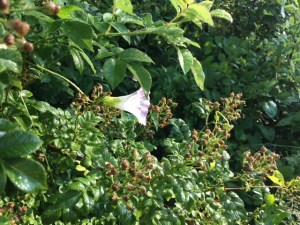
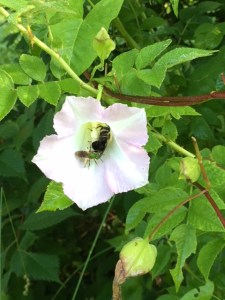
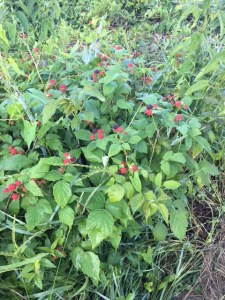
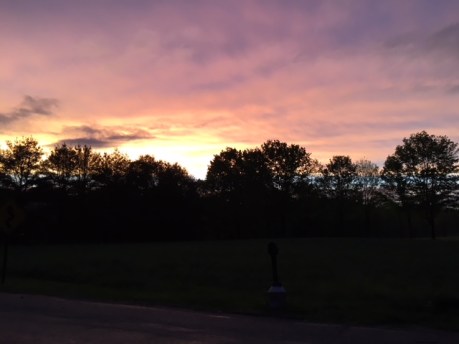
All is in flux. Shimmering in dawn’s golden light, morning glories hum with breakfasting bees. Raspberries ripen. Maples dazzle and beckon. One… two… three crows alight on the highest branches. Their caws echo across the countryside. I step into this dew-dappled morning, searchingfor what is true.
Today is really only the second day of my summer break. (I don’t think the weekend should count.) I am working hard at looking busy and being productive. But honestly, I haven’t accomplished much and feel a little adrift.
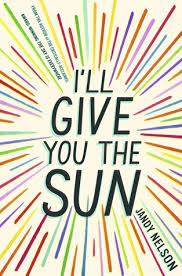
One thing I have managed to do is read the first chunk of I’ll Give You the Sun, by Jandy Nelson for an online reading group organized by Sally Donnelly. This Printz Award winner and Stonewall Honor Book was on many Best-Book lists when it was published, deservedly so. At first, I was so caught up in the story that I missed the nuances of Nelson’s writing. I’m rereading now with ever-increasing awe at the power of this book.
Thank you to Stacey, Betsy, Beth, Kathleen, Deb, Kelsey, Melanie, and Lanny for creating this community and providing this space for teachers and others to share their stories every Tuesday. Be sure to visit Two Writing Teachers to read more Slice of Life posts.
Our librarian has been culling our collections and leaving a box of books for us to look through before these withdrawn books are…(I’m not sure what, maybe sent to the Island of Withdrawn Books?) Of course I peruse the box each day, hoping to find a treasure or two. So you can imagine how happy I was to find this the other day:
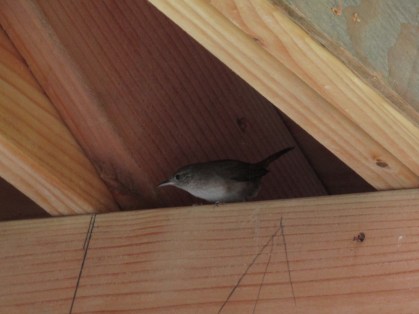
I’ve always loved Fisher’s poetry. Her keen observations and sense of humor make her work timeless. This spring, we have wrens nesting in the roof overhang of our new porch. They are dedicated parents, making countless trips back and forth from the nest to the nearby bushes for insects. As usual, Fisher gets their behavior exactly right in this sweet poem.
“The Wrens”
by Aileen Fisher
The wrens who rent our birdhouse
come back before it’s May.
They hang their hats inside the door
and settle down to stay.
We never have to send a bill,
so punctual are they…
They start each morning loud and clear,
to sing the rent away.
On another note, I am thrilled to share that two of my poems appear in The Quickwrite Handbook, Linda Rief’s new book full of mentor texts to “jumpstart…student’s writing and thinking.” Both poems first appeared here and here. Thank you, Linda, for including my work in your book!
Please be sure to visit Carol at Carol’s Corner for the Poetry Friday Roundup.
“One touch of nature makes the whole world kin.” John Muir
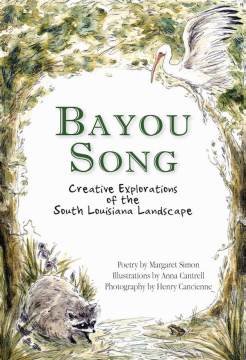
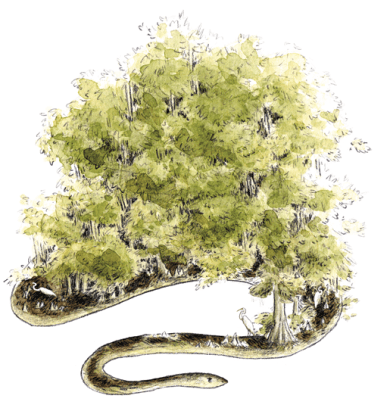
Welcome to the second stop on the blog tour for Margaret Simon‘s new book, Bayou Song: Creative Explorations of the South Louisiana Landscape(University of Louisiana at Lafayette Press, 2018)! Over the past few years, I’ve been lucky to get to know Margaret both as a writer and a friend through our online critique group. Sharing early drafts of your writing with another person is an act of trust, but it is also an invitation. An invitation to learn more about the truth of that person’s heart. The south Louisiana landscape is woven into Margaret’s heart and has always been integral to her writing. So it was no surprise when she first mentioned her idea for this book. Watching Bayou Songgrow from that tentative glimmer to a published book and been a thrill and an honor.
Annie Dillard once wrote “there is no such thing as an artist–only the world lit or unlit, as the world allows.” I’m not sure I agree with the first part of this thought, but Margaret is definitely someone who sees “the world lit.” This light shines throughout Bayou Song, creating a brilliant mosaic that brings Margaret’s beloved Bayou Teche magically to life.
This book is an invitation to linger and get to know the Bayou Teche. From the opening pages, where we learn legend of the bayou’s origin, to “Bayou Sunset Tanka,” the collection’s final poem, we are captivated. “I Am a Beckoning Brown Bayou” literally invites us to “stay awhile” and get to know the many moods of this mysterious world.
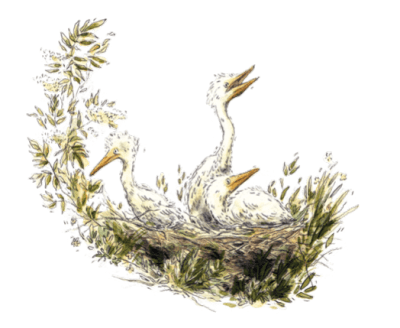
Margaret’s poems introduce us to the many plants and animals who make their home in the bayou. Nutria, with their “bright orange tusks” were unfamiliar to me. Other inhabitants were familiar, but Margaret’s vivid images helped me see them in a new light. I will never think of crawfish again without thinking of their “round peppercorn peepers.” And of course baby egrets are “feather-glistening,” “worm-juggling,” and “nest snuggling.”
Anna Cantrell’s illustrations and Henry Cancienne’s photographs complement Margaret’s words beautifully, bringing the bayou to life in a way any one medium couldn’t individually. Their collaboration is similar to the collaboration of our critique group. The work of each member makes the others stronger. Henry Cancienne’s photos provide visual support for readers who aren’t familiar with the diverse inhabitants of the bayou. Anna Cantrell’s watercolors, from two-stepping herons to “mischievous” raccoons bring Margaret’s whimsical images to life. Together, they create a tapestry of “paper-lace fragments of butterfly wings” and the “waving leaves of cypress trees”
The inclusion of factual information about the plants and animals who call the bayou home adds another dimension to this incredible resource. Through the “Write It” and “Sketch It” sections, Margaret extends an invitation to readers to learn more about their own environment. This appeal to write and draw will help readers see the similarities between the animals that live in habitats familiar to them–raccoons, toads, turtles–as well as understand the adaptability of these animals that allow them to thrive in a variety of habitats.
I am grateful to Margaret for inviting me to share this journey with her. Of our group she writes, “You hold me up. You give me…confidence…” Our words are our own, but by sharing and letting others help us shape them, they become stronger, we become stronger. Strong enough to write an amazing book like Bayou Song.
Don’t miss the next stops on Margaret’s blog tour to learn more about Bayou Song!
Thank you to Stacey, Betsy, Beth, Kathleen, Deb, Kelsey, Melanie, and Lanny for creating this community and providing this space for teachers and others to share their stories every Tuesday. Be sure to visit Two Writing Teachers to read more Slice of Life posts.
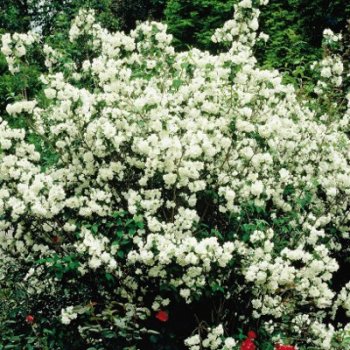
Syringa, which is also known as mock orange, is in full bloom here in my corner of Connecticut, and it always reminded of the massive bush in my grandmother’s yard. I grew up next door to my grandmother and spent as much time playing in her yard as I did in my own. Our shrubs and flowers were grown from cuttings and divided clumps of her shrubs and flowers, and I loved them all. So when my parents sold the house I grew up in, I divided as many of these heirlooms as I could. I still have peonies, iris, and poppies that once bloomed in both yards. The only plant that didn’t survive the move was my grandmother’s syringa (also known as mock orange).
We moved when Grandma’s syringa was blooming, its branches curved earthward by the weight of a thousand snowy blossoms. Their sweet, heady scent, the scent of my childhood is now tinged with sadness and longing for a home that exists only in my heart.
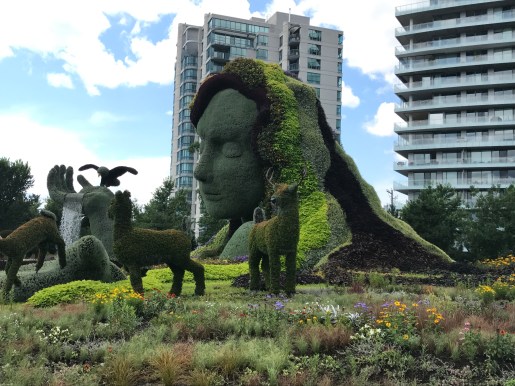
Today’s Poetry Friday Roundup is being hosted by my friend Margaret Simon at Reflections on the Teche. About a month ago, Margaret invited Poetry Friday regulars to participate in “More Than Meets the Eye,” a photo swap “in which we’d send a photograph from our own geographic area for our exchange partner to write a poem about.” Margaret paired me up with Amanda Potts, who hails from Ottawa, Ontario. Amanda sent me several photos to choose from, but I was drawn to this photo immediately:
Mother Nature Sculpture, MosaiCanda
I chose to write a villanelle because I wanted to capture the cycle of the seasons. Also, as a French form that is now widely used by English poets, I thought it would reflect two cultures of modern Canada. You can learn more about MosaiCanada, a “horticultural wonder” that commemorated Canada’s 150th birthday last year with scenes from Canada’s past, here.
A Villanelle for Mother Earth
Seasons come and seasons go, there’s not a thing she doesn’t see. Through her hands, all life flows.
She wears a crown of rainbows, perfumed by butterfly and bee. Seasons come and seasons go.
Abundant gifts she bestows, plenty pours from every tree. Through her hands, all life flows.
Across the land wild winds blow, an echo of her melody. Seasons come and seasons go.
Rivers fill with melting snow beneath bald eagle’s aerie. Through her hands, all life flows.
Her gifts are ours to borrow; “Care well for me,” her plea. Seasons come and seasons go; Through her hands, all life flows.
Before VHS, DVR and DVDs, favorite movies were a once-a-year treat. Each December my mother looked forward to White Christmas. And even though it terrified me, I couldn’t wait for the annual screening of The Wizard of Oz.
Because of that movie, I have always lived in fear of tornadoes. They aren’t common in Connecticut, but they aren’t unheard of, either. On Tuesday, my area experienced at least four tornadoes and two microbursts. My family and home were unharmed, but many of my friends and neighbors weren’t as lucky. A poem about these powerful storms was the only logical choice this week. Thank you, Irene Latham, for having the perfect one on your blog!
The Tornado By Irene Latham The story comes grumbling
over the hill. It tumbles
hailstones and cracks tree-trunks.
It craves front-page news,
so it musters all speed
and muscle. It tears across
Main Street, steals shingles
and un-parks cars.
It whirls, whistles
screams and teems with twists
no one sees coming.
“…just stare out the window and write what you see.”
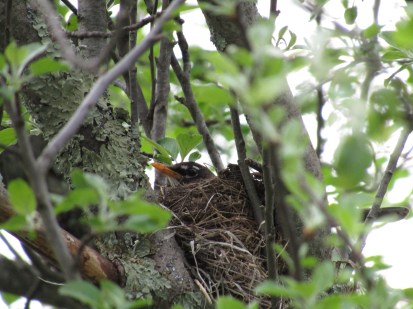
Some months, I ponder these challenges all month. But I’d been watching this robin for a few weeks, so this month I knew immediately what to write about.
Bedecked in fresh leaves, delicate and lithe, an old apple tree, its limbs loaded with fat pink blossoms ready to burst open, stands outside my window.
Concealed within this veil of green, a robin sits on her nest, still as a statue, guarding her eggs from the jays and crows who screech and caw in the branches above her,
“The more clearly we can focus our attention on the wonders and realities of the universe,
the less taste we shall have for destruction.” ~ Rachel Carson ~
Have you ever noticed that sometimes you read or hear about a topic and then, suddenly, it’s everywhere? The connection between science and poetry isn’t news to Poetry Friday regulars, but in the past week, this relationship was gloriously celebrated by Maria Papova, Janna Levin and friends at the second Universe in Verse, “an evening of science-inspired poems read by artists, writers, scientists, and musicians, part protest and part celebration.” The event, which was livestreamed, was dedicated to the legacy of Rachel Carson and included readings of poetry celebrating everything “from the oceans and trees and volcanos to bees and kale and the armadillo.” It was a truly inspiring event.
Then I found this article about the intersection of math and poetry, which led me to JoAnne Growney’s blog, “Intersections–Poetry with Mathematics.” Growney writes about both mathematical forms, including Fibs, and poems about math and declares, “let our STEM be STEAM.” Indeed!
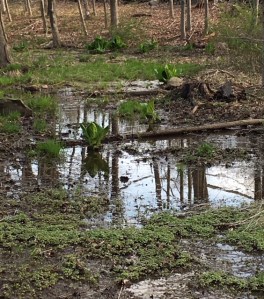
Further inspiration came from my poetry pal Christie Wyman, who wrote poems about vernal pools every day in April. (Congratulations, Christie!) Thanks to her, I’ve recently been paying close attention to a vernal pool near my home. After two days of above-average temperatures, this scene greeted me on my morning walk yesterday:
The unfortunately named skunk cabbage caught my attention. Kale, armadillos, even skunk cabbage, all are worthy subjects of our attention, our words.
“Fib for a Skunk Cabbage”
Like
hands,
ancient
and veined, skunk
cabbage leaves unfold,
arise from hidden vernal pools boldly proclaiming, “Spring is here! Spring is finally here!”





 Reading to the Core