Today is Reading to the Core’s second birthday! It seems completely appropriate that today is Tuesday, the day I usually participate in Slice of Life, a weekly writing challenge hosted by Two Writing Teachers. During my first year of blogging, I posted a grand total of eleven times. But last year, I committed myself to blogging, and this commitment has led to many positive changes in my writing and my life.
My life is much richer because of the connections I’ve made through blogging. It was a thrill to met several “slicers” personally during the past year, and I’ve also forged many online friendships. The stories shared by this community run the gamut from hilarious to heart-breaking, and they have inspired me in countless ways.
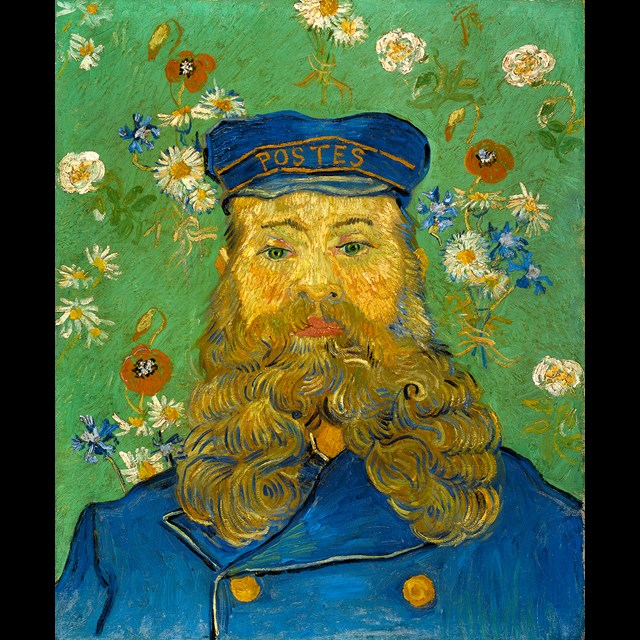
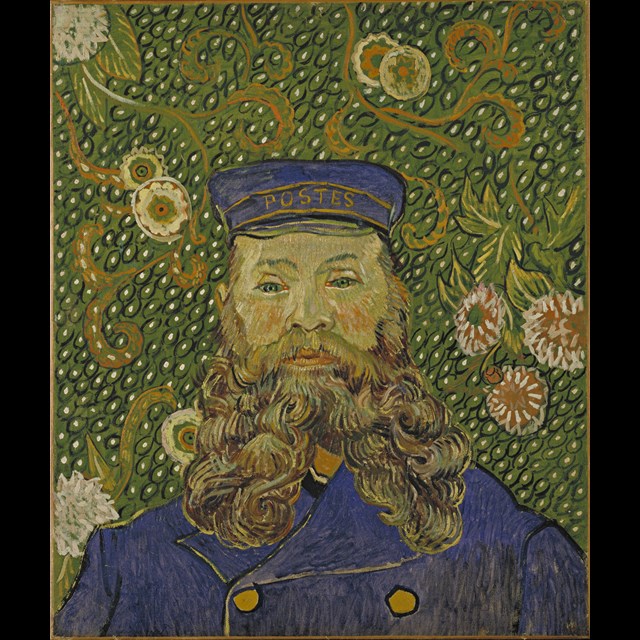
Not long ago, I visited the Philips Collection in Washington, D.C. to view “Van Gogh Repetitions,” a show devoted to Van Gogh’s artistic process. I never realized that there were different versions of some of Van Gogh’s most famous paintings (five different versions of “The Postmaster” alone!). The changes from painting to painting were sometimes dramatic, but more often were subtle, barely noticeable if you weren’t paying close attention.
It seems to me this is the pattern of life, and this has been true of my writing over the past two years. Most changes were minute, and often recognizable only in hindsight. Other changes were seismic; real breakthroughs for me as a writer. Taking part in last March’s daily Slice of Life Challenge was one of these watershed moments for me. I truly felt that I was part of a community, and this made me more confident about sharing my writing. I even branched out and began taking part in other memes, It’s Monday! What are You Reading? and Poetry Friday in particular.
Being a teacher who writes has improved my teaching, both with my students and the teachers I work with. I can help them through the hard parts (and as Katie Wood Ray would say, “they’re all hard.”) because I’ve worked through the hard parts myself. I can show them drafts full of cross-outs and arrows and say, “See, it can be done.”
This generous online community has also enriched my teaching. Blogs and tweets are full of ideas, resources, and book suggestions. My students have Skyped with authors, enjoyed books you’ve shared in give-aways, and benefited in countless ways from your collective brilliance.
So even though it’s my blog’s birthday, today I’m celebrating all of you, my PLN, my friends. Thank you for two exciting and inspiring years. I’m looking forward to many more!
Don’t forget to head over to Two Writing Teachers today to read what others are celebrating today.
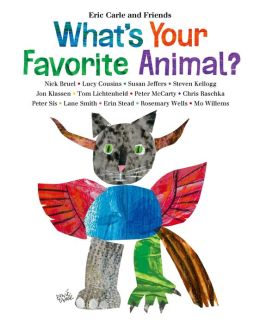
Take a five year-old’s favorite question, add Eric Carle’s joyous spirit and thirteen of the most accomplished illustrators working in children’s literature today and you have What’s Your Favorite Animal? (Henry Holt, 2014). This book is a glorious celebration of animals and art. Each artist responded to this important question with a short piece of writing and an illustration. The writing ranges from heartfelt recollections of childhood pets to whimsical imaginary pets. Nick Bruel’s Bad Kitty even gets to add her two cents.
The writing that accompanies each illustration is rich with description and rationale. Peter Sís describes “…many families coming with their carps to the river and blue fish swimming toward the ocean. This gave us all hope!” Chris Raschka’s keen observation of the lowly snail gives readers a new appreciation of an animal who’s often overlooked: “But all her life she works her craft, adding to it day by day, until, when she dies, she leaves us something of great beauty.”
These words could describe the work of these artists, who have given the world so much beauty through their books. It seems fitting, then, that proceeds from What’s Your Favorite Animal? are being donated to The Eric Carle Museum of Picture Book Art. The Carle, dedicated to inspiring “a love of art and reading through picture books,” is one of my favorite museums. (Read more about my last visit here.)
What’s Your Favorite Animal? is a perfect mentor text for young writers making their first attempt at opinion writing. The CCSS calls for both Kindergarten and first grade writers to “write opinion pieces.” What better topic than animals, something every child has an opinion about?
I also found this book on my most recent trip to the bookstore:
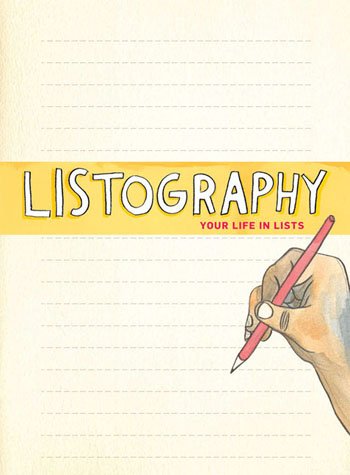
Listography: Your Life in Lists Chronicle Books, 2007
Lisa Nola, creator of this book/journal explains in a note that the book “is designed to help you create your autobiography.” But I was drawn to Listography for a different reason. It’s ideal for using with kids when they complain, “But I don’t know what to write about.” WARNING! Don’t just hand this book to students; adults are definitely the target audience. Rather, choose an appropriate page and write the topic on the board. Like What’s Your Favorite Animal?, everyone has favorite toys, games, and songs.
This book appealed to me on another level, though. I don’t usually need lists like this for ideas of what to write about. Rather, I can see using this book and these list ideas to get to know my own characters better. I have seen many writing exercises that do just this. But the idea of having this whole volume filled with these lists really appeals to me. I’m hoping they’ll help me find, to use Ray Bradbury’s perfect metaphor, what’s “hidden under the trapdoor on the top of my skull.” Or, in this case, my character’s skull.
Be sure to visit Jen at Teach Mentor Texts and Kellee at Unleashing Readers to find out what other people have been reading lately. Thanks, Jen and Kellee, for hosting!
Our fifth graders are in the midst of an informational reading/writing unit focused on inventions and inventors. While the students read mostly nonfiction during this unit, we also share several poems from Joyce Sidman’s remarkable book, Eureka! Poems about Inventors (Millbrook Press, 2002). In this volume, Sidman, winner of the 2013 NCTE Award for Excellence in Poetry for Children, celebrates in verse the invention of paper, hot air balloons, velcro, and more.
“Food of the Gods” describes the history of chocolate, from Quetzalcoatal dropping “ripe yellow pods of cacao” to Francois-Louis Cailler, who, in 1819,
“…seized upon them,
mixed and ground and tempered,
and by some clean and wholesome magic,
made of them a food–
a wafer of heaven,
a smooth slab of heart’s delight.”
For more about Eureka! as well as a Reader’s Guide and links to information about inventors, visit Joyce’s website.
In the past, the fifth grade teachers and I have talked about having the kids write their own inventor/invention poems, but we’ve never managed to find the time. I had my own eureka moment when I read Dana Murphy’s post about erasure poetry over at Two Writing Teachers last week. Suddenly, I knew this was the way to have our students craft poems about the inventors and inventions they’re studying. This technique is also a great way for students to practice zeroing in on important details and main ideas.
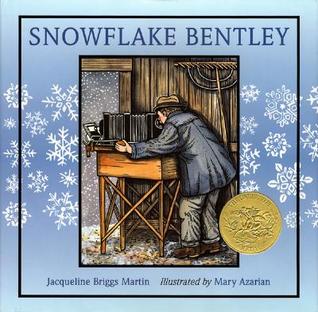
Here is my attempt at erasure poetry to use as a model with students. I chose Jacqueline Briggs Martin’s Snowflake Bentley (Houghton Mifflin, 1998), one of my all-time favorite books to share with students, as my subject. Mary Azarian’s stunning woodcut illustrations for the book won the Caldecott Medal. Although Wilson Bentley wasn’t an inventor like Gutenberg or Elijah McCoy, he did develop the process to photograph snowflakes and became world-famous for his miraculous pictures.
I worked in my notebook, jotting down lines that seemed meaningful as I read the book. As I reread, I thought about the importance of particular events and made decisions about including them in my poem. This kind of thinking can be challenging for students, and writing erasure poems will be an engaging way from them to practice these important skills.
The Snowflake Man
~Wilson Bentley~
born February 9, 1865
Jericho, Vermont
A boy who loved snow,
snow as beautiful as butterflies,
studied the icy crystals
through an old microscope.
Saw intricate patterns,
no two the same.
He wanted to find a way
to save snowflakes,
and tried drawing snow crystals,
but they always melted.
At sixteen,
he read about a camera with a microscope.
“I could photograph snowflakes,” he thought.
At seventeen,
his parents spent their savings
on that camera.
Mistake by mistake,
He would not quit.
Finally, in the second winter,
he figured out
how to photograph snowflakes.
Neighbors laughed when
he waited hours
to find just the right crystal.
Willie said the photographs
would be his gift to the world.
He wrote and gave speeches,
became famous,
and published a book.
A book of his best photographs,
of his treasures in snow.
Photo by Wilson A. Bentley; Smithsonian Institution from United States (Snowflake Study Uploaded by PDTillman), via Wikimedia Commons Please be sure to visit Tricia at The Miss Rumphius Effect for the Poetry Friday Round Up.
Mid-year goal meetings are coming up, and many teachers at my school are in a panic over the new reflection questions they have to respond to and the lesson plan that is required to be included in their portfolio as an “artifact.” I’ve been meeting with them over the past week, answering their questions and helping them as much as I can. But the paperwork still seems overwhelming when added to our daily responsibilities. This is why I was so happy to find this video about productivity at Brain Pickings Curated by Maria Popova, Brain Pickings is “a human-powered discovery engine for interestingness, a subjective lens on what matters in the world and why, bringing you things you didn’t know you were interested in — until you are.” Popova’s posts are full of wit and wisdom, and if you haven’t discovered her website, you’re in for a treat!
.
I love this video because it’s succinct and full of helpful advice. And even though many of the suggestions are common sense, I feel better knowing that I am not the only person who needs to be reminded about the importance of habit and routine.
Now if you’ll excuse me, I have some reflections to write!
As always, thank you to everyone at Two Writing Teachers for hosting the Slice of Life every Tuesday. Be sure to stop by to read more Slices!
Last spring, during a poetry writing unit, a 5th grade student asked me to read a poem she had written. “I’d love to,” I told her as she handed me her notebook with pride. I knew this girl to be a good student and a strong reader, so I was quite surprised to read what she had written. It was mostly about pickles, but her poem was full of forced rhymes and then no rhymes. I told her that her love of pickles was coming through loud and clear. Then I asked her about some of the more questionable rhymes.
“What do smelly feet have to do with sweet pickles?” I wondered
“Nothing, but sweet and feet rhyme,” she said matter-of-factly.
“I wonder if there are any other words that rhyme with sweet that have more to do with pickles than feet.”
“Probably, but today I just feel silly and want to write a silly poem.”
“Fair enough. Let’s look at it again tomorrow and see if you still feel that way. Writers often see their work differently after a day or two,” I said.
She wasn’t convinced, and she didn’t change the poem.
Over the years, I’ve had plenty of students who were unwilling to revise their writing. It seems as if getting anything down on paper is torture enough. Then to have to make changes is just insulting. Part of me empathizes with them. I know it’s hard to get our thoughts down in the first place. But I also know how much better writing can be after the second or third revision.
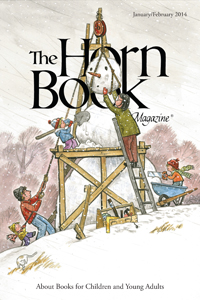
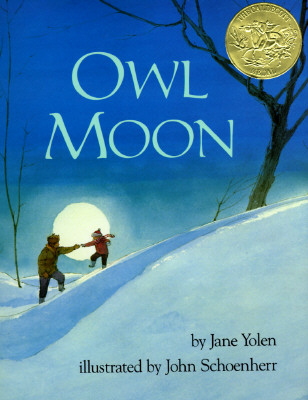
I wish I’d had Jane Yolen’s article from the current issue of The Horn Book to share with my reluctant reviser. In it, Yolen muses over different forms her Caldecott-Award winning picture book, Owl Moon, might have taken. A sonnet? No, too short. What about as a rap? Definitely not. She states that “a writer has to make choices [about] how to tell a story. But when a writer finds the right voice, everything comes together.” (pg. 46)
Writers do make choices. But I feel that our students don’t really understand that this means more that just thinking of words that rhyme. As Yolen goes on to say, finding this voice for our writing takes “hard work, inspiration, even perspiration.” (pg. 50)
So why did my young poet short-change herself and her poem? In this case, I think she just needed more time. Time to build the habit of writing every day so being asked to write didn’t feel like punishment. Time to experience the joy of finding just the right word, the perfect expression of her feeling. Time to play with different versions of her poem to find out if silly really was the right tone. Sometimes we may get lucky and stumble onto the right form on our first try, as Yolen feels she did with Owl Moon. But in most cases, we need to sweat over our writing before sharing it. Only then can we sit back and have a pickle.
Thank you to everyone at Two Writing Teachers for hosting the Slice of Life every Tuesday. Be sure to stop by to read the hard work of many devoted writers.
About a month ago, I found myself driving in an unfamiliar city at dusk. As I exited the highway into rush hour traffic, my GPS informed me that it had lost its satellite connection. After my initial panic, I took a deep breath and, because I had looked at a map before I left home and had the map feature open on my phone, was able to navigate to my hotel without a wrong turn.
Being able to read a map is an important skill. It provides us with a bird’s-eye view of where we’re going. Some people may argue that not knowing is what keeps life interesting, but I like having an idea of what lies ahead.
In teaching, our curriculum calendars and lesson plans are like maps in that they lay out a predictable path that will lead us from point A to point B. But like a driver encountering a roadblock, or me when my GPS failed, we need to possess the skills to help us adjust our teaching in a way that addresses the roadblock but still gets us, and more importantly, our students, to point B.
The school where I did my student teaching used a scripted math program that spiraled through concepts at a fairly quick pace. When we taught long division according to the program’s sequence, the kids were stumped. They just didn’t get it. They were frustrated and I was practically in tears. My cooperating teacher, however, believed in being responsive to the needs of students, not being a slave to the script. We worked together to use lessons from the old basal math program and other resources to give our students the time and support they needed to practice the steps of long division until they understood it well and were able to apply them independently. Without his guidance and support, I would have soldiered on and the kids wouldn’t have learned much about division.
I’ve been very fortunate in my career to have worked in a district where we’ve never had a scripted curriculum. The administrators have always trusted us. They’ve given us the autonomy and flexibility to make decisions about lesson plan and materials that we felt met the needs of our students. I worry that if teachers are never allowed to use anything other than a scripted curriculum, or are admonished or punished for deviating from this script, they will never know how to deal with the roadblocks our students present us with daily.
World of Ptolemy as shown By Johannes de Armsshein, Ulm, 1482 [Public domain], via Wikimedia CommonsMedieval cartographers labeled areas beyond their ken “Here there be dragons.” In other words, venture here at your peril. And yet, intrepid explorers ventured across unknown oceans. They trusted their knowledge, skills and instincts to carry them safely to shore. Teachers do this every day. We draw upon our past experiences, skills and knowledge as we interact with students. We aren’t always sure if our students are going to learn a skill or concept exactly they way we plan for them to, but we have a pretty good idea of what to do when we encounter a roadblock.
Just as drivers shouldn’t become dependent on their GPS, which might stop working at a critical juncture, teachers shouldn’t be held to scripts or curriculums that don’t meet the needs of our students. We have to have the flexibility to veer off course if needed, but still reach our destination. Anything less is a disservice to our students.
It is a rainy, dreary Monday here in Connecticut. What better day to spread a little sunshine? I felt incredibly honored to be nominated for the Sunshine Award by four bloggers: Amy Rudd of The “Rudd”er, Michelle Haseltine of One Grateful Teacher, Vicki Vinton of To Make A Prairie, and Julieanne Harmatz of To Read To Write To Be. The mission of the Sunshine Awards is to recognize bloggers who inspire.
The specifics are:
1. Acknowledge the nominating blogger(s).
2. Share 11 random facts about yourself.
3. Answer the 11 questions the nominating blogger created for you.
4. List 11 bloggers who inspire you.
5. Post 11 questions for the bloggers you nominate to answer and let all the bloggers know they’ve been nominated. Don’t nominate a blogger who has nominated you.
Eleven random facts about me:
I have rafted down the Colorado River through the Grand Canyon twice. (You can read more about these adventures hereand here.)
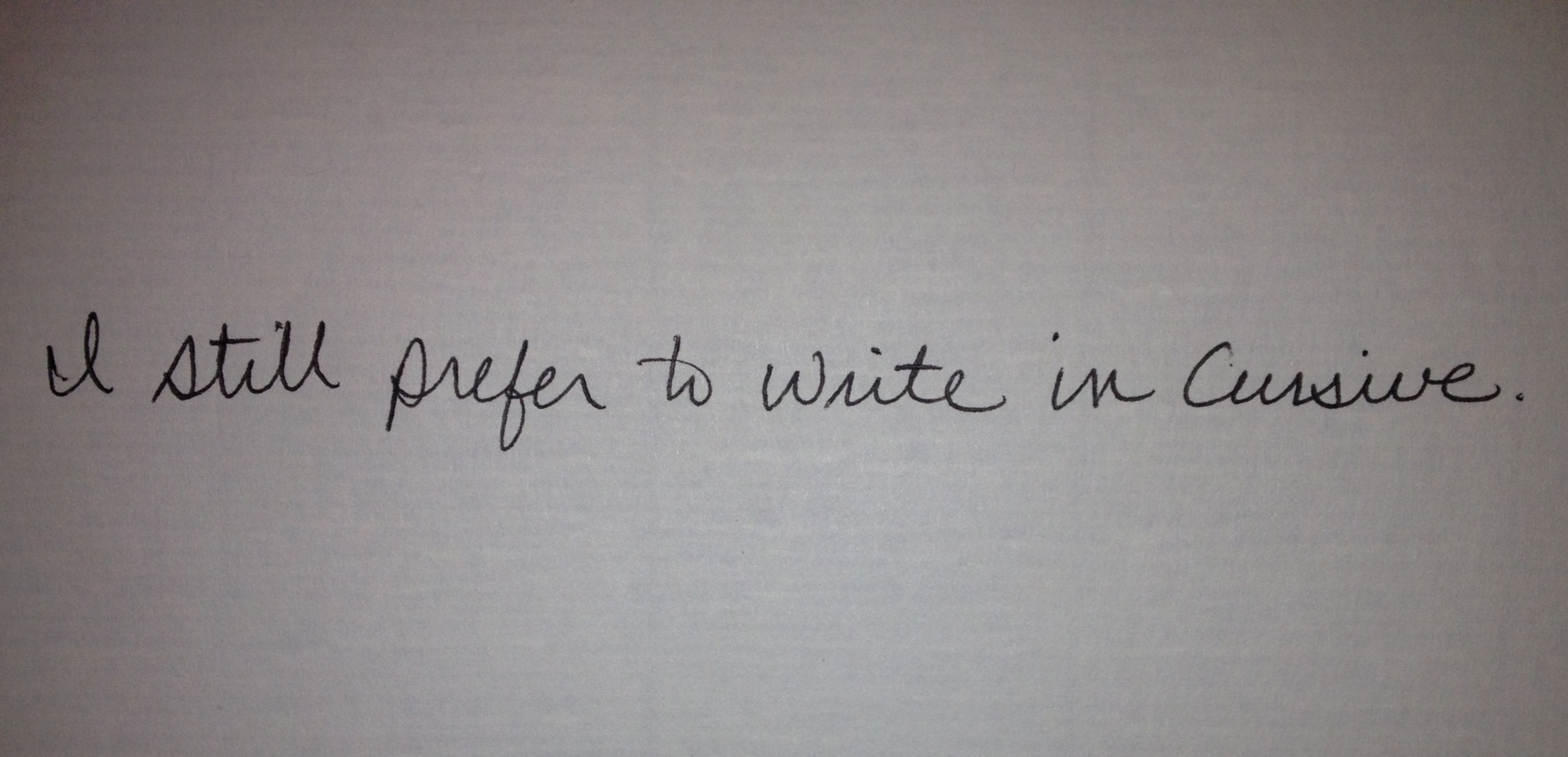
I won an award for cursive handwriting in 6th grade.
I have a stationary fetish. I love going into stationary stores (those that still exist) and buying beautiful notecards.
I love musicals; Funny Girl is my favorite.
I went to the prom with the inventor of LeapPad.
I live in the town where I grew up in a house built on land my great-grandfather bought in 1910.
I have a tendency to procrastinate. I also want things to be perfect. This is not a good combination.
I have never been a good speller. My spelling has improved significantly since I started teaching phonics.
I am a serial collector. Throughout my life, I have collected seashells, stamps, antique bottles, kitchen collectibles and McCoy pottery.
I am an excellent Trivial Pursuit/Jeopardy player. Collecting stamps helped me acquire a lot of facts about a wide variety of topics.
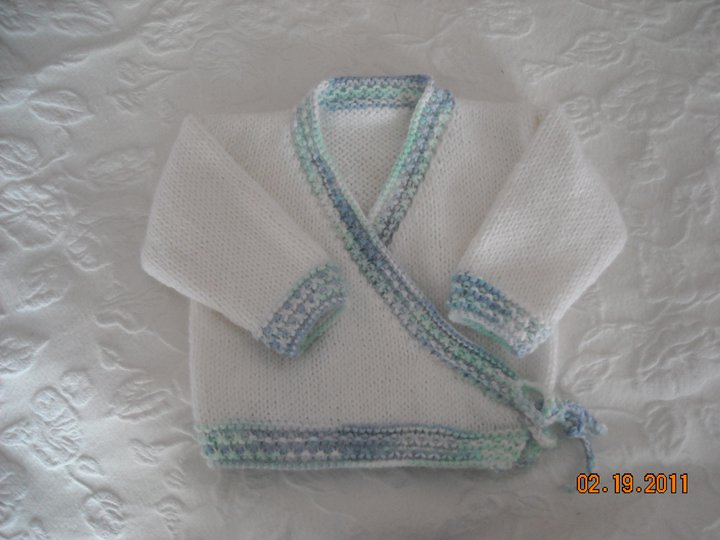
I love to knit.
A sweater I made for my great-nephew a few years ago.
Like other bloggers who were nominated by more than one person, I’ve chosen 3 questions from each person.
Vicki’s Questions:
1.What book would you want with you if you were stranded on a deserted island? In Search of Lost Time, by Marcel Proust. I think it would me take a while, and it’s a book I’ve always wanted to read.
2. What did you learn from your mother? How to bake an apple pie, how to hem a skirt, and how to be a loving and generous person. She also taught me how to spell “mountain.” (see random fact #8 above)
3. Where do you find joy in your classroom or work? I work closely with struggling readers, so watching a child use a strategy to decode for the first time and realize that they’ve read the words and understood them is like watching a lock pop open. It’s an amazing sight.
Michelle’s Questions:
4. What’s your favorite quote? Why? “I have no special talents. I am only passionately curious.” Albert Einstein. I love this quote because it is the epitome of what Carol Dweck refers to as a “growth mindset;” that if you cultivate your passion and curiosity, anything is possible.
5. If you had a weekend (and money was no object), what would you do? Who would be with you? I would go to Florence, Italy and climb to the top of Brunilleschi’s dome at the Basilica di Santa Maria del Fiore and soak in the beauty of the Tuscan countryside. I should take my husband with me, but my friend Colette and I have talked about taking this trip for years.
By sailko via Wikimedia Commons
6. What book are you reading right now? I typically have at least three books going at once. At the moment, my adult read is 11/22/63, by Stephen King, my mg/ya book is Rose Under Fire, by Elizabeth Wein, and my professional book is The Common Core Grammar Toolkit: Using Mentor Texts to Teach the Language Standards in Grades 3-5, by Sean Ruday.
Amy’s Questions:
7. What’s your most favorite children’s book ever? Charlotte’s Web, by E.B. White. This is the book that made me a reader. I wrote more about my experience with this book here.
8. What is your favorite young adult novel? At the moment, The Book Thief, by Markus Zusak is my favorite YA book.
9. How do you prefer to read books, paper or electronic? I have a Nook and an iPad with a Kindle app that I use once in a while. I love the convenience of being able to get a book at odd hours and not having to lug a heavy book around when I’m travelling, but paper is still my preference.
Julieanne’s Questions:
10. Name one guilty pleasure. Chocolate, in any form at any time.
11. What motivated you to start blogging? I began blogging because I learn so much from the blogs I read, and I love the idea of being part of a community where I can share ideas and learn from others. This experience has been more rewarding that I ever imagined.
12. What is your next challenge? An ongoing challenge for me is working with teachers to update our writing curriculum. We’re making some headway, but sometimes the scope of this work overwhelms me.
Eleven bloggers who inspire me: (Just eleven!? There are so many amazing bloggers, creating this list was almost as much of a challenge as answering the questions!)
I am a pack-rat. I hate to throw anything away. My cousins and I tease each other that this must be genetic because my grandmother saved EVERYTHING. I have a love/hate relationship with this part of my personality. On the one hand, the piles of boxes and books in my attic and office drive me crazy. On the other hand, I can usually find what I’m looking for and am glad that I still have whatever it is I’m trying to find.
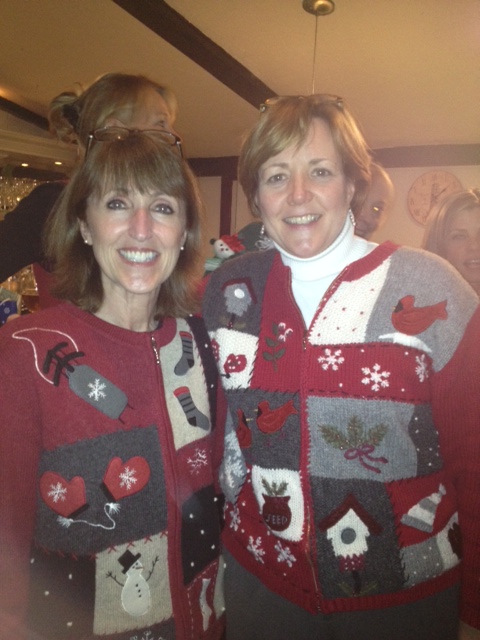
This was true last week when we had our Christmas party at work. The party organizers thought it would be fun to have an “Ugly Sweater” contest, with a prize for the ugliest sweater. “You know, those tacky holiday sweaters everyone used to wear,” one of my colleagues explained. Yes. I did know. I still have one. (Okay, maybe two, but I swear my tackiest Talbots sweater, circa 1994, went to Goodwill at least a year ago.) In the days leading up to the party, conversations like this could be heard throughout the halls: “Do you have an extra sweater I can borrow?” or “Maybe you can find one at the thrift store.”
Happy to know I didn’t have to search for something to wear, I was faced with another dilemma. I like my sweater. I don’t think it’s ugly. That’s why I still have it. I was relieved to find out that other people agreed with me. (Although maybe they were just trying to be nice.) Still, I felt better when I saw my friend Cathy.
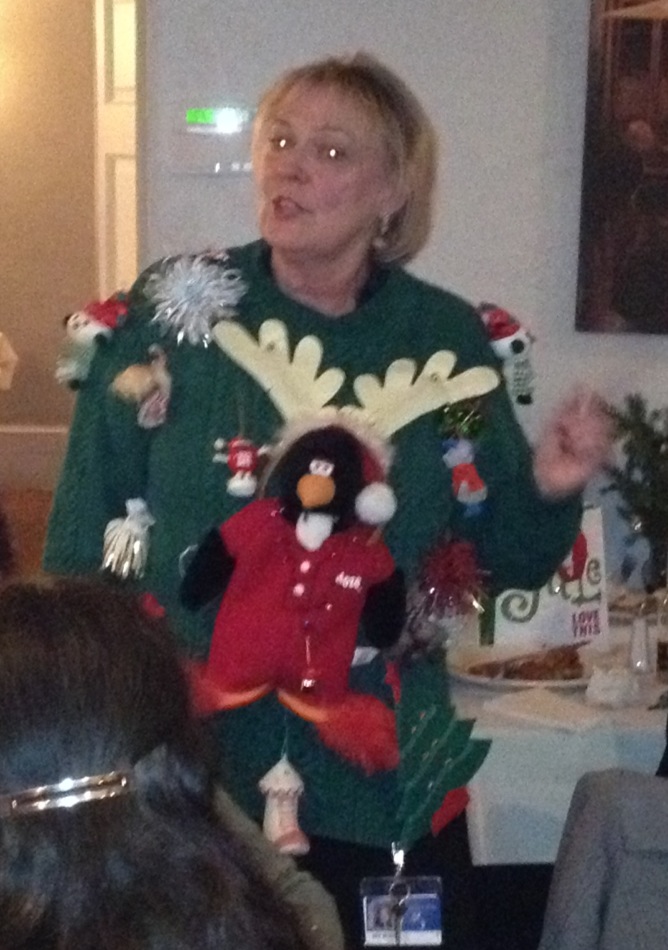
The winner of the contest didn’t have an ugly sweater, so she created one by raiding her Christmas decorations.
All this good-natured fun got me thinking, though. Even if my sweater wasn’t ready for the donation box, are there elements of my teaching that are? Am I clutching to an activity or practice just because I’ve always done it? I like to think that I’m reflective and objective about this, but I’m not sure. I definitely have favorite books and projects, but I also read new books and am always on the look out for ideas that will improve my teaching.
The truth is we get comfortable with materials and routines. It’s scary to change our practices and habits. But is this in the best interest of our students? When I talk with colleagues about lessons or activities, I always ask them, “How does this help our students grow as readers and writers?” If there isn’t a good answer to this question, then we have to let it go. By the same token, we shouldn’t be in a hurry to toss everything over for some shiny new program. If a practice is effective, we should keep it. We may need do some tweaking, but there’s a big difference between abandoning and modifying. We have to trust ourselves to make good decisions in this time of rampant change.
And don’t throw that sweater away. You never know when it will be exactly what you want to wear.
Thank you to everyone at Two Writing Teachers for sharing your slices. Your stories always give me new ideas to think about.
I originally posted this on December 21, 2012, one week after the tragedy at Newtown. I am posting it again today, in a slightly modified form, in honor of the teachers and children who died that day.
Turn Again to Life
by Mary Lee Hall
If I should die and leave you here awhile,
Be not like others, sore undone, who keep
Long vigils by the silent dust, and weep.
For my sake – turn again to life and smile,
Nerving thy heart and trembling hand to do
Something to comfort other hearts than thine.
Complete those dear unfinished tasks of mine
And I, perchance, may therein comfort you.
Mary Lee Hope
Iain Lees [CC-BY-SA-2.0 (http://creativecommons.org/licenses/by-sa/2.0)%5D, via Wikimedia CommonsWe owe it to the dedicated educators who died to take up their “dear unfinished tasks.” We must do everything in our power to create a world filled with love and joy; a world where all children can grow and flourish into the fullness of themselves.
I finished reading Christopher Lehman and Kate Robert’s new book, Falling in Love With Close Reading(Heinemann, 2013) last week. Kate and Chris have done a terrific job articulating the elements of close reading. At the same time, they encourage teachers to be purposeful about using close reading strategies. Close reading is not something to be done on every page of every book. Their main point it that close reading should be done when there is a deeper understanding to be gained.
All week I’ve been thinking about the application of these ideas in the classroom. I have been looking at texts differently since reading Falling in Love With Close Reading. Noticing patterns I might have skimmed over in the past, or asking myself, “I wonder why the author chose that word.” All this thinking reminded me of “The Secret” by Denise Levertov.
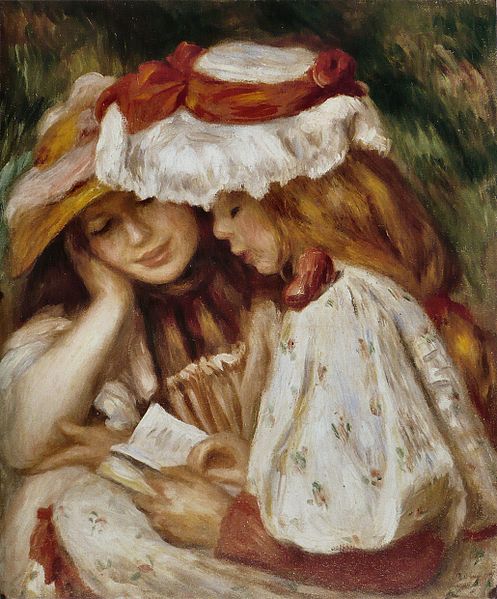
“Two Girls Reading” Pierre-Auguste Renoir [Public domain], via Wikimedia CommonsPlease visit Tabatha at The Opposite of Indifference for the Poetry Friday Round Up.



![By Smithsonian Institution from United States (Snowflake Study Uploaded by PDTillman) [see page for license], via Wikimedia Commons](https://readingtothecore.com/wp-content/uploads/2014/01/wilson_a-_bentley_snowflake_1890.jpg)
![World of Ptolemy as shown By Johannes de Armsshein, Ulm, 1482 [Public domain], via Wikimedia Commons](https://readingtothecore.com/wp-content/uploads/2014/01/800px-world_of_ptolemy_as_shown_by_johannes_de_armsshein_-_ulm_1482.png)


![Iain Lees [CC-BY-SA-2.0 (http://creativecommons.org/licenses/by-sa/2.0)], via Wikimedia Commons](https://readingtothecore.com/wp-content/uploads/2013/12/snow_angel_at_blynlee_-_geograph-org-uk_-_1652771.jpg)

 Reading to the Core