There are many things I love about NCTE’s Annual Convention. I love learning from authors, teachers, and researchers I admire. I love meeting friends from blogging and Twitter in real life. And I love all the free or discounted books, posters, and bookmarks being given away by publishers in the Exhibition Hall.
Something else I love are the book recommendations presenters make during their sessions. Teachers are readers, and presentations are always grounded in research. So, in addition to coming home with a suitcase full of books to share with my students, I brought home a list of professional books and other “adult” reading that I’m looking forward to diving into. Here, in no particular order, are some of the titles I’ll be reading in the weeks to come.
During her session, “Tracing the Shape of Human Thinking,” presented with her husband, Randy, Katherine Bomer referred toThe Best American Essays 2015, edited by Ariel Levy. I picked this up over the weekend and have already read Anthony Doerr’s lovely “Thing with Feathers That Perches in the Soul.” Katherine’s presentation was based on her upcoming book, The Journey is Everything. She closed her part of the session by telling us that “the act of writing without boundaries leads kids on a magical journey where they can hear what they think and say what they have to say.” I cannot wait to read more of Katherine’s thinking about changing they way we teach essay writing.
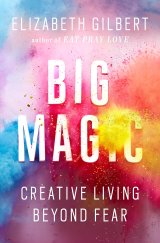
At the Wonderopolois Breakfast (which deserves it’s own post), Georgia Heard talked about Elizabeth Gilbert’s new book, Big Magic:Creative Living Beyond Fear. In this book, Gilbert urges her readers to live “a life that is driven more strongly by curiosity than by fear.” Sounds like good advice.
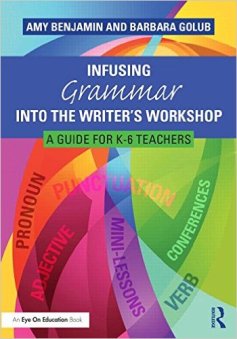
Amy Benjamin and Barb Golub’s session, “Infusing Grammar Instruction into the Workshop Model” was packed to the rafters and full of practical suggestions for implementing a “concept-based approach to grammar.” Fortunately, Benjamin and Golub have written a book, published by Routledge, to help us implement “activities [that] build language knowledge for ALL learners.”
This list is by no means complete, and doesn’t begin to address all the kids books now piled on my desk. But it perfectly illustrates that the learning from NCTE reaches far beyond the Minneapolis Convention Center.Happy reading, everyone!
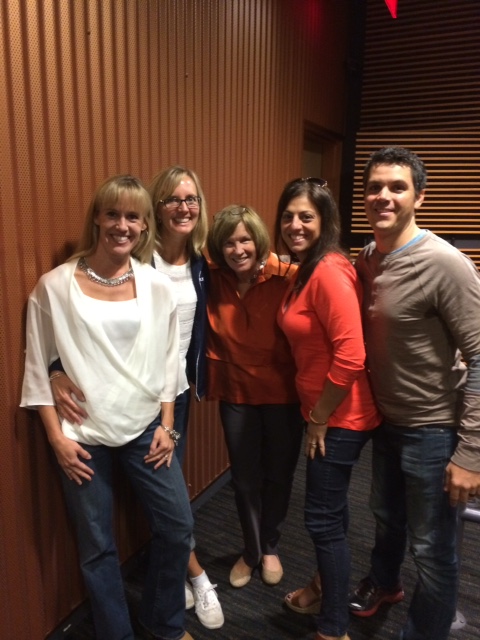
Two full days (plus breakfast on the third) at NCTE in Minneapolis filled my brain and my heart with enoughwisdom, friendship, and love to last several months. I’ve spent several hours over the past two days reading my notes, processing ideas, Googling references, trying to process my thoughts and weave a coherent narrative that captures the essence of my NCTE experience. I met so many authors I idolize, so many smart, funny teachers who work so hard, then so generously share their ideas and experiences with others. Each session is worthy of a separate blog post, but that will have to wait for another day. In the meantime, here’s a quick photo recap of some highlights from my NCTE experience.
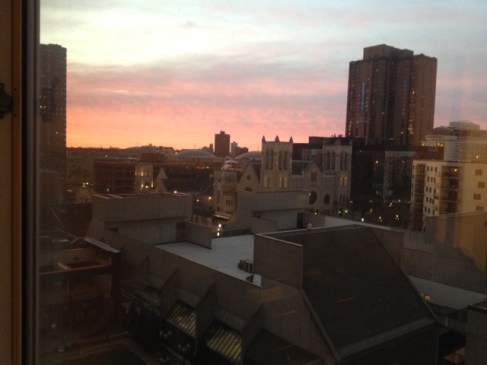
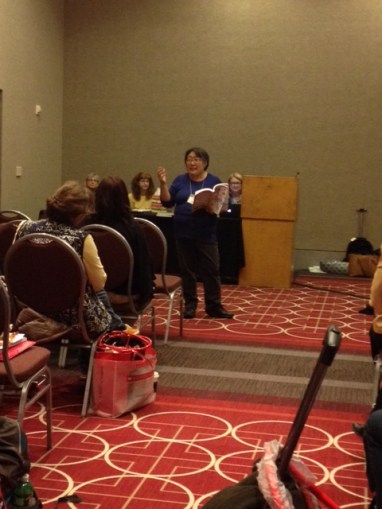
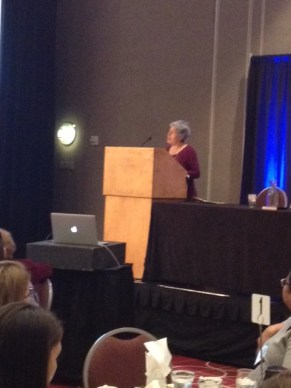
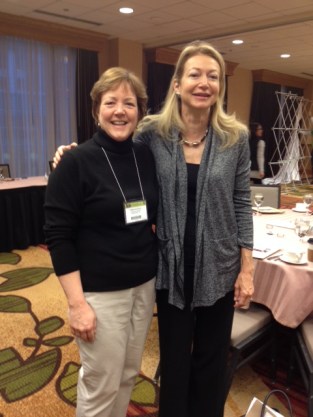
The view from my hotel on Friday morning.Janet Wong, Sylvia Vardell, Susan Marie Swanson, and Laura Purdie Salas leading a session on poetry, of course!Marilyn Singer sang to the audience when she accepted her award for Excellence in Children’s Poetry.Meeting poet Georgia Heard!With fellow Slicers at the Wonderopolis Breakfast.
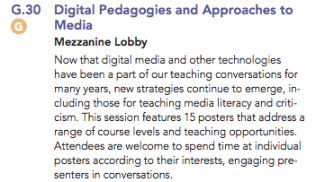
On Thursday, I’ll be heading to Minneapolis for my third NCTE Annual Convention. The previous two conventions have energized and inspired me. It’s such a thrill to meet nationally known educators and authors. I’ve also had a great time meeting fellow Slicers, bloggers, and Twitter friends. This year, my anticipation is even greater because I’ll be presenting “Every Picture Tells A Story” during a poster session on Saturday morning.
Many years ago, when I first read Keane & Zimmerman’s Mosaic of Thought (Heinemann, 1997) and Strategies that Work, by Harvey & Goudvis, I was inspired to find ways to provide my students with additional practice using comprehension strategies to develop their understanding of texts. I also realized that many kids who struggle with decoding weren’t getting enough opportunities to utilize the strategies. They were exerting so much energy decoding, they had nothing left for the higher level thinking needed for a deep understanding of their reading.
So I began incorporating art into my reading instruction as a way to give kids with decoding difficulties chances to practice and feel successful with comprehension strategies. It was quickly apparent that all students would benefit from learning to “read” the art. I’ve used paintings and illustrations to help first graders develop their retelling skills and third graders practice inferring and drawing conclusions. WPA photographs were a huge help when sixth graders were building background knowledge before reading Bud, Not Buddy. The possibilities for using art and photographs in the classroom are endless.
Paintings, illustrations, and photographs are also perfect for close reading. Strategies spelled out in recent books such as What Readers Really Do: Teaching the Process of Meaning Making (2012), by Dorothy Barnhouse and Vicki Vinton, Falling in Love with Close Reading, by Christopher Lehman and Kate Roberts, and Notice & Note: Strategies for Close Reading, by Kylene Beers and Robert L. Probst can all be introduced and practiced using art. After gathering details and developing ideas, students can also work on incorporating details that support their thinking into their writing, something our students always find challenging.
Constructing meaning from visual images has grown in popularity over the past ten years or so. There are many books and articles that offer additional ideas and suggestions for incorporating them into the curriculum. Later this week, I’ll be sharing some of these resources, as well as a lesson I recently taught in fifth grade.
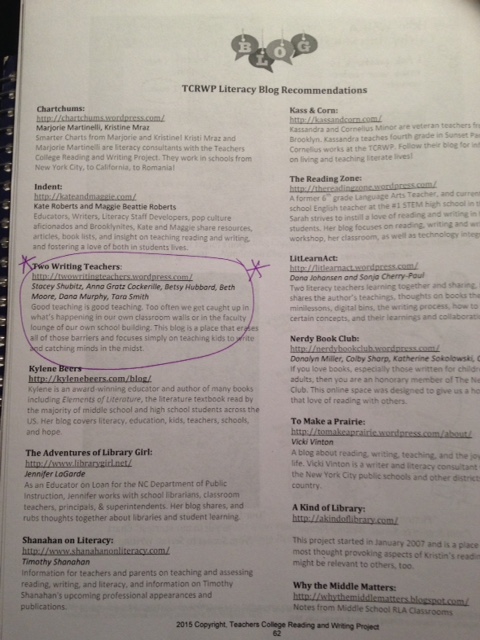
Hope to see you in Minneapolis! Thank you to Stacey, Tara, Dana, Betsy, Anna, Beth, Kathleen, and Deb for this space for teachers and others to share their stories each Tuesday. Be sure to visit Two Writing Teachers to read more Slice of Life posts.
A few weeks ago, on her superb blog, Vicki Vinton asked “What are you doing to cultivate passion in readers and writers in your rooms?”
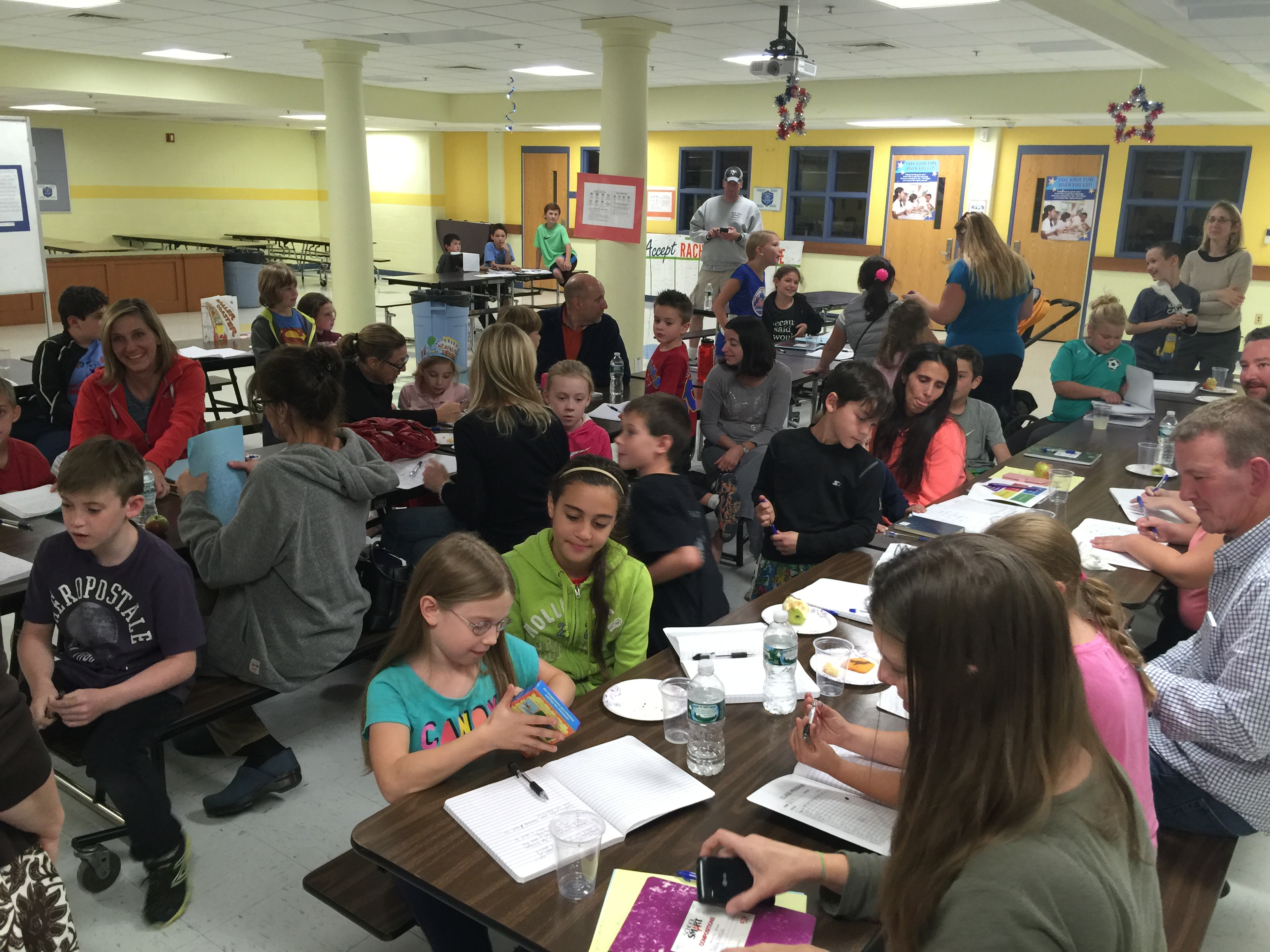
One way I try to cultivate passion is to wear my love for reading and writing on my sleeve. Another is to hold Family Writing Nights. Last winter, inspired by Dana Murphy’s presentation at NCTE, I organized our first writing night, which you can read about here. It was a big success, and many people asked if we could have another FWN. I’d hoped to squeeze it in last spring, but the schedule filled up quickly and there were too many conflicts. So this year I decided to hold our first writing night in the fall, followed by another in February.
The turnout wasn’t quite as high as last year’s event, but we still had an enthusiastic crowd.
Ralph Fletcher says that “memories are like a fountain no writer can live without.” Hoping to spark some summer memories, I began the evening by reading Marla Frazee’s exciting Roller Coaster (HMH Books for Young Readers, 2006). This gem of a small moment story recalls a child’s first time on that amusement park ride that everyone loves or loves to hate. Either perspective makes a good story!
I also shared a tip I learned recently from Shanna Schwartz shared at a TCRWP Writing Units of Study workshop. She suggested encouraging writers to use their body as a kind of memory map. Shanna said to have kids (or adults) start at the top of their head and ask if they have a story about their hair. I know I have my share of disastrous hairstyles! Maybe they have a story about a time they cut their hair, or a time they cut someone else’s hair. Moving down, is there a story about a loose tooth? What about that broken arm? Are they wearing a t-shirt they got on vacation or with the name of their favorite sport team? Once you start asking these questions, the list of possible stories is endless!
At the end of the evening, one dad came up to me to say how much he had enjoyed the evening. He told me he’d had a pretty stressful day, and that sitting down to write had relaxed him and relieved some of his stress. The next day, several students brought their notebooks to school to share what they’d written after they got home.
That’s the kind of enthusiasm we hope for in all of our students. It’s incredibly gratifying to help others find their voice as a writer. That’s why I’ll continue to organize Family Writing Nights, doing everything I can to encourage writers of all ages.
Four days of conferences in three different locations in one week sounds like too much, doesn’t it? But I did it, and survived! From a day at Teachers College with six colleagues for a day-long immersion into the Writing Units of Study to the Connecticut Reading Conference with Peter Johnston, Lester Laminack, Christine Hertz, Mary Howard, and Linda Hoyt, my brain felt like it was ready to explode as I drove home Friday afternoon. But in a good way!
Our day at Teachers College was a huge success. I spent the day with my two first grade colleagues learning more about writing workshop in K-2 from the amazing Shanna Schwartz, while four teachers from our school spent the day learning about 3-5 writing workshop with Lucy Calkins. Needless to say, we had plenty to talk about on the drive home.
3-5 teachers loved meeting Lucy Calkins.
I took nine (!) pages of notes, so I’m not going to attempt to distill them all into one post. Rather, here are a few of my key takeaways.
“Writing Workshop Bill of Writers” “We apprentice children in the life of a writer”
All children have the right to…
Time to write Units based in authentic genres Knowledge of conventions Skills and strategies for writing Understanding of the writing process Collaboration
In other words, our students deserve nothing less than to do “what real writers do in a writing life.”
Shanna stressed the importance of collaboration and feedback, and I love this idea: “Our best writing is the writing we work on on our own and with feedback from others. Feedback is a gift.”
On revision, Shanna had this to say: “Revision is a complement we give our best work.” Isn’t that a wonderful idea?
The importance of read alouds and mentor texts was also emphasized: “A writer can’t write what they haven’t heard or read.” and “Read alouds help readers/writers think about what writing can sound like.”
Shanna also talked about the importance of beginning the year with narrative writing. She explained that narrative is the “first way we exist in the world” and that “when we meet people, we tell them our story.” Shanna reminded us that “story is the first kind of reading we do.” Finally, she pointed out that “story is the building block of every other kind of writing…small stories are often included in informational and opinion writing.”
When conferring with children, Shanna suggested we begin by saying, “Tell me about what your working on in this story.” After listening to the writer’s response, “think about what will make this writer stronger and more independent.” She also urged us to “give compliments that are productive by noticing a behavior and tell them the effect that behavior” has on their writing. This type of praise will “encourage them to do it again,” and thus help them become more independent. Independence is the goal, after all.
If there was any common thread to all I learned last week, the idea of independent learners is it. As Lucy Calkins wrote in A Guide to the Reading Workshop: Primary Grades (Heinemann, 2015), “the goal…is not only to teach kids to read [and write], but to help them grow up to be people who value reading [and writing].
In August I was lucky to attend a Reading Institute at Teachers College Reading and Writing Project. This week-long institute is reinvigorating and energizing, and my brain is always bursting with ideas when I leave.
The staff developers at TCRWP do a terrific job of incorporating songs, videos, and other digital texts into their lessons to both engage students and broaden their horizons. I don’t watch much TV or listen to popular music on a regular basis, so I’m often out of the loop on what kids are watching and listening to. But after leaving New York, I was inspired to change the station on my way to work and listen to a country music radio station. Keith Urban’s new song, “John Cougar, John Deere, John 3:16” (written by Shane McAnally, Ross Copperman, and Josh Osborne) was playing. I was drawn in by the melody right away, and the lyrics really intrigued me.
I’m a 45 spinning on an old Victrola I’m a two strike swinger, I’m a Pepsi cola I’m a blue jean quarterback saying “I love you” to the prom queen in a Chevy…
Then my teacher brain kicked in and all sorts of possibilities for sharing this song with older students started swirling in my brain. The song evokes a bygone era and offers endless opportunities for building knowledge about the culture of mid-twentieth century America.
I was also reminded of George Ella Lyon’s poem, “Where I’m From.” Popular in writing workshops as a mentor poem, many teachers begin the school year with this poem as a way to learn about their students and build community. Pairing Urban’s rendition of “John Cougar, John Deere, John 3:16” with Lyon’s poem is a sure way to inspire young poets to pen their own poetic memoir.
“Where I’m From”
by George Ella Lyon
I am from clothespins, from Clorox and carbon-tetrachloride. I am from the dirt under the back porch. (Black, glistening, it tasted like beets.) I am from the forsythia bush the Dutch elm whose long-gone limbs I remember as if they were my own.
“Your absence has gone through me Like a thread through a needle. Everything I do is stitched with its color.”
The last official weekend of summer was bittersweet. My son was home, and we had company all weekend. Our days were filled with hiking, swimming, and napping. Our evenings began with suppers outside by candlelight and ended long past midnight around our fire pit. There were moments of laughter, but more moments of tears, as the loss of his dear, beautiful Julia is still a fresh wound. His heartbreak is palpable and visible in his face. But as we sat by the fire Friday night, I could feel his relief to be in our backyard, surrounded by his family and friends. I, too, felt a sense of peace start to return. This line, from “The Lake Isle of Innisfree,” by William Butler Yeats, came to me:
“And I shall have some peace there, for peace comes dropping slow.”
“Dropping slow” seemed to me exactly the way to describe the process of trying to stitch your heart and life back together without all the pieces. He’ll be putting his heart back together for years to come; maybe for the rest of his life. I’ll be there to help him with each stitch.
This slice was difficult to write. It feels much too personal for a blog that is supposed to be about teaching reading and writing. And yet, a slice is “a simple way to practice what we ask of students—to write…a small sliver of your ordinary life.”I am grateful to be part of this community and to have a place to share this writing, which seems so far removed from my original mission, but which was so necessary for me to write.
Thank you to Stacey, Tara, Dana, Betsy, Anna, and Beth for this space for teachers and others to share their stories each Tuesday. Be sure to visit Two Writing Teachers to read more Slice of Life posts.
Children’s first reading experiences are usually through picture books, and for this reason, people have fond memories of them and are passionate about their favorites. Because of the role picture books play in introducing the magic of reading to children, they are worth celebrating.
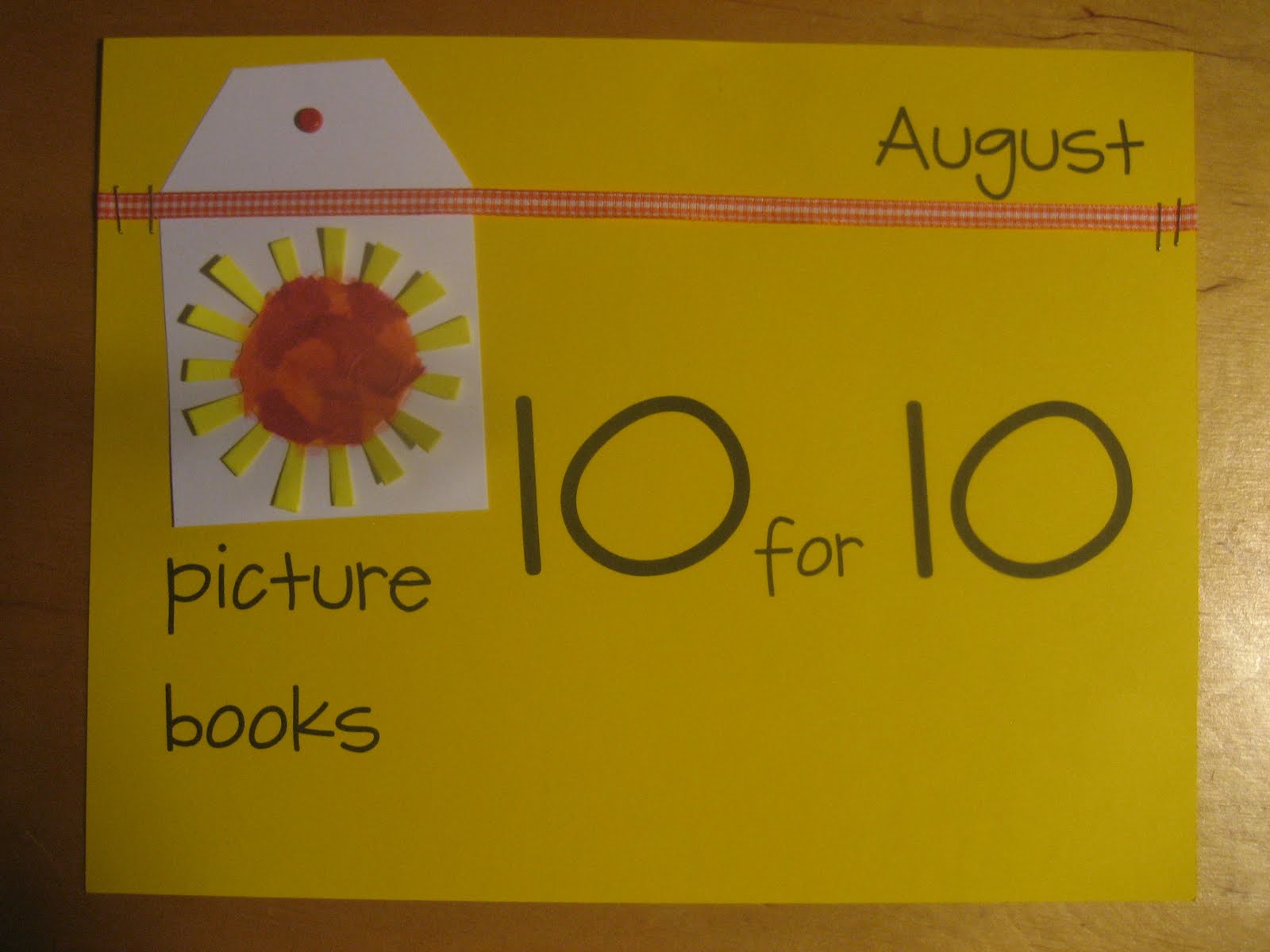
Picture Book 10 for 10 is the brainchild of Cathy Mere of Reflect & Refine: Building a Learning Community and Mandy Robeck of Enjoy and Embrace Learning. During this annual event, now in its sixth year, teachers, librarians, and book lovers create lists of 10 essential picture books. Cathy and Mandy collect and share these lists, and everyone is richer because of their efforts. Be sure to visit their blogs to see their lists, and check out dozens of Picture Book 10 for 10 lists here. Thank you, Cathy and Mandy, for organizing this celebration of picture book love.
Many children are introduced to picture books through collections of nursery rhymes. The rhythm of poetry is soothing and the rhymes give kids the foundation they need to become independent readers. But most importantly, reading nursery rhymes and poetry to children is fun.
Creating this list was quite a challenge, as there are many, many beautiful poetry picture books available these days. For any one of the poets listed below, there are one or two or ten other books that are just as worthy of inclusion on this list.
1.Bookspeak: Poems about Books, by Laura Purdie Salas, illustrated by Josée Bisaillon(Clarion Books, 2011)
What could be better than a collection of poems celebrating books? Laura Purdie Salas gives voice to all parts of books, including the cover, index, and the end. You can watch the trailer for Bookspeak, listen to Laura read two poems, and read the teacher’s guide here.
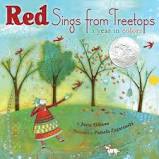
2. Red Sings From the Treetops: A Year in Colors by Joyce Sidman, illustrated by Pamela Zagarenski (Houghton Mifflin Books for Children, 2009)
Joyce Sidman is one of my favorite poets, and I love Pamela Zagarenski’s whimsical style, so this book was a shoe-in for this list. I have written about it before here.
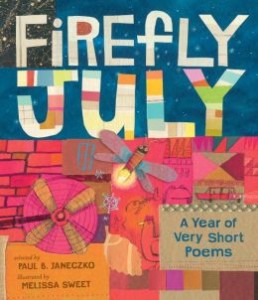
3. Firefly July: A Year of Very Short Poems, selected by Paul B. Janeczko, illustrated by MelissaSweet (Candlewick Press, 2014)
This award-winning anthology, illustrated with whimsical perfection by Melissa Sweet, includes poems celebrating each season and is not to be missed. Julie Roach, writing in School Library Journal described Sweet’s illustrations this way: “Colors and shapes with willowy details expertly blur or bring bits of the images into focus to create a magical sense of place, time, and beauty.”
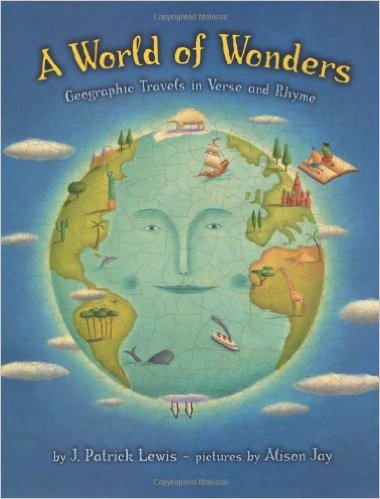
4. A World of Wonders: Geographic Travels in Verse and Rhyme, by J. Patrick Lewis, pictures by Alison Jay (Dial Books for Young Readers, 2002)
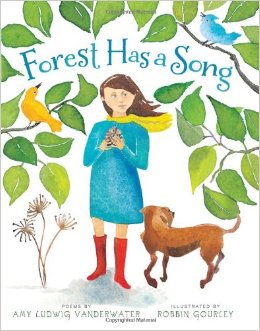
5. Forest Has a Song, by Amy Ludwig VanDerwater, illustrated by Robbin Gourley (Clarion Books, 2013)
Amy Ludwig VanDerwater turns her keen poet’s eye to the forest landscape throughout the year. Gourley’s delicate watercolors are the perfect complement to VanDerwater’s evocative poems.
6. On the Wing: Bird Poems and Paintings by Douglas Florian (Harcourt, 1996)
Douglas Florian’s sophisticated humor and word play make his poetry perfect choices for any elementary classroom. Find out more about Florian and his other poetry collections here.
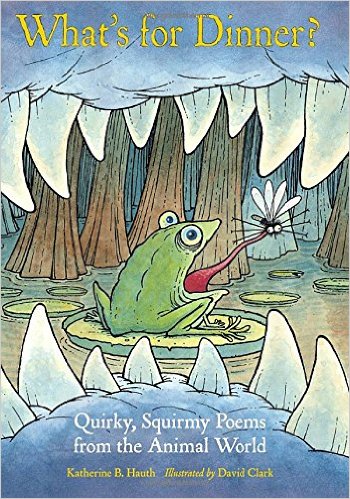
7. What’s for Dinner? Quirky, Squirmy Poems from the Animal World, by Katherine B. Hauth, illustrated by David Clark (Charlesbridge, 2011)
This NSTA/CBC Outstanding Science Trade Book is chock-full of hilarious poems about the very serious subject of how animals capture their prey. Hauth includes factual information about each animal, as well as a list of suggested reading. David Clark’s cartoon-like illustrations add to the humor.
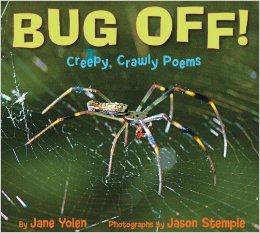
8. Bug Off! Creepy, Crawly Poems, by Jane Yolen, photographs by Jason Stemple (WordSong, 2012)
Jane Yolen is one of my favorite authors of all time. In fact, my 2013 Picture Book 10 for 10 post was devoted to her work. Yolen has published many volumes of poetry, but her collaborations with her photographer son, Jason Stemple, are my favorites. Stemple’s photographs are full of incredible details, and Yolen’s poetry captures the “beauty and mystery” of “these tiny living beings.” (From Yolen’s author’s note.)
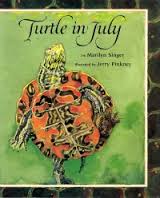
9. Turtle in July, by Marilyn Singer, illustrated by Jerry Pinkney (Macmillan, 1989)
Marilyn Singer is the 2015 winner of the NCTE Award for Excellence in Poetry for Childrenand has long been one of my favorite poets. You can read a previous post about Marilyn’s poetry here. This collection, filled with Jerry Pinkney’s stunning illustrations, is a must-have for any elementary classroom.
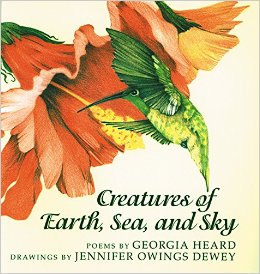
10. Creatures of the Earth, Sea, and Sky, by Georgia Heard, drawings by Jennifer Owings Dewey (WordSong, 1992)
Georgia Heard has written that “poets find poems in hundreds of different places” (Awakening the Heart: Exploring Poetry in Elementary and Middle School, Heinemann: 1999), and in this wonderful collection, which has long been a staple in my classroom, she has found poems throughout the animal kingdom. Dewey’s detailed, realistic drawings add to the beauty of this book.
Yesterday, Kate kicked off the 2015 season with an invitation to wonder. Kate writes that wondering is where authentic writing starts, that “Wonder is essential for writers, but sometimes, we don’t leave time for it in our daily task-finishing, dinner-making, laundry-sorting lives.” Unfortunately, this is often true in our classrooms, too.
I usually make time for wondering during my drive to work and when I’m walking my dog, so it didn’t take me long to come up with a list, which soon morphed into a poem:
What wonders does the world behold? a chirping robin greeting the dawn a mighty river carving stone a million stars shining in the sky above the ringing of a telephone the warmth of your hand in mine finding a friend in the pages of a book.
Not sure what I would do with this list, I went about my morning. Within an hour, I heard a story on NPR about the NASA’s New Horizons mission to Pluto. Of course I started wondering what discoveries will be made about this most-mysterious non-planet. The similarities between the word “planet” and “Pluto” popped out at me, and I started thinking about how to work this into a poem.
J. Patrick Lewis says that in poetry, like architecture, “form follows function.” My work-in-progress has me thinking a lot about poetic forms. Lately, I’ve been working on a diamante (Which J. Patrick Lewis doesn’t consider a true verse form; read why here.) because it seemed like the form might help me accomplish my purpose for writing. This form also seemed like it might work for a planet/Pluto poem. Here’s a draft:
Planet celestial, spherical orbiting, rotating, reflecting rock, solar system, outcast freezing, wandering, eluding distant, mysterious Pluto
While there are parts of this I like, I wasn’t thrilled with it. Still wondering, I did a little research. Tricia Stohr-Hunt’s blog, The Miss Rumphius Effect is a treasure-trove of poetic resources, so I checked her site for more information. Coincidentally, Tricia’s post yesterday was about cinquains, another short form with a strict pattern. So I decided to try the Pluto poem as a cinquain.
Frozen, rocky mystery wandering at the edge of our solar system; outcast: Pluto
I’m still pondering this one, but playing around with different forms was fun. It also helped me see a new possibility for a poem that’s been challenging to write. In addition, a few implications for teaching became clear as I was writing.
Asking a child, “What are you wondering about?” is such simple act, yet how often do teachers do it? What a gift it would be to ask our students this fundamental question each morning! What a list kids would generate! If we did this, then all the moaning about not knowing what to write about or groaning about making revisions might fall by the wayside. When you’re truly invested in what you’re doing, it doesn’t feel like work. And who knows where their questions will lead?
Thank you Kate, and everyone at Teachers Write! for the inspiration, and thank you to Stacey, Tara, Dana, Betsy, Anna, and Beth for this space for teachers and others to share their stories each Tuesday. Be sure to visit Two Writing Teachers to read more Slice of Life posts.
When I was a kid, my imaginary friend was nameless and unacknowledged. Sure that others, including my parents, would think I was weird, I never mentioned my imaginary friend to anyone.
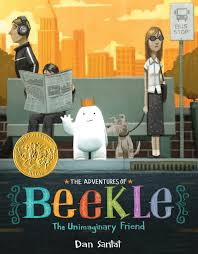
How times have changed! Not only are there plenty of picture books about imaginary friends, Dan Santat’s The Adventures of Beekle: The Unimaginary Friend (Little, Brown, 2014) won this year’s Caldecott Medal. So much for weird.
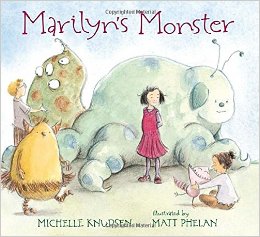
Marilyn’s Monster (Candlewick Press, 2015), by Michelle Knudsen, with illustrations by Matt Phelan is a variation on having an imaginary friend. Knudsen’s heart-felt storytelling and Phelan’s expressive illustrations work together to create a satisfying emotional journey all children will recognize.
Having a monster is “the latest thing,” but Marilyn doesn’t have one yet. “Your monster has to find you.” Soon, Marilyn is “the only one left without a monster.” At first she’s sad, and “tried to be the kind of girl no monster could resist.” Then she gets mad and tries to convince herself she doesn’t need a monster. Deep in her heart, though, Marilyn knows she wants a monster “more than she could say.” She defies the rules and takes matters into her own hands. She follows her instinct, faces her fears, and sets off in search of her monster. Along the way she discovers, like Beekle, that sometimes it’s necessary to push back against conventional wisdom to achieve your goal.
Marilyn’s happiness at the end of the book is more than just satisfaction at having found her monster. It’s far deeper than that. It’s happiness that comes from the confidence gained by overcoming her fears and accomplishing her goal by herself.
Marilyn’s Monster is an endearing book that young audiences will love, but I would share it with second and third graders, too. Not only will they enjoy the story, they will learn much about word choice, tension, and character growth from Knudsen’s masterful writing. In addition, Marilyn’s Monster and The Adventures of Beekle: The Unimaginary Friend are a perfect pairing for comparing and contrasting point of view and setting. Most importantly, though, the theme that when you follow your heart, anything is possible is one worth sharing again and again.
Candlewick has an interview with Michelle Knudsen and Matt Phelan here, and an activity guide here.
Don’t forget to visit Jen at Teach Mentor Texts and Kellee at Unleashing Readers to find out what other people have been reading lately. Thanks, Jen and Kellee, for hosting!

 There are many things I love about NCTE’s Annual Convention. I love learning from authors, teachers, and researchers I admire. I love meeting friends from blogging and Twitter in real life. And I love all the free or discounted books, posters, and bookmarks being given away by publishers in the Exhibition Hall.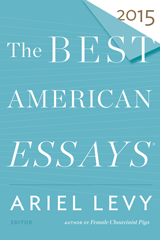







 Reading to the Core