National Poetry Month: Writing Wild, Day 24

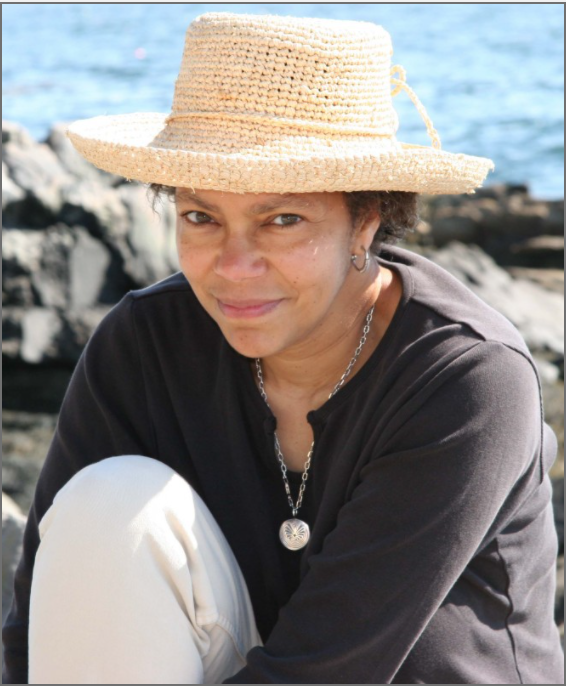
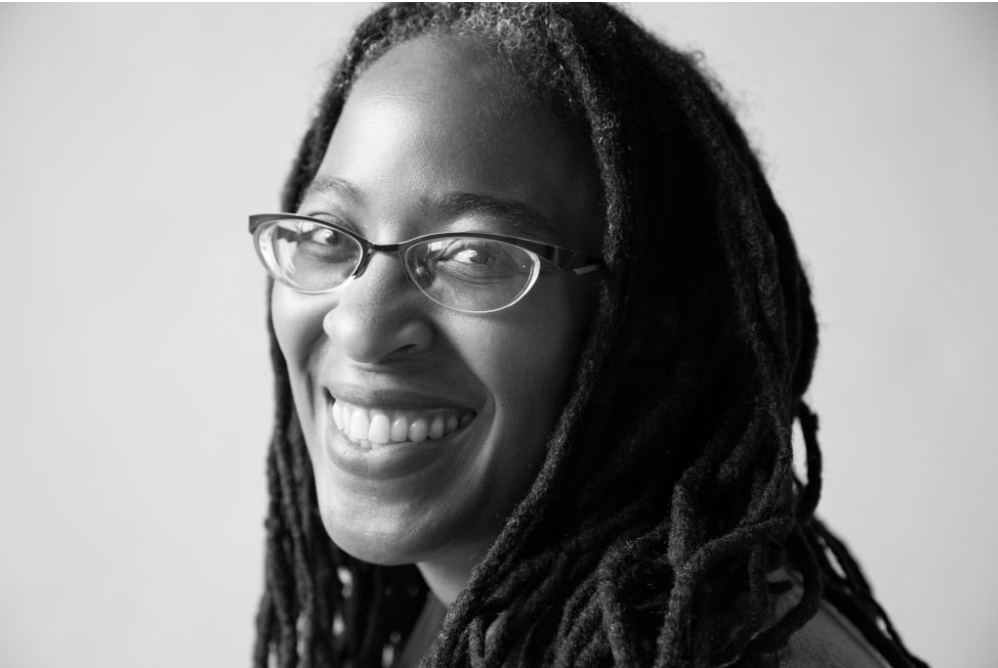
Here is a happy surprise from this project. Not only have I been introduced to many amazing, thought-provoking writers, I’ve also delved more deeply into the work of writers I had read before but had only skimmed the surface of their work. This is true of Camille T. Dungy. I am in awe of the scope of her writing, of her precise imagery and powerful metaphors.

Kathryn Aalto describes Dungy as a “master of poetic synthesis” who “fuses fact, observation and revelation to offer poetry’s inevitable surprise.” (p. 218) Dungy is a poet, essayist, and professor of writing. She is a 2019 Guggenheim Fellowship recipient whose writing has won the American Book Award. She states that she is  “never not thinking about nature. Because I don’t understand a way we can be honest about who we are without understanding that we are nature.” (Aalto, p. 218) 

When asked by Aalto what she wants “people to get out of her poems” Dungy explained to that she wants them to find “beauty and the heightened craft that comes from looking at everyday objects with respect.” (p. 223)

I had several false starts finding a way to respond to Dungy’s stunning poetry and essays. In the end, I let Dungy’s words speak for themselves in this cento.

Silence is one part of speech
the impossible hope of the firefly
imperceptible as air.

You are not required to understand.

This is the world we have
arranged,
a complicated beauty.

The snow 
builds a mountain
unto itself.

What happens today is fed by what I did yesterday.
I will plant my seeds 
plant them for abundance tomorrow
a demonstration of care
evidence of the wild wonder of the world

and into the world: music. 
The song is drink, is color. Come. Now. Taste. 

After which, nothing was ever the same.
Cento line sources in order:

Language
Characteristics of Life
There are these moments of permission
Arthritis is one thing, the hurting another
Daisy Cutter
FROM DIRT
In her mostly white town, an hour from Rocky Mountain National Park, a black poet considers centuries of protests against racialized violence
FROM DIRT
Letter to America: Diversity, a Garden Allegory with Suggestions for Direct Action
FROM DIRT
FROM DIRT
FROM DIRT
Letter to America: Diversity, a Garden Allegory with Suggestions for Direct Action
“What To Eat, And What To Drink, And What To Leave For Poison”
“Trophic Cascade”

Previous Writing Wild posts:

Day 1: Dorothy Wordsworth
Day 2: Susan Fenimore Cooper
Day 3: Gene Stratton-Porter
Day 4: Mary Austin
Day 5: Vita Sackville-West
Day 6: Nan Shepherd
Day 7: Rachel Carson
Day 8: Mary Oliver
Day 9: Carolyn Merchant
Day 10: Annie Dillard
Day 11: Gretel Ehrlich
Day 12: Leslie Marmon Silko
Day 13: Diane Ackerman
Day 14: Robin Wall Kimmerer
Day 15: Lauret Savoy
Day 16: Rebecca Solnit
Day 17: Kathleen Jamie
Day 18: Carolyn Finney
Day 19: Helen Macdonald
Day 20: Saci Lloyd
Day 21: Andrea Wulf
Day 22: Padma Venkatraman
The Poetry Friday Roundup is Here!

Welcome to the Poetry Friday Roundup! Wasn’t it thoughtful of April to begin on a Thursday this year, so we have five Fridays to celebrate National Poetry Month? There are number of amazing poetry projects happening at blogs around the Kidlitosphere. You can find a roundup of them at Susan Bruck’s lovely blog, Soul Blossom Living.

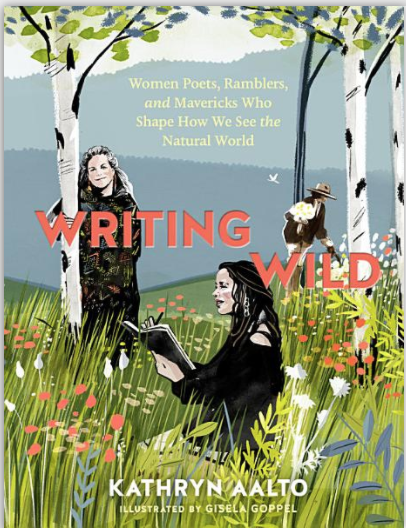
I’m taking a bit of a detour from my Writing Wild project, inspired by Writing Wild: Women Poets, Ramblers, and Mavericks Who Shaped How We See the Natural World, by Kathryn Aalto. Each day in April, I have written a poem inspired by one of the 25 trailblazing women profiled in Aalto’s book. Because there are 30 days in April, I chose another four authors recommended by Aalto. For today’s post, my inspiration comes from Padma Venkatraman, an author not included in Aalto’s book, but one who I think embodies the spirit of the other writers. I also wanted to diversify the list to include more writers of Asian descent.

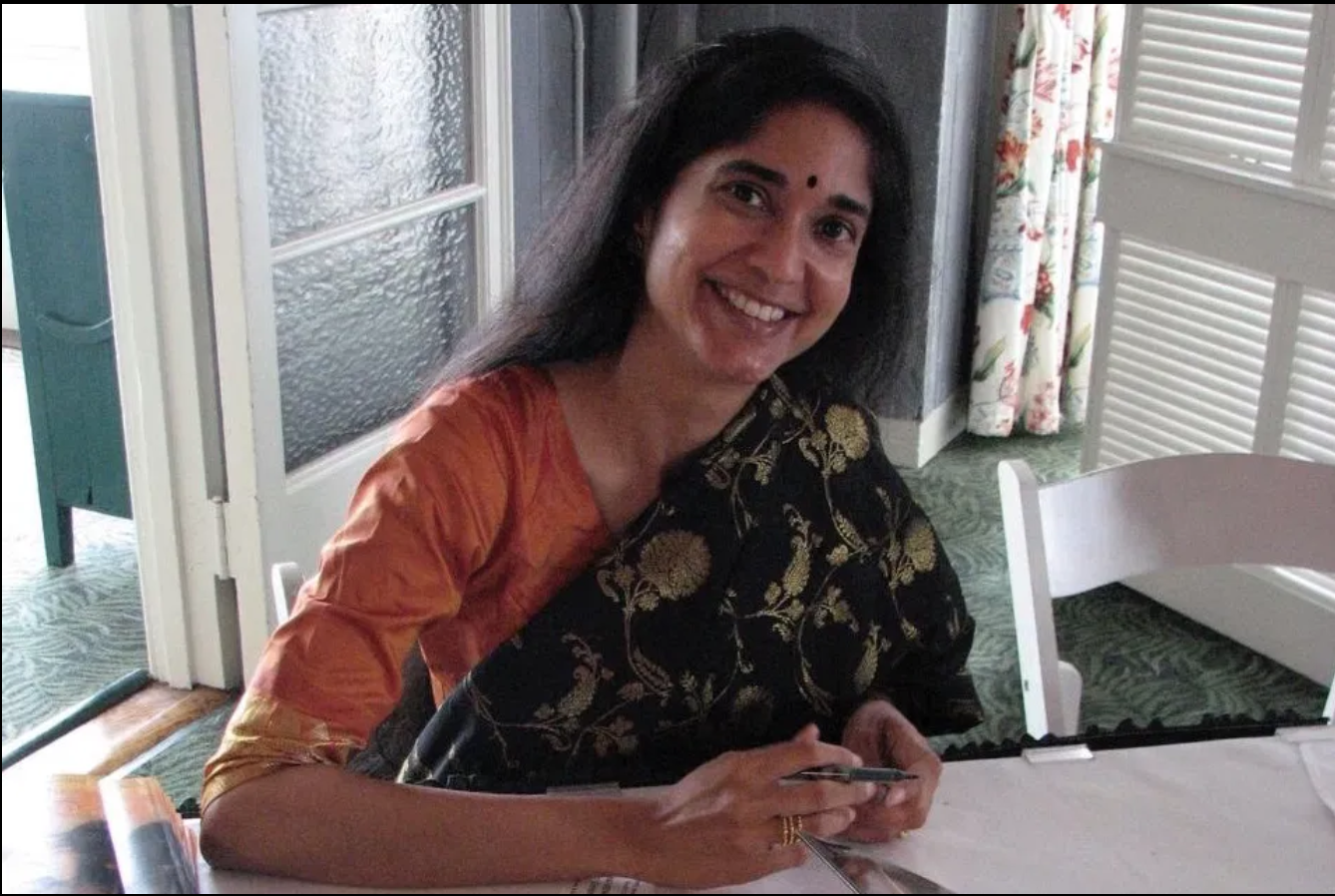
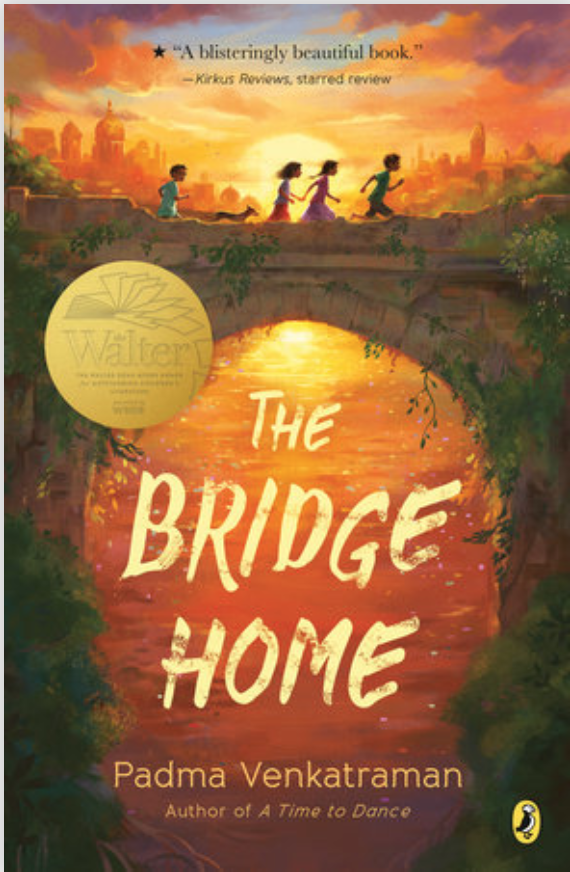
Padma Venkatraman trained as an oceanographer and now writes middle-grade and YA fiction as well as poetry for young people. Her beautiful, inspiring 2019 middle-grade novel, The Bridge Home, won the Walter Dean Myers Award and two of her poems appeared in this month’s issue of Poetry Magazine. In addition, she just launched “Diverse Verse… a website and a resource for educators and diverse poets and verse novelists.”

Today’s poem is my response to Venkatraman’s poetry prompt recently posted on Ethical ELA. In her introduction to the prompt, she stated that “as a writer who cares about young people, I feel compelled to preserve hope in the face of [hate crimes against Asians]. She challenged poets to write “a short poem dedicated to hope in defiance of hate.” Here is a draft of my response.

Finding Our Way

Can we agree we’ve gone astray?
Lost sight of treasures untold.
Our map’s completely upside down
from chasing too much gold.

Some creatures are gone; they won’t return.
But we can change this course.
Protect each species; keep them safe
And learn from our remorse.

Recognize your neighbors.
Know and say their names.
They’re living beings, just like you,
treat everyone the same.

The world keeps changing bit by bit.
We all can do our part
to make the world a better place.
The change starts in your heart.

Draft © 2021, Catherine Flynn

Photo by freestocks on Unsplash

Previous Writing Wild posts:

Day 1: Dorothy Wordsworth
Day 2: Susan Fenimore Cooper
Day 3: Gene Stratton-Porter
Day 4: Mary Austin
Day 5: Vita Sackville-West
Day 6: Nan Shepherd
Day 7: Rachel Carson
Day 8: Mary Oliver
Day 9: Carolyn Merchant
Day 10: Annie Dillard
Day 11: Gretel Ehrlich
Day 12: Leslie Marmon Silko
Day 13: Diane Ackerman
Day 14: Robin Wall Kimmerer
Day 15: Lauret Savoy
Day 16: Rebecca Solnit
Day 17: Kathleen Jamie
Day 18: Carolyn Finney
Day 19: Helen Macdonald
Day 20: Saci Lloyd
Day 21: Andrea Wulf

Please add your link to join the party!

You are invited to the Inlinkz link party!

Click here to enter
https://fresh.inlinkz.com/js/widget/load.js?id=a8b40ada7693d64e5923

National Poetry Month: Writing Wild, Day 21

Today’s featured author, Andrea Wulf, wrote one of my favorite books of all time. The Invention of Nature: Alexander von Humbolt’s New World (2015) is a breathtaking introduction to a man Wulf calls the inventor of “the web of life, the concept of nature as we know it today.” (Wulf, p. 6) In 2015, Wulf explained to Science Friday host Ira Flatow that “we have to use our imagination and emotion to understand nature,” and that we owe this understanding to Alexander von Humbolt.

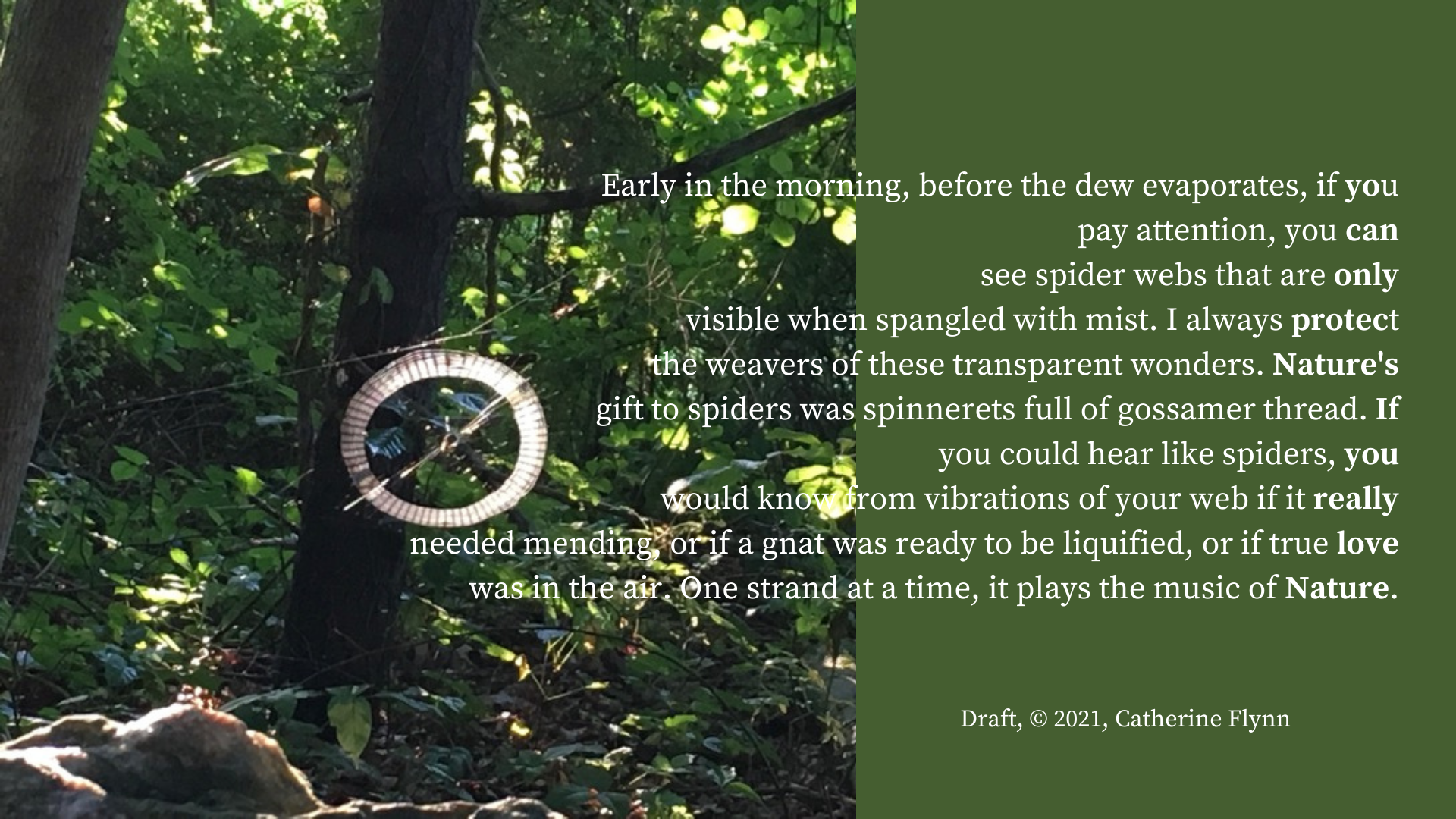
I’ve written another Golden Shovel today from a statement Andrea Wulf made during her 2015 interview on Science Friday. She said, “you can only protect nature if you really love nature.” That statement has been the driving force behind this project, and I feel certain it was the driving force behind Kathryn Aalto‘s creation of Writing Wild. I searched my memory for a time when my love of nature was palpable, and recalled the morning I spotted this stunning spider’s web. It was only as I was working on the poem that I remembered Wulf’s words and decided I had chosen the right topic for today’s poem.

Previous Writing Wild posts:

Day 1: Dorothy Wordsworth
Day 2: Susan Fenimore Cooper
Day 3: Gene Stratton-Porter
Day 4: Mary Austin
Day 5: Vita Sackville-West
Day 6: Nan Shepherd
Day 7: Rachel Carson
Day 8: Mary Oliver
Day 9: Carolyn Merchant
Day 10: Annie Dillard
Day 11: Gretel Ehrlich
Day 12: Leslie Marmon Silko
Day 13: Diane Ackerman
Day 14: Robin Wall Kimmerer
Day 15: Lauret Savoy
Day 16: Rebecca Solnit
Day 17: Kathleen Jamie
Day 18: Carolyn Finney
Day 19: Helen Macdonald
Day 20: Saci Lloyd

National Poetry Month: Writing Wild, Day 20

In November of 2019, when the world still felt normal, I hosted a baby shower for my son and daughter-in-law. Wildfires were raging through Australia, and news reports were dire about the impact on wildlife, especially koalas. I remember saying to my cousin that I couldn’t imagine my granddaughter growing up in a world without koalas.

Today’s featured author is Saci Lloyd, whose novels imagine a world that is missing much more than koalas. Lloyd is a British teacher and writer of “cli-fi,” a genre that has “sprung from the ticking clock of climate change and explores the consequences of a warming planet.” (Aalto, p. 197). Written for teens, Lloyd’s books The Carbon Diaries 2015 (2009) and The Carbon Diaries 2017 (2010) are “a wonderfully mordant look at the coming environmental ­meltdown“. Lloyd explained her approach to Kathryn Aalto this way: “The urban kids I teach…have no upbringing in nature and so the humor is the bridge to get them there to care.” (Writing Wild, p. 199)

Writing a poem inspired by Lloyd’s work was quite a challenge. I desperately want people to care, but recognize the danger of being didactic. In the end, I opted for another Golden Shovel, using the end of this quote as my strike line. It may be didactic, but it’s the truth.

“Climate change is a massive issue. I believe we are a brilliant species. If we can do the things we’ve done already, we can fix this too.

Saci Lloyd, from ClimateMagic

The question was never if.
Glaciers are melting, fires are blazing. We
(well, some of us) simply choose to ignore reality. Can
we muster the will to act? We must do
whatever our battered planet needs to heal. The
survival of countless species is at stake. Things
are at a tipping point. We’ve
wasted too much time already.
Damage has been done
to the air, the water, the land. But we
are resilient; we’ve met challenges in the past. We can
rise to this challenge, too. We can fix
what needs fixing. Create and innovate. We made this
mess. Now it’s time to clean it up, before it’s too

late.

Draft © 2021, Catherine Flynn

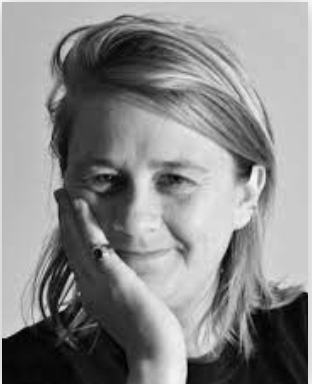
Saci Lloyd

Previous Writing Wild posts:

Day 1: Dorothy Wordsworth
Day 2: Susan Fenimore Cooper
Day 3: Gene Stratton-Porter
Day 4: Mary Austin
Day 5: Vita Sackville-West
Day 6: Nan Shepherd
Day 7: Rachel Carson
Day 8: Mary Oliver
Day 9: Carolyn Merchant
Day 10: Annie Dillard
Day 11: Gretel Ehrlich
Day 12: Leslie Marmon Silko
Day 13: Diane Ackerman
Day 14: Robin Wall Kimmerer
Day 15: Lauret Savoy
Day 16: Rebecca Solnit
Day 17: Kathleen Jamie
Day 18: Carolyn Finney
Day 19: Helen Macdonald

National Poetry Month: Writing Wild, Day 19

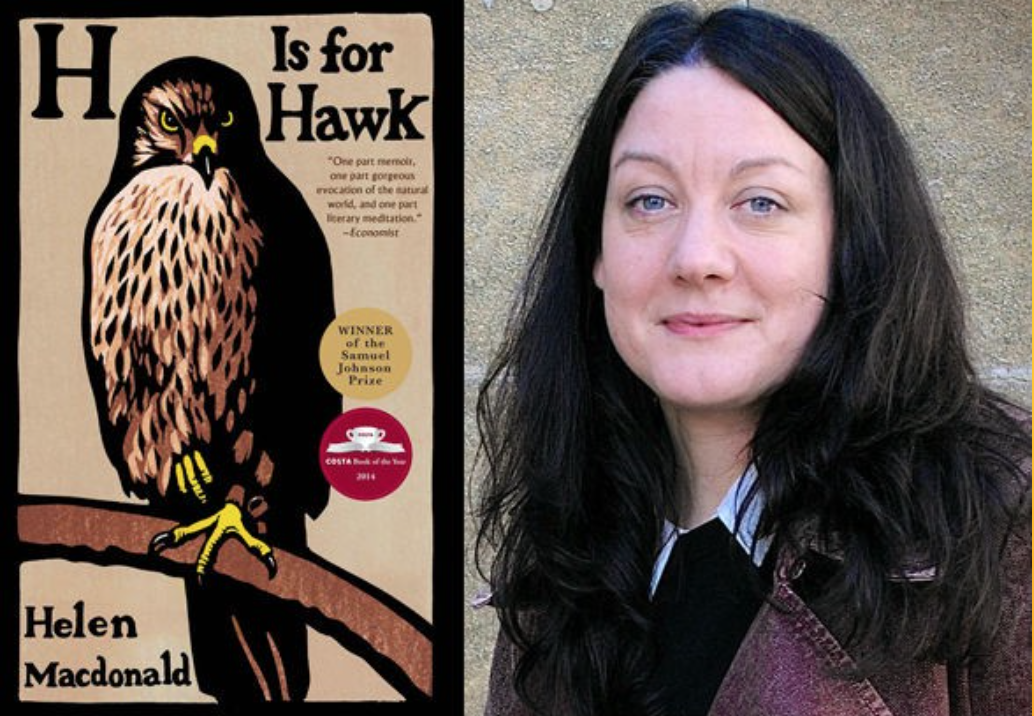
Kathryn Aalto calls Helen Macdonald‘s 2016 book, H is for Hawk, a “masterpiece of literary nonfiction that braids memoir, literary biography, and falconer’s diary into a beautiful example of new nature writing.” (p. 187) The Guardian states that “loss and grief are the emotional landscape of Macdonald’s work.”

Last spring, in the early days of the pandemic, I finally got around to reading H is for Hawk. Macdonald’s writing was full of pain, a mirror for the fear I was feeling. Coincidentally, or maybe not, a hawk built a nest in a tree near enough to the edge of the road where I walk that I could watch it each day. I began to see this hawk’s natural reproductive cycle as a defiant act of life in the face of so much death. During that desperate time, this hawk family gave me hope.

H is for Hawk
An Abecedarian

Assembled from scavenged twigs, a nest rests in the
Branches of an old oak, 
Cradling a clutch of
Delicate
Eggs. 
Far above prying eyes, this woven bowl is
Guarded by two fierce
Hawks.
Incubating inside, three pearly
Jewels, speckled brown, are
Kept warm by both
Loyal parents. Patient, nearly
Motionless, only heads bob back and forth,
Noticing all potential threats.
On each chest, a bare brood
Patch covers the eggs like a 
Quilt, heat
Radiating, heart to heart.
Spongy moss and 
Tufts of grass
Upholster the nest, cushioning its
Valuable cache. Soon, hatchlings will
Wriggle free of their shells
eXclaiming their arrival on a spring day,
Yellow daffodils dancing on a warm
Zephyr in celebration.

Draft © 2021, Catherine Flynn

Previous Writing Wild posts:

Day 1: Dorothy Wordsworth
Day 2: Susan Fenimore Cooper
Day 3: Gene Stratton-Porter
Day 4: Mary Austin
Day 5: Vita Sackville-West
Day 6: Nan Shepherd
Day 7: Rachel Carson
Day 8: Mary Oliver
Day 9: Carolyn Merchant
Day 10: Annie Dillard
Day 11: Gretel Ehrlich
Day 12: Leslie Marmon Silko
Day 13: Diane Ackerman
Day 14: Robin Wall Kimmerer
Day 15: Lauret Savoy
Day 16: Rebecca Solnit
Day 17: Kathleen Jamie
Day 18: Carolyn Finney

National Poetry Month: Writing Wild, Day 18

Over the course of this project, I’ve been aware of the danger of appropriating and/or (mis)interpreting an experience different from my own. This is especially true today. As a white child growing up in western Connecticut, I was surrounded by other white children who came from families similar to my own. We tromped through the fields and woods, rode our bikes everywhere, swam in nearby lakes and ponds. That others were excluded from this experience simply never occurred to me. The media–TV, movies, books, newspaper–only confirmed my experience. 

Today’s featured author is Carolyn Finney, a black woman who grew  up in the white suburbs of New York City, had a childhood filled with similar activities, but experienced them very differently. Her parents were caretakers on an estate in Westchester County, the only black family for miles. In her book Black Faces, White Spaces: Reimagining the Relationship of African Americans to the Great Outdoors, Finney explores “the linkages between representations of the ‘Great Outdoors’ and the ‘African American experience in the United States, in terms of attitudes, beliefs, and interactions pertaining to the environment.” She wants “to understand the relationship between African Americans and various processes that define and inform what we call ‘environment’ (whether as matters of discourse or aspects of the natural world).” Her book considers “the legacy of an environmental narrative that denies the complex history of various cultural groups whose access to and use of natural resources were mediated by policies and laws that limited their possibilities.” 

Like Lauret Savoy’s Trace, this book asks hard questions. Questions that deserve our thoughtful consideration. This found poem, created with words and phrases found in the Introduction and Epilogue to Black Faces, White Spaces, is my initial understanding of Finney’s work. I have tried to represent the truth and intent of Finney’s words. If this poem does not, the fault is mine.

Black faces
outside looking in:
exclusion from
“white wilderness.”
Socially constructed,
shapes reality,
informs identity,
ideas of wilderness.

Racism impacts participation.
Creates roadblocks,
constrains environmental interactions.

Shift cognitive maps.
Offer opportunity.
Draw outside the lines
of the Great Outdoors
to see how
resilience can emerge.
Engage the unlikely,
the unfamiliar
Attempt to grasp our future
with clear intention

and eyes wide open.

Previous Writing Wild posts:

Day 1: Dorothy Wordsworth
Day 2: Susan Fenimore Cooper
Day 3: Gene Stratton-Porter
Day 4: Mary Austin
Day 5: Vita Sackville-West
Day 6: Nan Shepherd
Day 7: Rachel Carson
Day 8: Mary Oliver
Day 9: Carolyn Merchant
Day 10: Annie Dillard
Day 11: Gretel Ehrlich
Day 12: Leslie Marmon Silko
Day 13: Diane Ackerman
Day 14: Robin Wall Kimmerer
Day 15: Lauret Savoy
Day 16: Rebecca Solnit
Day 17: Kathleen Jamie

National Poetry Month: Writing Wild, Day 17

Kathleen Jamie is an award-winning poet, essayist, and professor of poetry. Her work, Kathryn Aalto explains, “force you to stop, bend down to examine that eye-catching thing you see, and contemplate other worlds washed ashore at your feet.” (p.170)

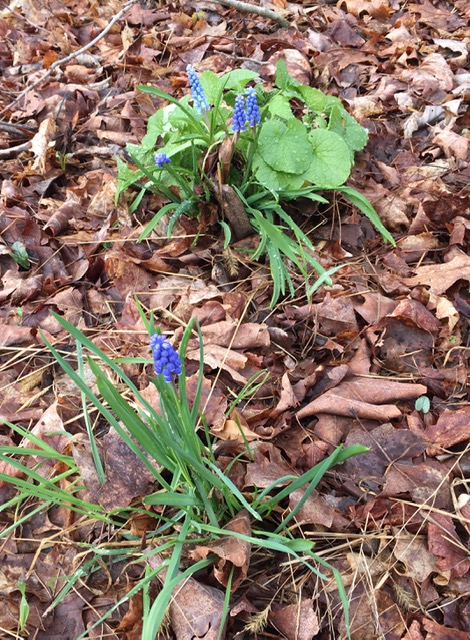
Jamie believes that “nature resides in the cracks and crevices of daily life,” and I quite agree. The sights and sounds gathered on my walks are an endless source of inspiration for me. Today’s poem is after Jamie’s poem, “The Dipper.

It was spring, damp and raw,
I’d walked along the edge of fields
when I saw nestled in leaf litter
a cluster of grape hyacinth.

They sat beside a rock wall,
surrounded by a shock of green,
this pyramid of purple bells,
and chimed a silent celebration.

It wasn’t mine to pluck.
I can’t pick this first flower
that knows April’s icy rains
yet sings of spring.

Draft, © 2021, Catherine Flynn

Previous Writing Wild posts:

Day 1: Dorothy Wordsworth
Day 2: Susan Fenimore Cooper
Day 3: Gene Stratton-Porter
Day 4: Mary Austin
Day 5: Vita Sackville-West
Day 6: Nan Shepherd
Day 7: Rachel Carson
Day 8: Mary Oliver
Day 9: Carolyn Merchant
Day 10: Annie Dillard
Day 11: Gretel Ehrlich
Day 12: Leslie Marmon Silko
Day 13: Diane Ackerman
Day 14: Robin Wall Kimmerer
Day 15: Lauret Savoy
Day 16: Rebecca Solnit

Poetry Friday & NPM: Writing Wild, Day 16

I discovered Rebecca Solnit many years ago when I spotted her book, Wanderlust: A History of Walking on a shelf at my local library. As a passionate walker, I was intrigued, and Solnit’s expansive perambulation from ancient Athens to today’s suburban sidewalks and treadmills didn’t disappoint. Kathryn Aalto describes Solnit as “a writer, historian, and activist who links ideas and places like string to thumbtacks.” (p. 161)

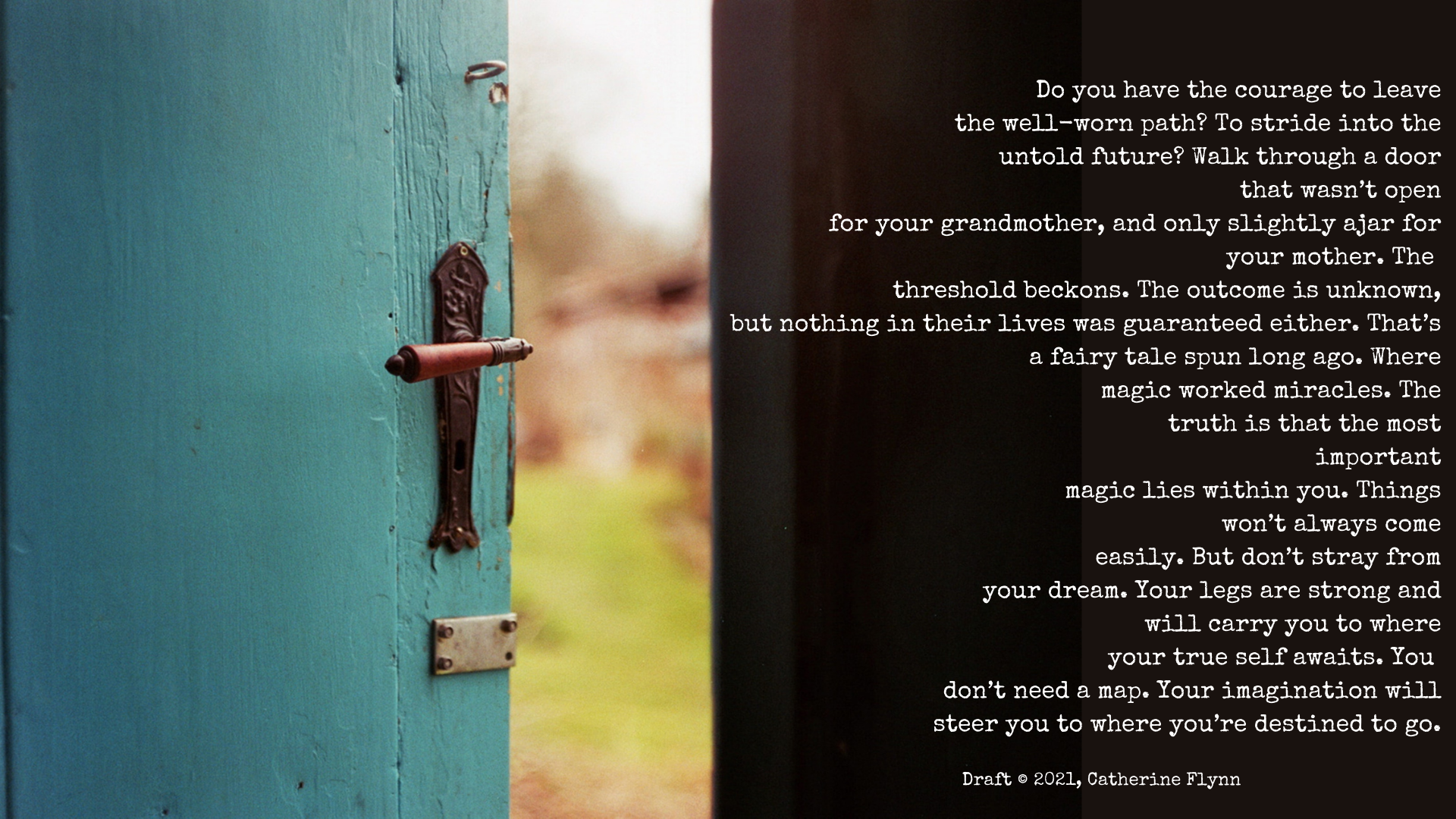
Because walking is what drew me to Rebecca Solnit’s work in the first place, I expected to write a poem about my daily walks, and thought a Golden Shovel would be a good form. My plan took a few detours. To begin with, I couldn’t find a quote I liked well enough to use as a strike line in Wanderlust. Searching through Solnit’s many other works, I found one I liked, but it was long. So I shortened it. (I have no idea if this is allowed, but I did it anyway.) Here is the original quote from A Field Guide to Getting Lost.

Leave the door open for the unknown, the door into the dark. That’s where the most important things come from, where you yourself came from, and where you will go.

Finally, this poem took an unexpected turn away from walks through my neighborhood and into a semi-autobiographical realm that was influenced by the fifteen writers highlighted in my previous Writing Wild posts. Writing is full of surprises!

Photo by Jan Tinneberg via Unsplash

Please be sure to visit Jama Rattigan at Jama’s Alphabet Soup for the Poetry Friday Roundup. You can also read previous Writing Wild posts if you’d like to learn more about some amazing writers.

Day 1: Dorothy Wordsworth
Day 2: Susan Fenimore Cooper
Day 3: Gene Stratton-Porter
Day 4: Mary Austin
Day 5: Vita Sackville-West
Day 6: Nan Shepherd
Day 7: Rachel Carson
Day 8: Mary Oliver
Day 9: Carolyn Merchant
Day 10: Annie Dillard
Day 11: Gretel Ehrlich
Day 12: Leslie Marmon Silko
Day 13: Diane Ackerman
Day 14: Robin Wall Kimmerer
Day 15: Lauret Savoy

National Poetry Month: Writing Wild, Day 15

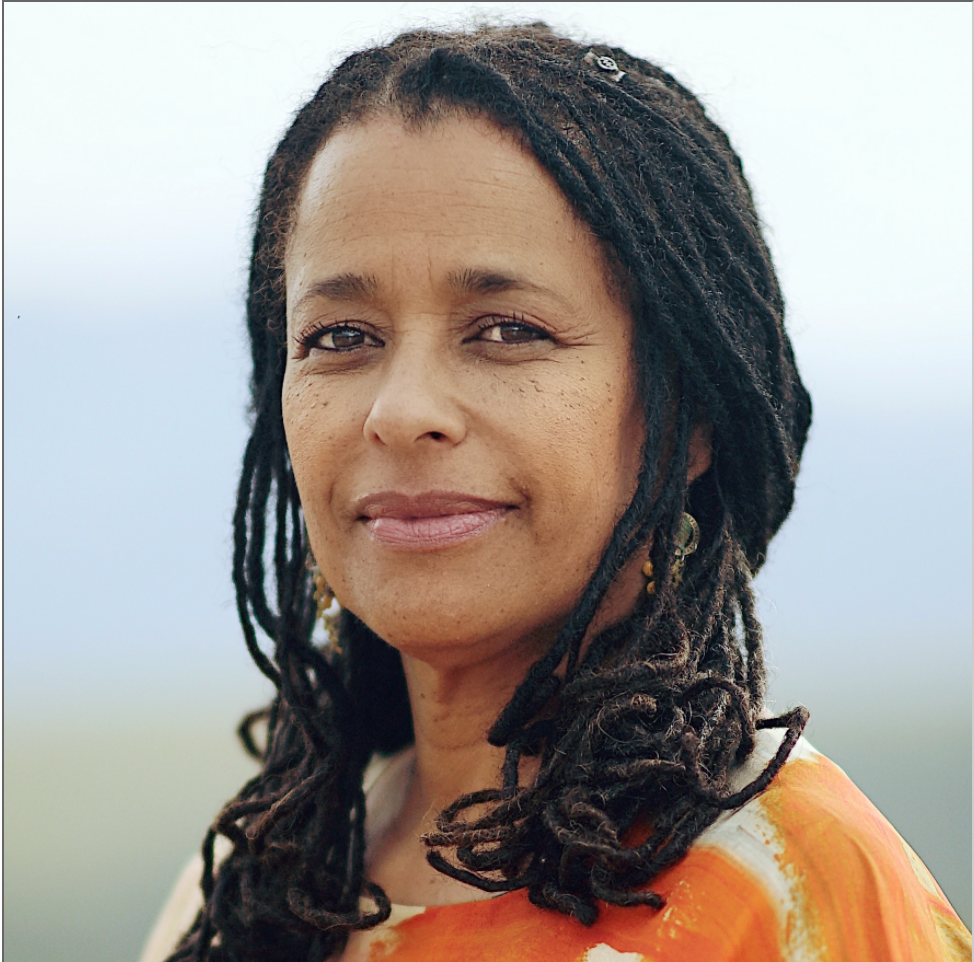
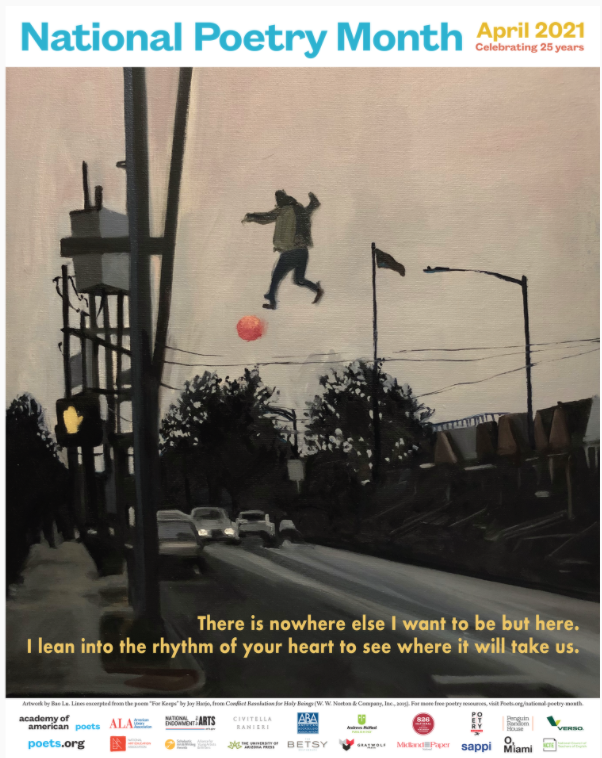
We are halfway through National Poetry Month. After fifteen days of leaning “into the rhythm” of the hearts of these incredible women, I am in awe of the work they have done, but also the work Kathryn Aalto did to create Writing Wild. I am just scratching the surface of their work, their lives, and their stories to gather ideas for these poems. There is so much more to be learned from them.

This is particularly true of today’s featured author, Lauret Savoy. The David B. Truman Professor of Environmental Studies and Geology at Mount Holyoke College (Aalto, p. 152), Savoy brilliantly uses the science of geology, the study of earth’s broken and fragmented history and applies it to her exploration of the American landscape and her place in it. Her award-winning book Trace: Memory, History, Race, and the American Landscape, details painful histories and asks hard questions in an effort to integrate “multiple perspectives into reading landscape and our history in the land.”

To create a poem that could weave these ideas together was daunting. Using many of Lauret’s own words from her writing and this interview on the Kenyon Review Podcast I turned to an acrostic to help me grapple with the expansiveness of Savoy’s ideas.

Tattered truths litter our fractured, fractious landscape.
Recognition of this complexity and unvoiced history,
Attempts to reconcile that beauty and ugliness can
Coexist, that this land existed before hatred, can begin to
Erase boundaries and cultivate a new vision, a new kinship with Earth.

Photo by Kris Bergbom via https://www.lauretsavoy.com/about/

Previous Writing Wild posts:

Day 1: Dorothy Wordsworth
Day 2: Susan Fenimore Cooper
Day 3: Gene Stratton-Porter
Day 4: Mary Austin
Day 5: Vita Sackville-West
Day 6: Nan Shepherd
Day 7: Rachel Carson
Day 8: Mary Oliver
Day 9: Carolyn Merchant
Day 10: Annie Dillard
Day 11: Gretel Ehrlich
Day 12: Leslie Marmon Silko
Day 13: Diane Ackerman
Day 14: Robin Wall Kimmerer

National Poetry Month: Writing Wild, Day 14

Oren Lyons calls Braiding Sweetgrass “instructive poetry.” One of the challenges of this project has been deciding on a poetic form that fits well with an author’s writing. Kimmerer is such a lyrical and evocative writer, I decided to try and capture the main tenets of her work in found haiku and tanka(ish–the syllable count isn’t always exact). These words appear in Kimmerer’s essay, “Returning the Gift.

“Returning the Gift”

The Earth Calls Us to Gratitude

Recognize the gift
give back in equal measure
practice contentment

The Earth Asks that We Pay Attention

Listen to the Earth
be open and attentive
notice the beauty

but also notice the wounds
attention becomes intention

Recognize the Personhood of All Beings

We share the planet
non-human persons, neighbors
with rights and intentions

with their own ways of being
more the same than different

The Earth Asks Us to Change

Everything changes
Allosaurus becomes a warbler
singing from the trees

we can learn from global mistakes
we need to change ourselves

The Earth Calls Us to Reciprocity

What is our gift?
to reciprocate Earth’s gifts
practice reverence

heal the damage we have done
give our gifts on behalf of life

Previous Writing Wild posts:

Day 1: Dorothy Wordsworth
Day 2: Susan Fenimore Cooper
Day 3: Gene Stratton-Porter
Day 4: Mary Austin
Day 5: Vita Sackville-West
Day 6: Nan Shepherd
Day 7: Rachel Carson
Day 8: Mary Oliver
Day 9: Carolyn Merchant
Day 10: Annie Dillard
Day 11: Gretel Ehrlich
Day 12: Leslie Marmon Silko
Day 13: Diane Ackerman