Poetry Friday: The Secret

Poetry_Friday_Button-210

I finished reading Christopher Lehman and Kate Robert’s new book, Falling in Love With Close Reading (Heinemann, 2013) last week. Kate and Chris have done a terrific job articulating the elements of close reading. At the same time, they encourage teachers to be purposeful about using close reading strategies. Close reading is not something to be done on every page of every book. Their main point it that close reading should be done when there is a deeper understanding to be gained.

All week I’ve been thinking about the application of these ideas in the classroom. I have been looking at texts differently since reading Falling in Love With Close Reading. Noticing patterns I might have skimmed over in the past, or asking myself, “I wonder why the author chose that word.” All this thinking reminded me of “The Secret” by Denise Levertov.

The Secret

by Denise Levertov

Two girls discover

the secret of life

in a sudden line of

poetry.

I who don’t know the

secret wrote

the line. They

told me

(through a third person)

they had found it

but not what it was

not even

what line it was. No doubt

by now, more than a week

later, they have forgotten

the secret,

the line, the name of

the poem. I love them

for finding what

I can’t find,

Read the rest of the poem here.
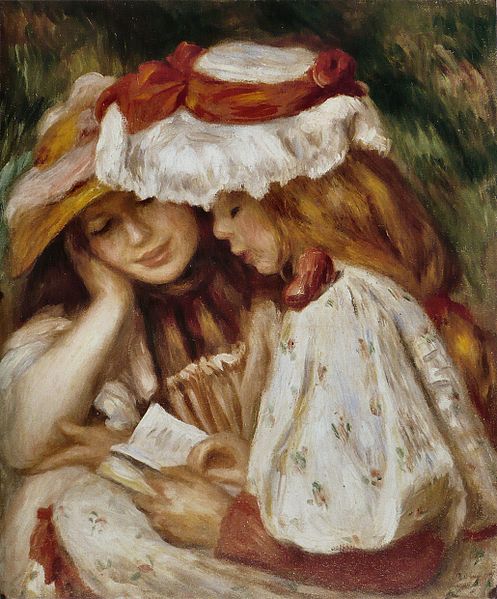
497px-Pierre-Auguste_Renoir_-_Jeunes_Filles_lisant
“Two Girls Reading”
Pierre-Auguste Renoir [Public domain], via Wikimedia Commons
Please visit Tabatha at The Opposite of Indifference for the Poetry Friday Round Up.

Slice of Life: Christmas Trees and the Gift of Books

sols_6

“A book is a gift you can open again and again.”

Garrison Keillor

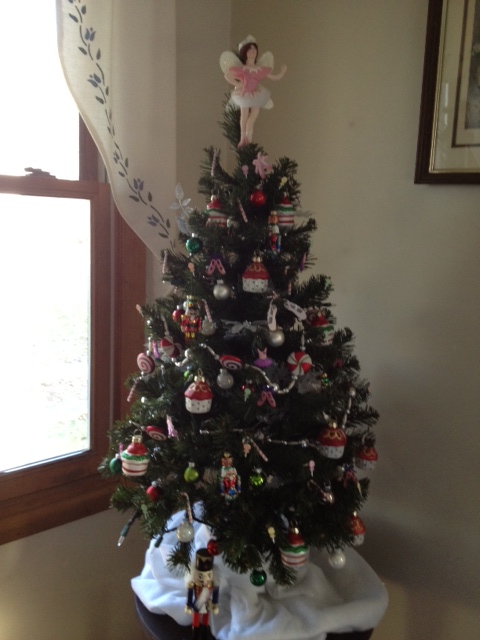
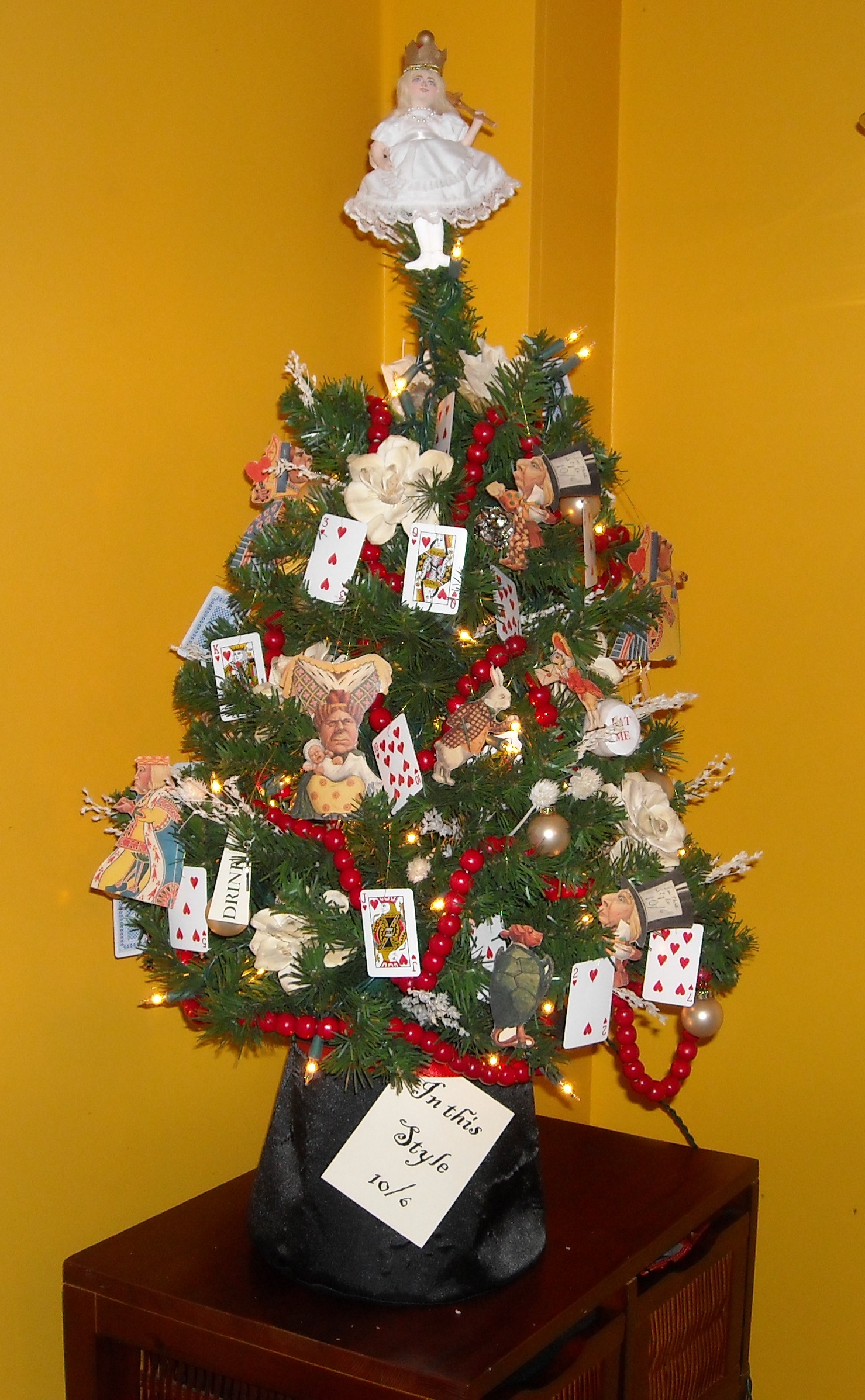
Every year in late November, my town library hosts a cocktail party/silent auction fund raiser to kick off the holiday season. People donate gift baskets, wreaths, and gift cards to local restaurants and businesses, but the highlight of the event are the Christmas trees. The decorations on each tree are inspired by a book, which is of course part of the package. My dear friend, Colette (of Used Books in Class fame), and I have been contributing a tree for at least the last 15 years, and it has become one of my favorite holiday traditions.

The Nutcracker
The Nutcracker Tree, topped by Boalt’s Sugar Plum Fairy

Our trees have most often been based on a children’s book, but we have done a few trees based on adult books. Our Under the Tuscan Sun tree was especially beautiful.  Sometimes we’re inspired by the book itself; other times we find an ornament that strikes our fancy. Many of our trees were inspired by the incredible handmade soft sculpture ornaments by Gladys Boalt. These usually adorn the tree top. The rest of the ornaments are generally a mix of purchased ornaments and ornaments that we make. We’ve gotten very creative over the years about making ornaments out of almost anything. Tiny terra-cotta flower pots and raffia became bells on the Tuscan tree, yellow grosgrain ribbon was transformed into the yellow brick road with the help of a black Sharpie, and a hand-knit I-cord became the garland for a tree full of little sweaters and hats.

Alice in Wonderland Tree

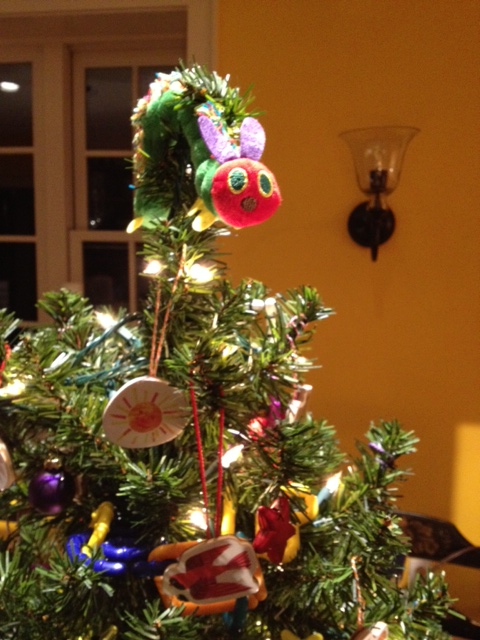
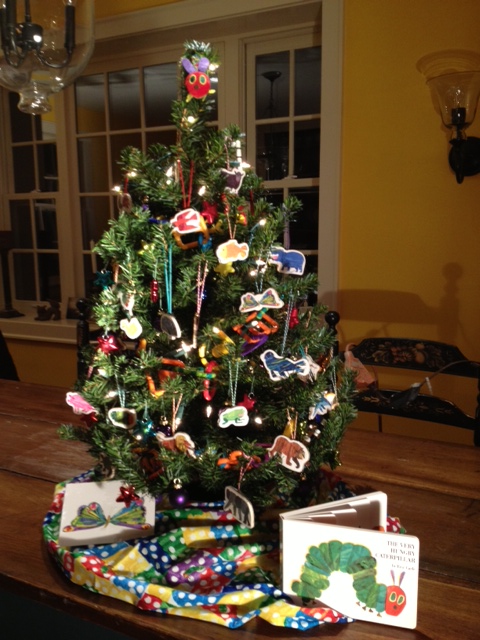
Ideas for a tree can strike at any time of the year. Colette is usually the mastermind, but I’ve had my share of brainstorms too. This year’s tree was inspired by a set of wooden magnets Colette found in the gift shop at the Eric Carle Museum back in March. With the help of brightly colored bakery string and scrap book paper (to cover the black backs), these adorable magnets became ornaments. Plastic alphabet links were turned into a garland, and the Very Hungry Caterpillar himself sat atop the tree.

The Very Hungry Caterpillar

Every year we ask ourselves why we do this, as it takes a fair amount of time to make sure we have all the materials we need, make the ornaments, and decorate the tree. Trees have to be delivered to the library (a big challenge in itself!) right before Thanksgiving, a very hectic time of year for teachers. But every year, as we’re making the ornaments, we remember why we do this. We love it. We love supporting our local library. We love using a creative part of our brain that we often neglect, and we love creating beautiful Christmas trees that bring joy to someone. Most of all, we love giving a child a book they will never forget.

This year's finished tree
This year’s finished tree

Thank you to everyone at Two Writing Teachers for creating and nurturing this supportive community!

It’s Monday! What Are You Reading?

IMWAYR

I brought a stack of books home with me from NCTE, and I’ve had fun making my way through those over the past few weeks. Today I’m highlighting two of my favorites.

Although I was overwhelmed by the Exhibition Hall at the Hynes center, this immediately caught my eye at the Clarion booth:

Clarion, 2013

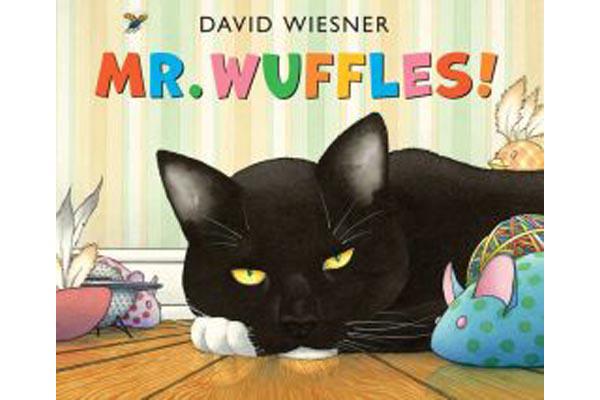
I love teaching with wordless picture books because they are accessible to all students, and David Wiesner is a genius of the form. The level of sophistication in his wordless picture books make them especially appealing to older students. Mr. Wuffles (Clarion, 2013) is one of his best. At first I was surprised by the slightly cartoony quality of the cover. But, after reading the first few pages, my notion that this might be a departure from Wiesner’s usual photographic style was gone.

Mr. Wuffles can’t be bothered with the many toys his human has tried to lure him with. Nestled in amongst the stuffed mice and jingle balls is what at first glance might be a tea infuser or some other forgotten mid-20th century kitchen gadget. Mr. Wuffles ignores this too, until something about this curious little silver ball catches his attention. Then the fun begins. Priceless facial expressions tell much of the story, and Wiesner plays with point of view throughout the book. Rich with details, Mr. Wuffles is a treat for picture book lovers of all ages.

Meet the model for Mr. Wuffles and learn more about Wiesner’s creative process in the book trailer:

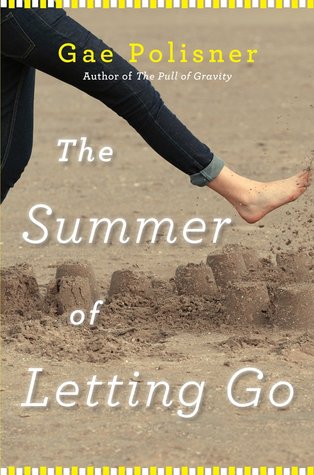
Another highlight of my visit to the Exhibition Hall was meeting Gae Polisner and getting a signed ARC of The Summer of Letting Go. (Algonquin, publication date: March 18, 2014) Gae is one of the forces behind Teachers Write! and her kind and generous feedback about my writing was a real boost to me last summer. This may make me biased, but if I hadn’t liked this book, I just wouldn’t have written about it.

16068979

And actually I didn’t like it. I loved it. I wish my 14 or 15 year old self could have read this book. It would have been such a relief to know that other girls were insecure about their looks or felt like they couldn’t do anything right. Francesca, aka Frankie, worries about all this and more. She feels responsible for the drowning death of her younger brother four years earlier, and she worries about her parents, who are each coping with this tragedy in their own way. The Summer of Letting Go is the story of Frankie’s journey to forgiveness and acceptance; to understanding that “not even the ocean can drown our souls.”

Be sure to visit Jen at Teach Mentor Texts and Kellee at Unleashing Readers to find out what other people have been reading lately. Thanks, Jen and Kellee, for hosting!

Poetry Friday: Georgia Heard, Roque Dalton, and Unlocking the Door to Poetry

Poetry_Friday_Button-210

Poetry filled the air last weekend at the NCTE Convention in Boston. One of the highlights for me was hearing Georgia Heard, Tom Romano, and Linda Rief speak about the importance of “Keeping Poetry at Our Core.”

georgiaheard

Georgia Heard began the session by pointing out that “poetry is in every single strand of the CCSS.” She urged us to grow poetry slowly, not to wait until April, but to make a place for poetry in our classrooms every day. “Poetry changes us,” she said, “it changes our writing and our living.”

With these thoughts about the importance of poetry in mind, Heard went on to give us steps to guide our work. The first step is to “choose poems that are accessible, non-threatening, and relevant” to our students. Once we’ve done this, the next crucial step is to help students connect with a poem by guiding them “toward finding themselves and their lives inside the poem.”

Heard also shared that we have to give our students the tools they need to analyze and interpret poetry. Through close reading and asking questions such as “How does this poem relate to your life?” and “What is the impact of this poem on your life?” students can “unlock the door of a poem.” Then they will be able to analyze the meaning and craft of a poem for other layers of meaning.

Heard inspired me to be even more mindful about helping my colleagues share poetry with students when she closed her part of the session with the wisdom of Matthew Fox:

“The Celtic peoples…insisted that only the poets could be teachers. Why? I think it is because knowledge that is not passed through the heart is dangerous.”

This quote can also be found in Georgia’s book, Awakening the Heart (Heinemann, 1999, pg. 118). As I revisited my copy of this classic, I rediscovered this poem by Roque Dalton, another reminder that poetry is for everyone.

“Like You ”

Like you I

love love, life, the sweet smell

of things, the sky-blue

landscape of January days.

And my blood boils up

and I laugh through eyes

that have known the buds of tears.

I believe the world is beautiful

and that poetry, like bread, is for everyone.

And that my veins don’t end in me

but in the unanimous blood

of those who struggle for life,

love,

little things,

landscape and bread,

the poetry of everyone.

(translated by Jack Hirschman)

Tom Romano and Linda Rief were just as eloquent and inspiring, so, in the weeks to come, they will each have their own well-deserved post. For more inspiring poetry posts, NCTE-related and otherwise, be sure to visit Carol’s Corner, for the Poetry Friday Round Up.

Slice of Life: NCTE Edition

sols_6  logo-higher-logic

“The universe is made of stories, not atoms.”

 ~Muriel Rukeyser~

I arrived at the Hynes Convention Center in Boston on Thursday evening for my first NCTE Convention filled with anticipation about the upcoming three days. To say my expectations were fulfilled is an understatement! From meeting authors Jane Yolen, Gae Polisner, and Kate Messner, to having breakfast with fellow Slicers, to learning so much from all the amazing presenters, it was a weekend I will long remember.

My head is still filled with the wise words shared not only by the teachers, authors, and poets in front of the conference rooms, but with everyone I chatted with throughout the day. How to share all these thoughts swirling around my brain, like the leaves on the streets of Boston Sunday morning? As I pored over my notes, a pattern of recurring words and phrases began to emerge, and I “found” this poem:

Open the door…

welcome to this safe space.

A space to share our voices,

and tell our stories,

through poetry,

movement,

and art.

A place to explore,

imagine,

speculate,

and connect.

A space to find surprises,

insights,

knowledge,

and trust.

This place is a source of joy.

It has the power to change us; to

help us discover what’s in our heart.

It gives us the courage

to take our message

out into the world.

Thank you to Judy Blume, Nancie Atwell, Helene Coffin, Georgia Heard, Linda Rief, Tom Romano, Chris Leheman, Kate Roberts, Maggie Beattie Roberts, Joyce Sidman, Jane Yolen, Jerry Spinelli, Glenda Funk, Cherylann Schmidt, Kate Messner, Gae Polisner, Jo Knowles, Jen Vincent, Brian Wyzlic, Sara Egan, Brian Fizer, Sean Ruday, and Miriam Kopelow for so generously sharing these words, your experiences and your insights with teachers; for giving us the knowledge and the courage and the power to change our students’ lives.

Please visit Two Writing Teachers, where many wonderful and courageous teachers share their stories each week.

Slice of Life: Code Name Verity

sols_6

“Tell all the truth but tell it slant…”

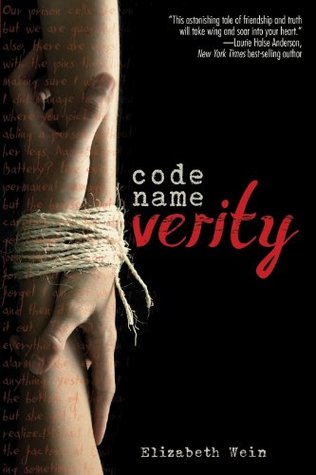
Emily Dickinson’s words came to mind as I reread Code Name Verity, by Elizabeth Wein, over the weekend. When I originally read Wein’s tale of intrigue and suspense, I was caught up in the story of the two heroines. This time, I was more aware of Wein’s craft: her masterful use of foreshadowing and literary allusions that deepen the reader’s understanding of the characters.

Hyperion, 2012
Hyperion, 2012

But even as I noticed subtleties and connections I hadn’t on my first read, I was worried that my book group might not share my feelings about this title. Recommending a book you love to a friend is one thing. Suggesting it to your discussion group is another. A friend can always say she hasn’t gotten around to reading the book yet. In a group, though, it can be very awkward if everyone doesn’t love a book as much as the person who said, “Let’s read this!”

I needn’t have worried. Everyone liked Code Name Verity, even if some of the details were disturbing. The “YA” sticker on the book’s spine didn’t matter to anyone. The story drew them in, and held on to them until the end.

This is a great book for discussion. There aren’t any unresolved plot lines, but there are plenty of questions. Each person had their own unique interpretations and brought up ideas others hadn’t thought of. Listening to one another added layers to our insight and understanding of this powerful book.

Our diverse little group came together because we love books. We’ve developed a camaraderie over the years, sharing the ups and downs of our lives as we share our latest reading. I’m grateful for this community where I feel free to share my thoughts and ideas about books that I love. Books like Code Name Verity, where the truth lies waiting, even if the stories are made up.

Thank you to everyone at Two Writing Teachers for creating this wonderful community!

Poetry Friday: Hurry

Poetry_Friday_Button-210

When I was in college, one of the required classes for English majors was “Introduction to Poetry.” One assignment was to write a sonnet, a challenging form under the best of circumstances. At the time, I had two small children and was working part-time in addition to taking classes. It seemed like there was never a moment to take a deep breath, let alone write a sonnet. The busyness of my life was my muse, and I ended up with a poem that included ringing telephones, crying children, and burnt food. (The poem itself is buried somewhere in my attic; count yourself as lucky that I didn’t have time dig it out of its cardboard sarcophagus.)

I thought about this poem last night while trying to decide what to share for Poetry Friday. Somehow, twenty-five years later, I’m as busy as ever. Last week, we were on our way to Pennsylvania for my niece’s wedding, and although I had an idea of what I wanted to share, I ran out of time and posted nothing. The same thing happened earlier in the week when it was time for It’s Monday! What Are You Reading? and Tuesday’s Slice of Life.

By Aldaron — Aldaron, a.k.a. Aldaron (Flickr) [CC-BY-SA-2.0 (http://creativecommons.org/licenses/by-sa/2.0)], via Wikimedia Commons
By Aldaron — Aldaron, a.k.a. Aldaron (Flickr) [CC-BY-SA-2.0 (http://creativecommons.org/licenses/by-sa/2.0)%5D, via Wikimedia Commons
This morning, I woke up determined to share a poem. I googled “poems about being busy” and found I’m not alone in my feelings of frustration at all there is to do. In “Notes on Distraction,” a wonderful post on The New Yorker blog, Giles Harvey writes about noticing a man glance at his watch during a performance of “Einstein on the Beach” as a “vignette of our contemporary busyness.”

Poet Marie Howe has captured this “contemporary busyness” in her poem, “Hurry.”

We stop at the dry cleaners and the grocery store

and the gas station and the green market and

Hurry up honey, I say, hurry, hurry,

as she runs along two or three steps behind me

her blue jacket unzipped and her socks rolled down.

Where do I want her to hurry to?

read the rest of the poem here

This morning, I stood at my kitchen window for what seemed like minutes, just looking at a maple tree covered with yellow leaves glowing in the morning sun. It was lovely not to feel busy or rushed at that moment, even if it was just for a minute or two. I thought back to  the closing lines of Harvey’s essay:

“In a world of speed and distraction, the slow, demanding art work is more indispensable than ever, for it holds out the possibility of those elusive commodities: stillness, clarity, and peace.”

Be sure to visit Diane at Random Noodling for today’s Poetry Round Up. You’ll be sure to find a moment of “stillness, clarity, and peace.”

It’s Monday! What Are You Reading? Randolph Caldecott: The Man Who Could Not Stop Drawing

IMWAYR

When I was a kid, I always sought out the picture books with the shiny gold and silver stickers on the cover. I had no idea what these stood for, but like a magpie searching for glittering baubles, I was drawn to them for the magical illustrations they contained.

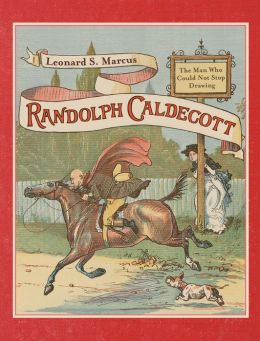
I learned soon enough what these stickers represented, but still only had a vague sense of who Randolph Caldecott was. Thanks to Leonard S. Marcus’s wonderful new book, Randolph Caldecott: The Man Who Could Not Stop Drawing (Farrar Straus Giroux, 2013) I know much more about this pioneer of picture books for children.

9781466852907_p0_v2_s260x420

Oversized and printed on heavy, creamy paper, Randolph Caldecott: The Man Who Could Not Stop Drawing follows Caldecott from his birth in 1846 to his early death at the age of 39 in 1886. Caldecott found joy in nature and humor in everything. He went to work as a bank clerk at the age of 15, but spent most of his free time sketching. He was soon selling illustrations to newspapers and on his way to becoming the inventor of the modern picture book.

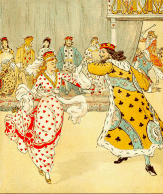
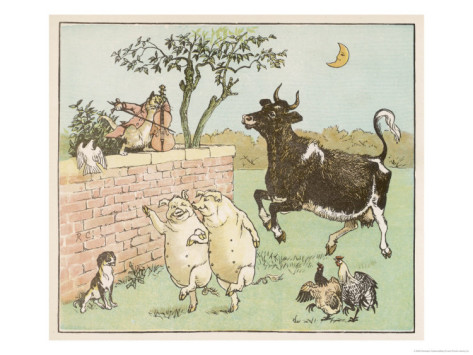
KingHeartsrandolph-caldecott-the-cow-jumped-over-the-moon

This book is lavishly illustrated. Scenes from Caldecott’s sketch books are interspersed with both black and white and color illustrations published throughout his lifetime. Caldecott’s drawings are filled with humor and energy.  He wrote of his art, “Please say that my line is to make to smile the lunatic who has shown no sign of mirth for many months.” (p. 36) And an 1883 illustration from The Fox Jumps Over the Parson’s Gate shows hounds racing through a graveyard with headstones for Peter Piper, Mary, and Thomas Blowhorn.

As I read this book, I thought of Artist to Artist: 23 Major Illustrators Talk to Children about Their Art. Published in 2007, Artist to Artist is a collection of essays by picture book artists, many of them Caldecott Medal and Honor winners, telling the story of their careers with young readers. It’s so important for students to learn about the often long and arduous path so many artists take on their way to success. Learning about their creative process can take the mystery out of becoming an artist and make it seem within reach. Sharing these stories with our students can inspire them to pursue their own passions and create their own art, because, as Caldecott himself reminded a young fan, “there are so many beautiful things waiting to be drawn.”

Be sure to visit Jen at Teach Mentor Texts and Kellee at Unleashing Readers to find out what other people have been reading lately. Thanks, Jen and Kellee, for hosting! And thank you, Colette, for giving me this lovely book.

Poetry Friday: Wynken, Blynken, and Nod

“Children are made readers on the laps of their parents.”

— Emilie Buchwald

Poetry_Friday_Button-210

Parents often ask me how they can help their children become readers. I tell them to read to them early and often. There is an extensive research base supporting this advice. (Reach Out & Read and Reading Rockets have thorough summaries.) The National Center for Family Literacy and The Yale Reading Center are just two of the many websites with resources for parents and teachers. And the variety and quality of children’s books being published today is astounding.

Poetry is especially well suited for little ones. They love the rhythm, rhyme and word play found in nursery rhymes and poems. When my boys were little, we all looked forward to our ritual bedtime reading. We had many Mother Goose collections and rhyming books, and this was one of our favorites.

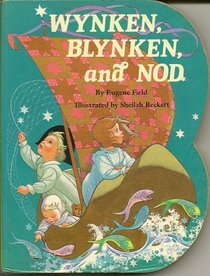
Image

“Wynken, Blynken, and Nod”

by Eugene Field

Wynken, Blynken, and Nod one night

Sailed off in a wooden shoe–

Sailed on a river of crystal light,

Into a sea of dew.

“Where are you going, and what do you wish?”

The old moon asked of the three.

“We have come to fish for the herring fish

That live in this beautiful sea;

Nets of silver and gold have we!”

Said Wynken,

Blynken,

And Nod.

The old moon laughed and sang a song,

As they rocked in the wooden shoe,

And the wind that sped them all night long

Ruffled the waves of dew.

The little stars were the herring fish

That lived in that beautiful sea–

“Now cast your nets wherever you wish–

Never afeard are we!”

So cried the stars to the fishermen three:

Wynken,

Blynken,

And Nod.

All night long their nets they threw

To the stars in the twinkling foam–

Then down from the skies came the wooden shoe,

Bringing the fishermen home;

‘Twas all so pretty a sail it seemed

As if it could not be,

And some folks thought ‘twas a dream they’d dreamed

Of sailing that beautiful sea—

But I shall name you the fisherman three:

Wynken,

Blynken,

And Nod.

Wynken and Blynken are two little eyes,

And Nod is a little head,

And the wooden shoe that sailed the skies

Is a wee one’s trundle-bed.

So shut your eyes while mother sings

Of wonderful sights that be,

And you shall see the beautiful things

As you rock in the misty sea,

Where the old shoe rocked the fishermen three:

Wynken,

Blynken,

And Nod.

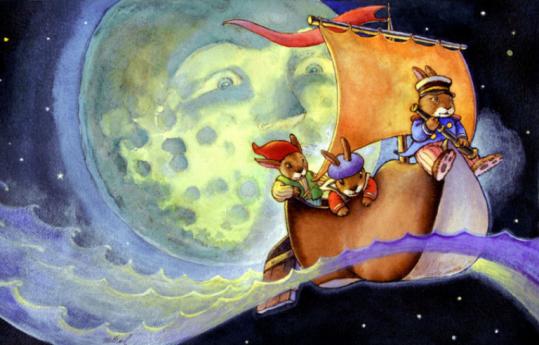
 illustration by David McPhail, from ''Wynken, Blynken, and Nod,'
Illustration by David McPhail, from ”Wynken, Blynken, and Nod”

Be sure to visit Irene Latham at Live Your Poem… for the Poetry Friday Round Up.

It’s Monday! What Are You Reading?

IMWAYR

I love going to conferences and workshops. They’re so invigorating. Sometimes an idea I have is confirmed, or I’m reminded of a strategy or activity I haven’t used in a while. But the best sessions are those where I learn something new that I can immediately use in my teaching and moves my thinking about a topic forward.

This happened on Saturday at the Teachers College Reading and Writing Project Saturday Reunion. Carl Anderson’s session on analyzing informational texts for teaching points to support student writing caused a noticeable shift in my thinking about these books.

Anderson, author of the classic book on conferring, How’s It Going? (Heinemann, 2000), opened his talk by reminding us that using mentor texts is essential if we want our students to write well in any genre. They have to “imagine the shape of their drafts.” In order to do this, they’ll need lots of exposure to models of the genre before they write.

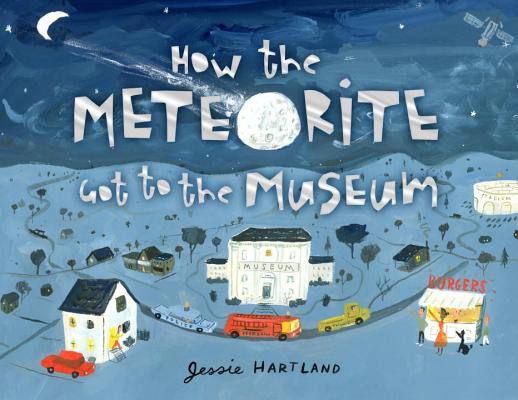
Teachers should look at possible mentor texts through several lenses, including meaning, structure, details, voice, and conventions. Anderson’s words came back to me a few hours later while I was browsing the shelves at Bank St. Book Store. Astronomy has always fascinated me, so Jessie Hartland’s new book, How the Meteorite Got to the Museum (Blue Apple Books, 2013), caught my eye. As I flipped through the pages, I realized I was reading the book differently that I would have just the day before. Many elements of the book’s structure and style popped out and grabbed my attention.

9781609052522

Told as a cumulative story in the tradition of “The House that Jack Built,” How the Meteorite Got to the Museum combines scientific facts with the daily lives of the people whose path the meteor crossed, making the story more interesting and engaging to readers. Hartland infuses the story with humor with lines like “Your car was in an interstellar collision!”

The Peekskill Meteorite’s descent to Earth is described with vivid details that include all the senses. Witnesses’ reactions are chronicled with a variety of verbs each time they’re mentioned, as is the meteorite’s journey itself. Hartland’s colorful, engaging illustrations, which remind me of Maira Kalman’s work, include diagrams, maps and other typical of non-fiction features.

All of these touches give this book a depth that will draw kids back to it again and again, a depth I might have missed if not for Carl Anderson’s ideas about analyzing mentor texts. How the Meteorite Got to the Museum is an ideal mentor text for 3rd or 4th grade students who’ve been writing informational text for a few years and are ready to stretch their writing wings and try a new text structure. And they’ll learn a few facts about meteorites along the way.

Be sure to visit Jen at Teach Mentor Texts and Kellee at Unleashing Readers to find out what other people have been reading lately. Thanks, Jen and Kellee, for hosting!