SOLC 2014: Plans for National Poetry Month

11454297503_e27946e4ff_h

“Poetry is a language in which man explores his own amazement.”

~ Christopher Fry ~

Every month, I lead our school’s Language Arts Committee meeting. The purpose of this committee is to promote the language arts and ensure that our teaching is based on the latest research. I usually begin the meetings sharing news from our state Department of Education, upcoming conferences and workshops, and information gathered at conferences I’ve attended. Teachers share lessons they’ve had success with and examples of student work. We always have snacks and these meetings are a nice way for teachers to learn about what’s happening at other grade levels. 

I spent much of my afternoon planning tomorrow’s meeting. Since National Poetry Month is just a few days away, I will be sharing poetry resources and have a poetry activity planned. Here’s a preview of what’s on the agenda.

  • Poem in Your Pocket Day is on Thursday, April 24th this year. We’ll actually be in school on this day. For several years, this day has been during our April break.
  • Poet-to-Poet Project is “a multimedia educational project that invites young people in grades 3-12 to write poems in response to those shared by some of the award-winning poets who serve on the Academy of American Poets Board of Chancellors.” The resources for this project are incredible: videos of the poets reading their poems, lesson plans, and more. Students can submit their original poems to poets.org for possible publication on the website in May.
  • Book spine poems are a form of found poetry and are a fun way to ease into poetry. You can read about the basic steps at Kenn Nesbitt’s, our current Children’s Poet Laureate, website, Poetry4kids.com.
  • Poetry Tag Time is an e-book of 30 original poems for children compiled in 2011 by Sylvia Vardell and Janet Wong. A veritable who’s who in children’s poets contributed a poem after being “tagged” by the previous poet. Each poem is connected in some way. I participated in an activity very similar to this several years ago during an online Children’s Literature class, but it was called a poetry “merry-go-round.” The professor posted the first poem, then a student had to post a poem that linked to the original, and so on. I really enjoyed reading the different ways people connected to the poems, and read many wonderful poems I might never have seen. I asked everyone to bring a poem tomorrow so we can play Poetry Tag.
  • Thinking about Poetry Tag reminded me of a incredible project Linda Rief shared at NCTE last November. At the beginning of the year, Rief’s students created Heart Maps, an idea from Georgia Heard’s amazing book, Awakening the Heart: Exploring Poetry in Elementary and Middle School. Rief’s students then read volumes of poetry, gathering poems that spoke to them and exemplified an area of their heart map. Students copied these poems out by hand, and gathered them into a “Heart Book.” Vicki Vinton shared a description of this project on her blog, To Make a Prairie.

This seems like a lot to cover in the 40 minutes or so we have for our meeting! My hope is that everyone leaves the meeting with a collection of poems and at least one new idea to try during National Poetry Month. What are your plans for National Poetry Month?

Thank you, as always, to StaceyTaraDanaBetsyAnna, and Beth for hosting the Slice of Life Challenge. Be sure to visit Two Writing Teachers to read more Slice of Life posts.
SOLC 2014: It’s Monday! What Are You Reading?

11454297503_e27946e4ff_hIMWAYR

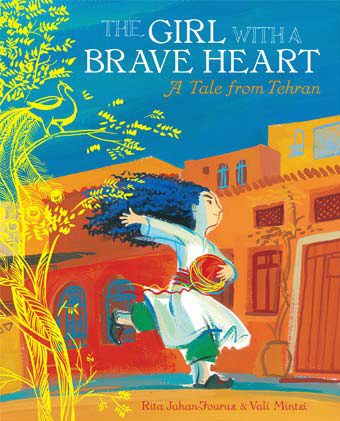
My one little word for 2014 is balance, but over the past week it’s been a challenge to balance work, family, writing, and reading. I’ve read blog posts that are funny and sweet, moving and thought-provoking. But I haven’t really had time to read any books. So when I got home this afternoon, I scanned my shelf and found The Girl with a Brave Heart: A Tale from Tehran (Barefoot Books, 2013), by Rita Jahanforuz and illustrated by Vali Mintzi.

girl.with.a.brave.heart

This is a lovely book. Jahanforuz tells the story of Shiraz, a young girl whose mother died in childbirth. Her father remarries, and his new wife and her young daughter come to live with Shiraz and her father. At first, “the family lived happily together and Shiraz’s stepmother treated her kindly.” But after Shiraz’s father dies, her world is changed. Like Cinderella, she is forced to do all the housework. Shiraz’s life is changed again

When the wind blows Shiraz’s ball of wool into the garden next door, she spends the day helping and caring for the old lady who lives there, with miraculous results. Rendered in a rich, vibrant palette evocative of its Iranian setting, this unforgettable fable has a message that is universal: “When people are sad, they do not always know how to ask for what they need. (from Barefootbooks.com)

Watch Jahanforuz describe how she came to write The Girl with a Brave Heart here:

Don’t miss The Girl with a Brave Heart, a book Pamela Paul, writing in The New York Times called “a heartwarming vindication of good-heartedness.”

Thank you, as always, to StaceyTaraDanaBetsyAnna, and Beth for hosting the Slice of Life Challenge. Be sure to visit Two Writing Teachers to read more Slice of Life posts.
Don’t forget to visit Jen at Teach Mentor Texts and Kellee at Unleashing Readers to find out what other people have been reading lately. Thanks, Jen and Kellee, for hosting!

SOLC: My Day at the Teachers College Saturday Reunion, 2014 Edition

11454297503_e27946e4ff_h

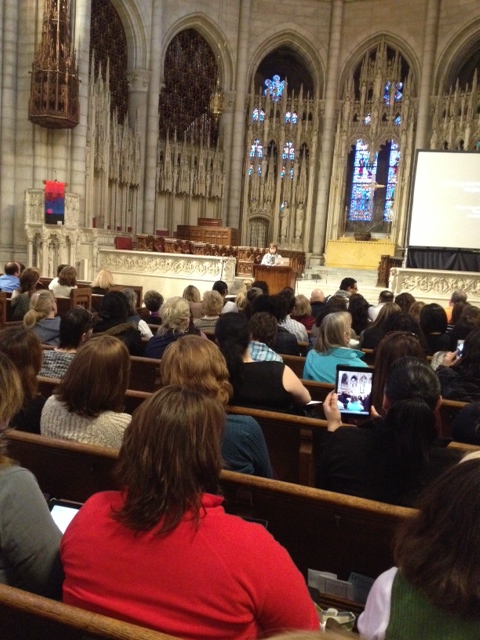
This morning, I left my house at 6:30 and drove to Teachers College at Columbia University for their spring Reading and Writing Project Saturday Reunion. I spent the day with thousands of dedicated teachers soaking up the wisdom of the amazing presenters. Because I am now quite tired, here is my day in pictures.

Diane Ravitch delivering the opening keynote.

Diane Ravitch’s keynote was a call to arms. Lucy Calkins, in her introduction, described Ravitch as “the single most important defender of public education” and “our hero, inspiring all of us to speak out and tell the truth.

Anna Gratz Cockerille sharing strategies to help children improve their informational writing.
Fellow Slicer Anna Gratz Cockerille sharing strategies to help children improve their informational writing.
Cynthia Satterlee had great advice for helping kids craft personal opinion essays.
Stephanie Harvey shared her wisdom about nonfiction.
Stephanie Harvey reminding teachers that “there’s a difference between thinking and knowledge. We have to teach kids to think so they can acquire and use knowledge.”
Kathleen Tolan describing how to "take an ordinary idea about a character and make it extraordinary."
Kathleen Tolan describing how to “take an ordinary idea about a character and make it extraordinary.”
The wisdom of Kathy Collins: "Children should believe that  when they give something to texts, they will get something back from the text."
The wisdom of Kathy Collins: “Children should believe that when they give something to texts, they will get something back from the text.”
photo-9
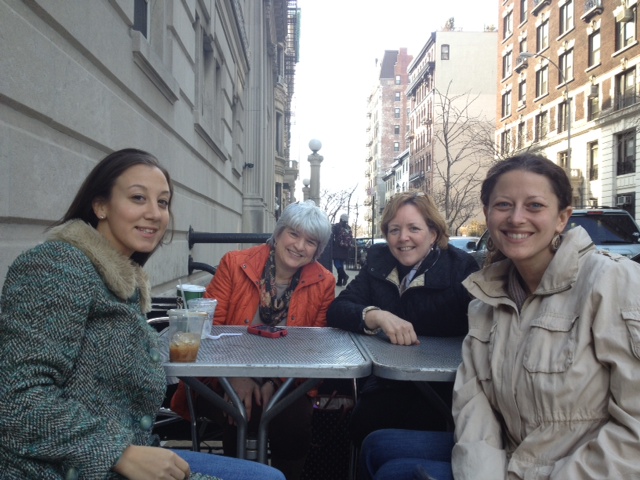
Having coffee with friends and talking about our wonderful day.
photo-10
On my way to Brooklyn, my first view of the Freedom Tower.
photo-11
The view from Brooklyn.
Dinner with my son and his girlfriend.

What an amazing day, filled with learning, laughter, family, and friends. Thank to everyone at Teachers College for hosting this amazing event!

Thank you, as always, to StaceyTaraDanaBetsyAnna, and Beth for hosting the Slice of Life Challenge. Be sure to visit Two Writing Teachers to read more Slice of Life posts.

SOLC 2014: What Do You Know?

11454297503_e27946e4ff_h

Yesterday I contemplated the life story of a man I know only because I often pass him on my way to work. Today, I’m still thinking about life stories, and this made me think of Jennifer Allen, a literacy specialist in Waterville, Maine, and the author of Becoming a Literacy Leader: Supporting Learning and Change (Stenhouse, 2006) and A Sense of Belonging: Sustaining and Retaining New Teachers (Stenhouse, 2009). I read Becoming a Literacy Leader when I began working as a literacy specialist and found Allen’s advice both thoughtful and practical.

Early in Allen’s career as a literacy leader, she was frustrated by the lack of buy-in from her colleagues. In an effort to break the cycle of PD sessions where she did most of the talking, Allen posed this question: “If you had only seven stories to tell of your life, what would they be?” Allen states that “the attention and interest of the staff was captured immediately” and that “teachers were eager to share their stories.” (No surprise here, right, Slicers?)

I intended to share what my seven stories would be, even though I’ve shared some of them with you already. But when I looked up Allen’s current biographical information, I found a “What Do You Know?” interview. This seems much more manageable at this late hour.

Books Next to My Bed: The Round House, by Louise Erdrich; Words in the Dust, by Trent Reedy; The Arden Shakespeare: Book of Quotations from Songs and Sonnets; What the Heart Knows:  Chants, Charms & Blessings, by Joyce Sidman, illustrated by Pamela Zagarenski; A Tree Grows in Brooklyn, by Betty Smith

Favorite Destressing Activity: Going for a walk

Pets: Lucy, a beagle, and Noodles, a fluffy orange kitty

Hobbies: Knitting and gardening

Inspiration: Nature, art, and interesting people

Favorite Place to Visit: Northern Virginia, where my son and his wife live, and New York City, where my younger son lives (Also home to the Metropolitan Museum of Art, my favorite museum.)

Guilty Pleasure: Peanut M&Ms

Item on My Bucket List: Traveling to Florence, Italy

Music on My iPod: (Very eclectic and not too up-to-date) the Beatles, Broadway shows, Mozart

Proud Accomplishment: Raising two sons

What Makes Me Laugh: My husband, The Big Bang Theory

A Few Favorite Movies: Some Like it Hot, The Shawshank Redemption, White Christmas

Thank you, as always, to StaceyTaraDanaBetsyAnna, and Beth for hosting the Slice of Life Challenge. Be sure to visit Two Writing Teachers to read more Slice of Life posts.

SOLC 2014: It’s Monday! What Are You Reading?

11454297503_e27946e4ff_h     IMWAYR

Another double-duty Slice for It’s Monday! What Are You Reading?

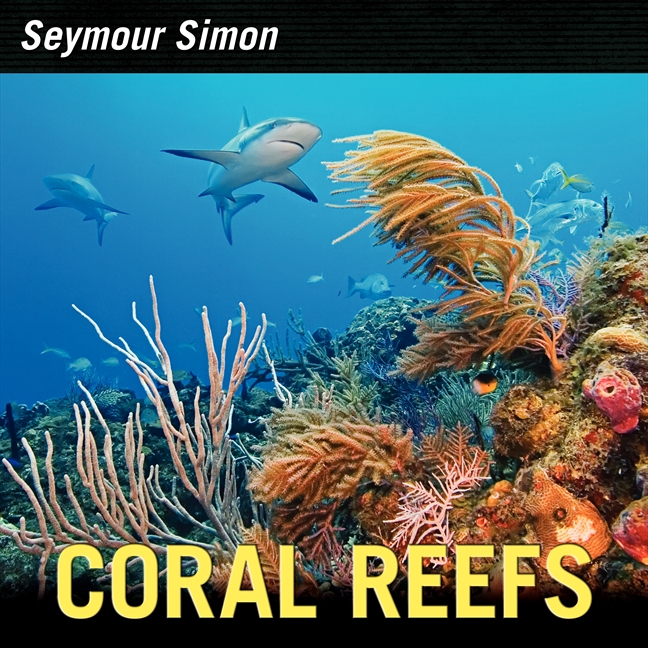
Coral Reefs, by Seymour Simon (Harper, 2013)

9780061914959

This is a gorgeous book, filled with stunning photographs of one of the earth’s most fragile ecosystems. Coral Reefs gives young readers a thorough overview of the “gigantic communities of living things.” (pg. 6) Simon describes the different types of coral, what they eat, and where they’re found in the world. The “many different kinds of citizens” of a coral reef are also described.

The close-up photographs are captivating and kids will want to pore over them for hours. An index is included, as are a glossary and links to websites with additional information. This book would make a nice companion to the more fanciful but just as informative Coral Reefs by Jason Chin.

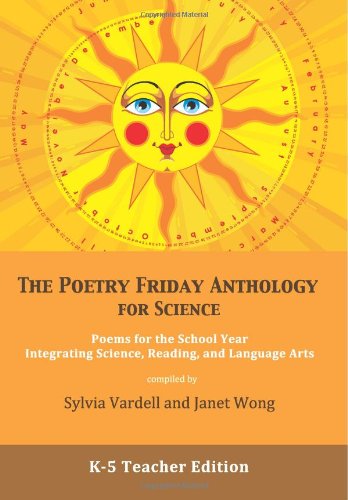
I’ve also been enjoying the poems collected by Sylvia Vardell and Janet Wong in The Poetry Friday Anthology for Science (Pomelo Books, 2014). Dozens of the best poets writing for children today have contributed to this volume. The poems cover a broad range of scientific topics, from scientific practices and lab safety to famous scientists and future challenges, and everything in between. (Although there wasn’t one specifically about a coral reef.)

51c5QVogNwL

Wong and Vardell begin their informative introduction with the question “Why poetry with science?” To make their case, they quote legendary author and educator Bernice Cullinan:

 “Scientists observe with a clear eye, record their observations in precise, descriptive language, and craft their expressions. Poets do the same thing.”

Also included are tips for sharing the poems and connections to the Next Generation Science Standards. In addition, the following resources are included:

  • a bibliography of poetry books for science
  • links to websites and blogs, for both poetry and science
  • a list of professional resources
  • a “mini-glossary of science terms”
  • title, poet, and subject indexes

This book is a must-have resource elementary teachers working to integrate literacy into their science instruction. Student editions are available by grade level and include bonus poems.

Several poems from the anthology have been shared on blogs over the past week. Jone at Check It Out has “Sound Waves” by Amy Ludwig VanDerwater:

If you have ever seen the ocean

throwing cold waves from her hand

pulling shells from mighty depths

tossing each upon wet sand,

you can understand how sound waves

move like water through dry air.      

(Read the rest of the poem here)

You can also read poems from each grade level at Irene Latham’s blog, Live Your Poem…

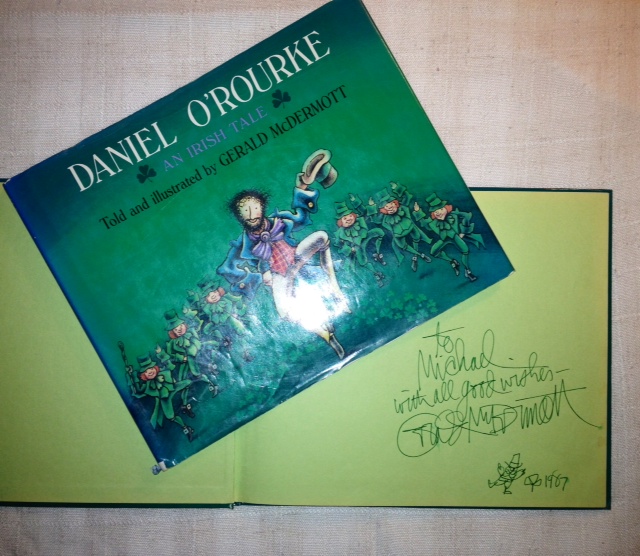
Finally, because it’s St. Patrick’s Day, I have to give a shout-out to my favorite book to share on this day, Daniel O’Rourke (Viking Kestrel, 1986), by Gerald McDermott. Sadly, it seems that this tale of Daniel O’Rourke’s misadventures at the hands of three mischievous leprechauns is out of print. My own children loved this story when they were small, and dozens of my classes over the years have laughed along as Daniel is taken on a wild ride by the legendary pooka.

Our copy, signed by the author to my youngest son.

Thank you, as always, to StaceyTaraDanaBetsyAnna, and Beth for hosting the Slice of Life Challenge. Be sure to visit Two Writing Teachers to read more Slice of Life posts.

Don’t forget to visit Jen at Teach Mentor Texts and Kellee at Unleashing Readers to find out what other people have been reading lately. Thanks, Jen and Kellee, for hosting!

SOLC 2014: Finding Gold in the Classroom

11454297503_e27946e4ff_h

“The text awakens associations in the reader’s mind, and out of the mix, meaning is created.”

~ Kylene Beers & Robert E. Probst ~

Like many of you, I have been working with my colleagues to teach students to read more closely and gather evidence to support their thinking. I am thankful for the work of Christopher Lehman and Kate Roberts in their book Falling in Love with Close Reading, Vicki Vinton on her blog, To Make A Prairie (I’m embarrassed to confess that her book, What Readers Really Do, written with Dorothy Barnhouse, is still in my TBR pile.), and Notice & Note: Strategies for Close Reading, by Kylene Beers and Robert E. Probst, for helping us in this endeavor. 

Last week, I mentioned sharing King Midas and the Golden Touch with the fourth grade students at my school. They all enjoyed the story, and because of our rich discussion, had a good understanding of the theme. They were also able to write about this understanding, but incorporating evidence from the story into their writing was more of a challenge.

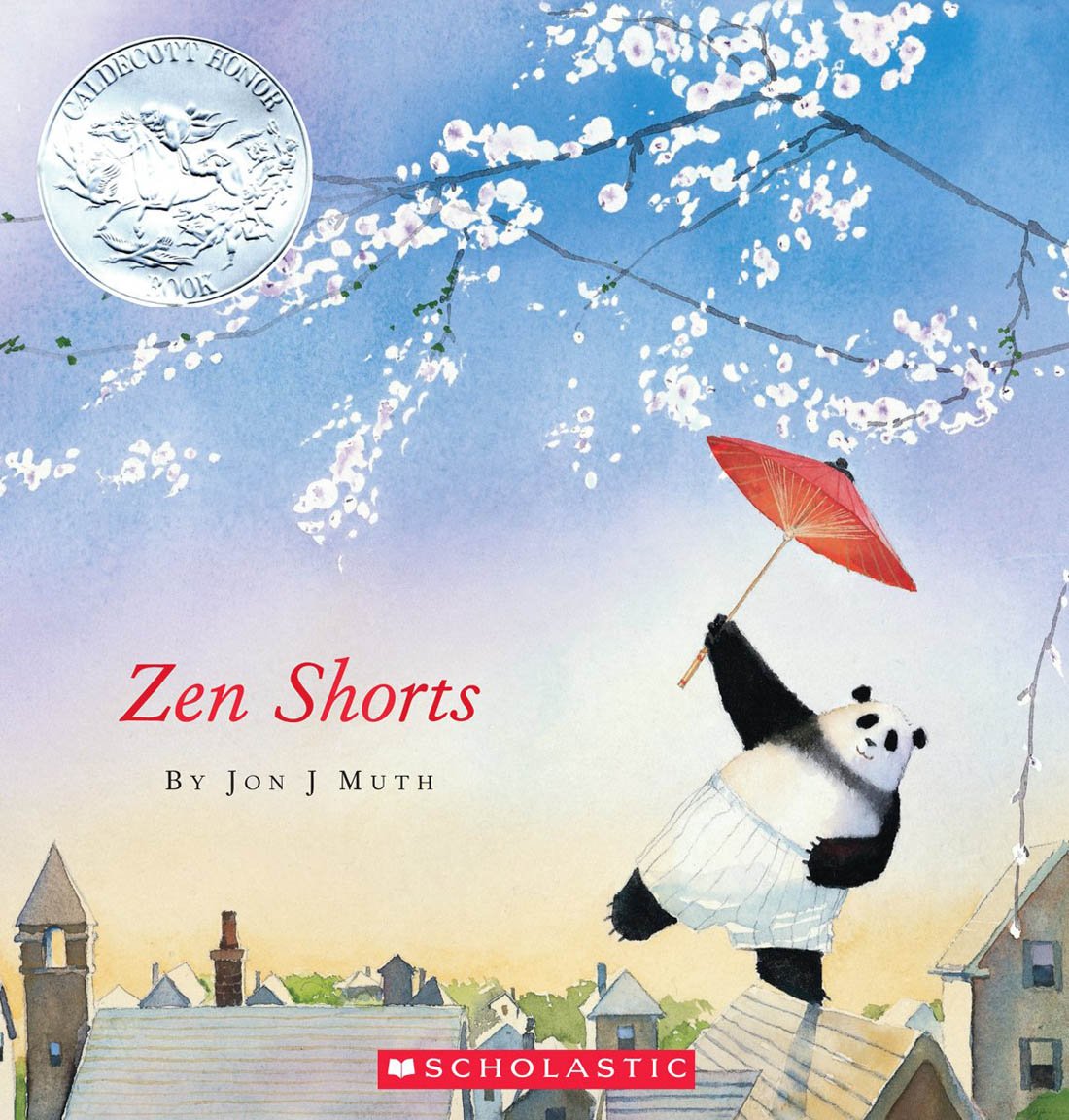
Their teachers and I knew from the start that this wasn’t going to be a “one-shot deal.” We knew there would be many more lessons, including guided and independent practice, as well as feedback, to get our students to be able to do this kind of work well. So on Friday, I was back in their classrooms with a very short excerpt from Jon J. Muth’s Zen Shorts, “Uncle Ry and the Moon.” I love sharing this deceptively simple story with students, and have done so many times. Muth’s book is quiet and unassuming, but it contains a powerful message.

71voPogi3LL

Following the same routine we had used with King Midas, I read the story through once. The kids followed along on a typed version of the text. When I finished reading, I was met with a roomful of puzzled faces. I asked the kids to write what they had noticed and what they were wondering (We used a modified version on Vicki Vinton’s “Know/Wonder” chart for this.) Once they had their thoughts written down, they shared. All of the students were confused by Uncle Ry’s attitude toward the intruder. This clearly conflicted with the action they would take, or expect anyone to take, under similar circumstances. I complimented them for noticing this important contradiction, and explained to them the importance of this kind of observation. When an author includes those contradictions, he’s doing it for a reason. (Notice & Note, pg. 71)

Our next step was to reread the story, more carefully this time, and we stopped along the way to discuss what we were noticing now, and trying to sort out our confusion and begin to answer some of our questions. As we read, some students made thoughtful observations or raised interesting questions. Others asked questions to clarify a simpler element of the story, but these were important, too. I let them discuss these with their partners before sharing with the whole class.

It was during this conversation that one boy tentatively raised his hand. I have known and worked with this student since he was in first grade. His thinking is often perceptive, but can sometimes be muddled. I paused before calling on him to give him time to organize his thinking. Then I nodded to him and he said, “It’s like he’s the opposite of King Midas. Uncle Ry gives things away because he doesn’t mind being poor, and Midas wanted to have as much gold as he could get.”

I was speechless. I hadn’t thought of that myself. His teacher and I exchanged a look of joy. Of course, we let him know how impressed we were with his thinking and the he had made such a meaningful connection to King Midas. Then, another student started to raise her hand, and again, I could see the wheels still turning. She proceeded to tell us that another reason Uncle Ry was different from Midas is that Midas was blinded by greed, but Uncle Ry was blinded by his kind nature, and that was why he saw the intruder as a visitor.

I have shared this story with students many times before, but they have never come to these deep and thoughtful conclusions or level of understanding. So what was different? I hadn’t read the story right after King Midas before, but I wasn’t consciously thinking of a thematic connection between the two. Just as before, I had a plan when I began the lesson, but it was more open-ended. In the past, we were usually focusing specifically on character traits or summarizing. I firmly believe that the kids were able to achieve this level of understanding because I followed their lead. I let them develop the questions they had about the story. I let them go back and locate significant passages in the text. We do our students a huge disservice when we teach from a script and ask only preplanned, canned questions.

Are we finished with this work? Absolutely not. But we are laying a solid foundation for the kind of close reading and thinking skills our students will need to be thoughtful, caring human beings. And that, my friends, is worth all the gold in the world.

Image courtesy of FreeDigitalPhotos.net

Thank you to StaceyTaraDanaBetsyAnna, and Beth for hosting the Slice of Life Challenge. Be sure to visit Two Writing Teachers to read more Slice of Life posts.
SOLC 2014: Stories, Letters, and Mailing May

11454297503_e27946e4ff_h

Kate DiCamillo, the National Ambassador for Young People’s Literature, claims

“When we read together…we are taken out of our aloneness. Together, we see the world. Together, we see one another. We connect.”

We typically think of stories being in the pages of a book. But they also come in the form of letters. One of my aunts was a great letter writer. This, of course, was pre-email and texting, even before free long distance was ubiquitous. My grandmother always looked forward to her sister’s letters, and she loved sharing them with my mother as soon as they arrived. Thinking of her now, sitting at her kitchen table, reading and commenting on my aunt’s news, has suddenly overwhelmed me with longing.

Charlotte May Pierstorff also longed for her grandmother, who lived “a million miles away through the rough old Idaho mountains.” Her parents had promised her a visit, but when the time came, there was no money for a train ticket.

mailing_may_lg

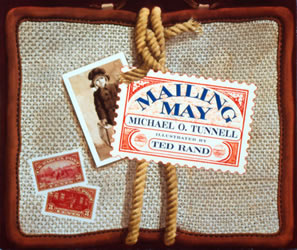
The solution to May’s problem is told in the 1997 book, Mailing May (Greenwillow), by Michael O. Tunnell and illustrated by Ted Rand. With the help of a cousin who works for the railroad, May’s parents decide to mail her to her grandmother via parcel post. After having fifty-three cents worth of stamps and a mailing label attached to the back of her coat, May boards the train for Lewiston and is off on her adventure.

Tunnell lets May tell her own story, which really conveys May’s excitement about her trip. She describes hanging “on the edge of mountainsides” and crawling “through tunnels.” The story ends with May’s joyous reunion with her grandmother, “with a little help from the U.S. Post Office!”

I knew the minute I read Mailing May that it was perfect for my third grade students. May’s experience was so far removed from anything they could imagine, I wanted to immerse them in this book. We turned it into a springboard for a day’s worth of learning. We discussed the theme of the book, and made personal connections about visiting grandparents far away.

But we also wrote letters to grandparents, even if they lived down the street. We studied a map of Idaho and learned about its geography. In the book, Tunnell describes how the postmaster weighs May, then calculates the cost of mailing her. We were piloting a new math program at the time, and there was a lesson about calculating shipping costs for packages. So I brought in my bathroom scale and weighed each child so they could calculate how much it would cost to ship themselves to Florida (where many grandparents did indeed live).

Each year I looked forward to our Mailing May day. The kids were amazed by May’s story and loved her sense of adventure. And while I can’t say they all loved writing the letters, they all had a new appreciation for our quick and easy communication abilities. More importantly, they also gained an understanding and appreciation of how stories, whether in books or letters, connect us all across distances of space and time.

Thank you, as always, to StaceyTaraDanaBetsyAnna, and Beth for hosting the Slice of Life Challenge and creating this space for us to share our stories. Be sure to visit Two Writing Teachers to read more Slice of Life posts.

SOLC 2014: Greek Myths, Retold

IMWAYR    11454297503_e27946e4ff_h

It’s Monday, and this slice is once again doing double-duty for It’s Monday! What Are You Reading? Be sure to visit Jen at Teach Mentor Texts and Kellee at Unleashing Readers to find out what other people have been reading lately. Thanks, Jen and Kellee, for hosting!

Reading Anchor Standard nine of the CCSS states that students will “analyze how two or more texts address similar themes or topics in order to build knowledge or to compare the approaches the authors take.” At each grade level, this standard has a different specificity. In fourth grade, students are expected to “compare and contrast the treatment of similar themes and topics (e.g., opposition of good and evil) and patterns of events (e.g. the quest) in stories, myths, and traditional literature from different cultures.”

By the time they reach eighth grade, this expectation has become more complex. Now students must “analyze how a modern work of fiction draws on themes, patterns of events, or character types from myths, traditional stories, or religious works such as the Bible, including describing how the material is rendered new.”

I’m focusing on this standard in particular because it is such a shift from the previous expectation in the Connecticut ELA standards. They emphasized text-to-self connections, and there was no particular emphasis on folk tales, fairy talks, or myths. I’m glad these stories have been given more attention in the standards. Many of them are so ubiquitous in our culture we don’t even recognize them as myths. Worse, they aren’t recognized because readers lack the knowledge of the original story.

1492

So, one of my goals this year has been to find materials that help us meet these expectations. I’ve always had a copy of the classic D’Aulaires’ Book of Greek Myths in my classroom, but there are many other excellent resources available. Here are two of the many books I’ve found.

king-midas-and-the-golden-touch-retold-by-charlotte-craft-paperback-800x800

Charlotte Craft’s retelling of King Midas and the Golden Touch (HarperCollins, 1999) is based on a version of the story told by Nathaniel Hawthorne in A Wonder-Book for Girls and Boys. The original story is thought to be based on an 8th-century BC king of Phrygia, in what is now central Turkey. In a note, illustrator K.Y Craft explains that she chose to set the tale in the more-recent Middle Ages of Europe to convey the truly timeless nature of this story. In Craft’s version, Midas receives the golden touch as a reward for entertaining a stranger, for he believes that “the golden touch will bring me all the happiness I need.” Craft’s retelling is rich in imagery, characterization, and language. Last week, I shared the story with two fourth grade classes. Both groups had rich discussions about the decisions Midas made, key turning points in the story, and the theme. Some students had recently finished reading The Chocolate Touch, by Patrick Skene Catling. It was so much fun to see the lightbulbs going off as they made connections between the two books.

photo-1

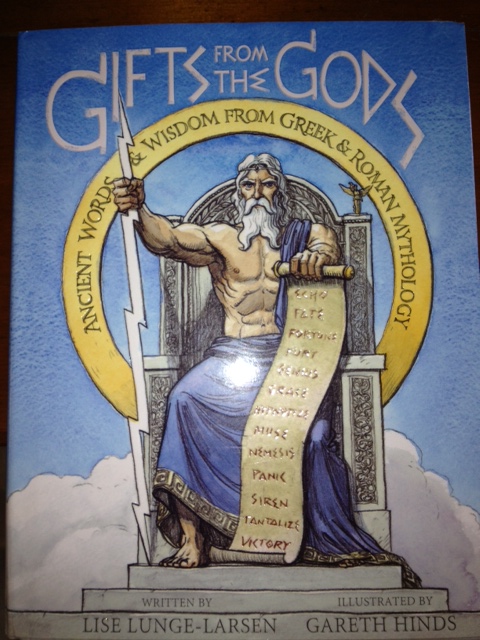
Gifts from the Gods: Ancient Words of Wisdom from Greek & Roman Mythology, (Houghton Mifflin Harcourt, 2011) by Lise Lunge-Larsen and illustrated by Gareth Hinds. Lunge-Larsen has chosen seventeen myths that “illuminate and explain words” that English speakers use all the time. (RL.4.4: Determine the meaning of words and phrases as they are used in a text, including those that allude to significant characters found in mythology (e.g., Huerculean).) She has also included an excerpt from a modern story as an example. This is from Norma Howe’s Blue Avenger Cracks the Code:

Like all those classical heroes down through the ages, Blue Avenger is not invulnerable; like them, he has a weakness. Superman feared kryptonite, Achilles had his heel. For Blue Avenger, it’s lemon meringue pie. (p. 1)

At the end of each myth, Lunge-Larsen also includes the meaning of other words related to the story. After reading the story of the Three Fates, we learn that the goddess who cut the thread was named Morta by the Romans. “Her name means ‘death’ and lives on in mortal and mortality, words we use about things that one day will die. The gods, who will never die are immortal.” (p. 22) Hinds, who is best known for his graphic novel versions of Beowulf  and The Odyssey uses a similar style in this richly illustrated volume.

There are countless retellings of Greek and Roman myths, plus many from other cultures around the world. More about those another day.

Thank you, as always, to StaceyTaraDanaBetsyAnna, and Beth for hosting the Slice of Life Challenge. Be sure to visit Two Writing Teachers to read more Slice of Life posts.
SLOC 2014: Downtime

11454297503_e27946e4ff_h

Not long ago, I found a link to a Today Show interview with clinical psychologist and parenting expert Wendy Mogel and teacher and writer Jessica Lahey about how to help children be creative. Mogel and Lahey both talked about how important it is for kids to have downtime and opportunities for unstructured play. Mogel stated that we “need to encourage our kids to really embrace creativity” and that “the best teachers of creativity are free time, nature, and mess.” Lahey, who blogs at Coming of Age in the Middle, followed Mogel’s advice with ways that her family tries to accomplish this. She shared that on the weekends they have two hours of “nap time, quiet time” when the devices are turned off and “everyone has to find something to do and be quiet doing it.”

Today, I took this advice to heart. After the breakfast dishes were cleared away and the laundry started, I curled up with Malcolm Gladwell’s Outliers: The Story of Success. I have heard of Gladwell’s work and have read a few of his articles in The New Yorker, but somehow this is the first book of his I’ve read. It’s well-written and fascinating, and I was completely absorbed by the stories Gladwell told to support his theory.

I only feel slightly guilty for spending most of the day reading. I have plenty of professional books (not to mention other Slices!) I should have read, plenty of paperwork I should have done. It’s all waiting for me on my desk. It will be there tomorrow, and, thanks to today’s downtime, I’ll be ready to tackle anything.

Thank you, as always, to StaceyTaraDanaBetsyAnna, and Beth for hosting the Slice of Life Challenge. Be sure to visit Two Writing Teachers to read more Slice of Life posts.
SOLC 2014: Celebrating Success

11454297503_e27946e4ff_h

When Ruth Ayers began her Celebrations link up on her blog Ruth Ayers Writes last fall, I thought it was a terrific idea. After all, it’s very easy to get bogged down in our exhaustion at the end of the week. Why not look for joy in ordinary moments and celebrate them? As Ruth put it, “We can wallow or we can celebrate.”

I liked the idea, but was still so caught up in the swirl of CCSS, SBAC, SEED, and more that I didn’t participate. I enjoyed reading about what other people were celebrating, but that was it.

Fast forward to March. Slice of Life Challenge month. A post everyday. Although I had made a plan, none of those ideas resonated with me this morning. As I thought back over the week, my mind automatically went to unfinished projects. But then I started thinking about moments during the week when I had laughed or smiled. There were many. So instead of wallowing in the stacks of paperwork surrounding me, this morning I’m celebrating the growth of one of my students.

I’ve been working with this first-grade girl for the past three months or so. She is very sweet, but reading has been a real challenge for her. When we began working together, she didn’t know short vowel sounds and even some consonants were still tricky for her. Her progress has been of the one step forward, two steps back variety. She likes to guess based on the illustration in a book and doesn’t like to reread if a sentence doesn’t make sense.

This week, though, she had a bit of a breakthrough. Suddenly, she was able to blend and segment words quickly and, for the most part, accurately. Best of all, she is beginning to transfer this skill to her reading. She’s becoming more fluent and more confident. You should have seen her beaming smile after she finished reading a challenging book on Thursday.

We still have a long way to go, but, for the first time, I sense a shift in this girl and her skills. Things are starting to click for her. She is becoming a reader.

Thank you, as always, to StaceyTaraDanaBetsyAnna, and Beth for hosting the Slice of Life Challenge. Be sure to visit Two Writing Teachers to read more Slice of Life posts.