Nonfiction 10 for 10: Lives of the Artists

Screen Shot 2013-02-04 at 11.55.24 PM

“Whoever you are, no matter how lonely, the world offers itself to your imagination…”

~ Mary Oliver ~

When I was a senior in high school, I visited the Metropolitan Museum of Art for the first time. It was pure coincidence that Monet’s famous Water Lily paintings were starring in the exhibit “Monet’s Years at Giverney” at the time of this visit. Seeing those paintings was a revelatory experience. My appreciation and love of art began on that spring day.

Le bassin aux nymphéas Claude Monet , 1919 [Public domain], via Wikimedia Commons

Although nothing compares to standing in front of a magnificent work of art, kids don’t have to visit a museum to learn about art and artists. Gorgeous picture books about artists and their work abound. These books will inspire young artists to pick up a paint brush, scissors, or clay and begin creating their own art.

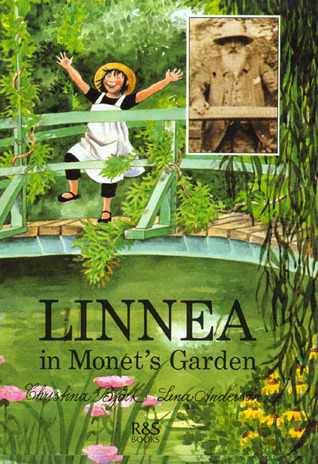
I searched for the origin of the trend of picture books about artists, but couldn’t find a definitive answer. The first picture book about an artist I remember (probably not a coincidence) is Linnea in Monet’s Garden, (R&S Books, 1985) by Christina Björk and illustrated by Lena Anderson. Björk blends the fictional account of a young girl’s pilgrimage to Monet’s home in Giverney, France with facts about Monet’s life and art. Illustrations of Linnea’s trip are combined with photos of Monet, his masterpieces, and the his beloved gardens that inspired so many of his paintings. A timeline of Monet’s life, a family tree, and a description of the museums Linnea visits in Paris are included, as well as a very brief bibliography are included.
188798    9780307978493_zoom

One of the most recent picture book biographies of an artist is The Noisy Paint Box: The Colors and Sounds of Kandinsky’s Abstract Art (Alfred A. Knopf, 2014) by Barb Rosenstock, illustrated by Mary Grandpre. This 2015 Caldecott Honor book introduces   young Vasya Kandinsky as a proper Russian boy, who is bored by his studies and his monochromatic life. Vasya’s world is changed when his aunt presents him with a “small wooden paint box.” Suddenly, colors swirl around him, creating a cacophony of sound. Kandinsky had synesthesia, which enabled him to “hear the hiss of the colors as they mingled.” Discouraged by his family from following his dream, Kandinsky persevered, capturing the music the colors created. In the process, he “created something entirely new–abstract art.”

An Author’s Note includes additional information about Kandinsky’s life, as well as information about synesthesia. There is also a list of sources and websites for additional information.

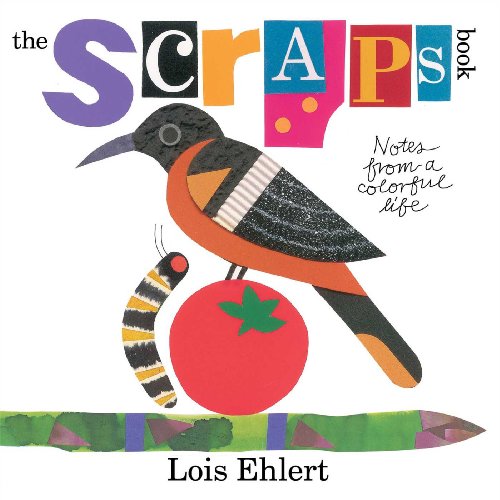
Another recent title that will inspire young artists is Lois Ehlert’s autobiography, The Scraps Book: Notes from a Colorful Life (Beach Lane Books, 2014). This joyous book is filled with Ehlert’s signature collages, photos of Ehlert’s family, collections, and her inspirations from nature. Ehlert parents, both of whom “made things with their hands” shared their tools and materials with young Lois. She describes finding “ideas in the world around” her, and is full of encouragement for young artists. “An egg in the nest doesn’t become a bird overnight,” Ehlert states. Good advice for us all.
51072dWqu9L   Sandy_jacket_new

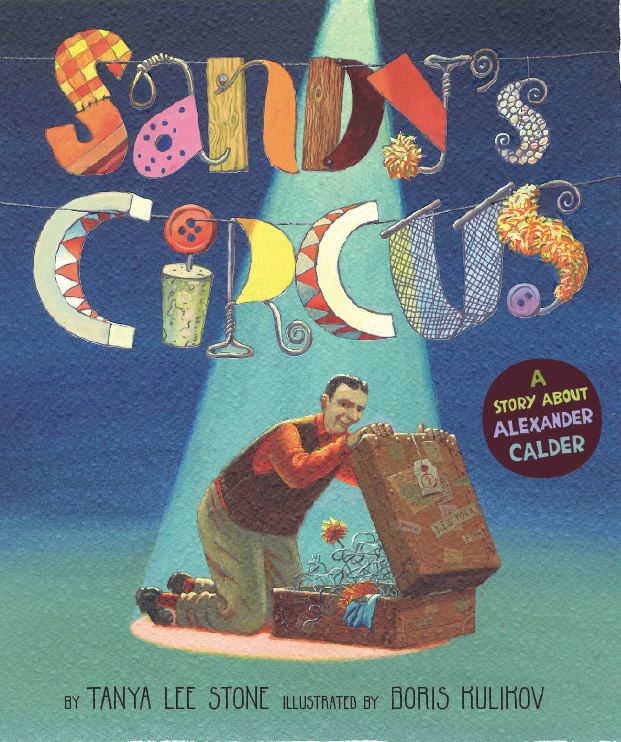
Alexander Calder, who “invented the very first mobiles,” is another artist whose parents nurtured his creativity from a young age. Tanya Lee Stone’s Sandy’s Circus: A Story About Alexander Calder (Viking, 2008; Author’s Note and a list of sources included), illustrated by Boris Kulikov, describes Calder as a boy who always had a workshop and tools. He used scraps of wire, wood, and other materials to create jewelry and toys for his friends. After art school, Calder, nicknamed Sandy, used these same materials to create a “magical, moveable circus,” which he performed in New York and Paris. Calder’s exuberance shines through in Kulikov’s illustrations. Children of all ages will be inspired to “turned ordinary objects into extraordinary art,” just as Calder did throughout his lifetime.

Watch a performance of “Sandy’s Circus:”

You can also view how one school was inspired by Sandy’s Circus: A Story About Alexander Calder to create their own circus:

I had never heard of Calder’s circus before, but his whimsical creations immediately reminded me of the art of Melissa Sweet. Sweet’s illustrations vividly recreate the world of Horace Pippin in Jen Bryant’s biography, A Splash of Red: The Life and Art of Horace Pippin (Alfred A. Knopf, 2013). This Schneider Family Book Award winner also won the NCTE Orbis Pictus Award for Outstanding Nonfiction for Children and was named a Robert F. Sibert Honor Book. Young Horace loved to draw, “loved looking at something in the room and making it come alive again in front of him.” Self-taught, Pippin pursued his artistic vision through a life of physical pain and hardship to become widely known and admired. His paintings now hang in museums around the country. Bryant and Sweet both include notes about the origins of this beautiful book, and an extensive list our resources is included.

You can read more about this book and view the book trailer here.
imgres-2  9781596439481

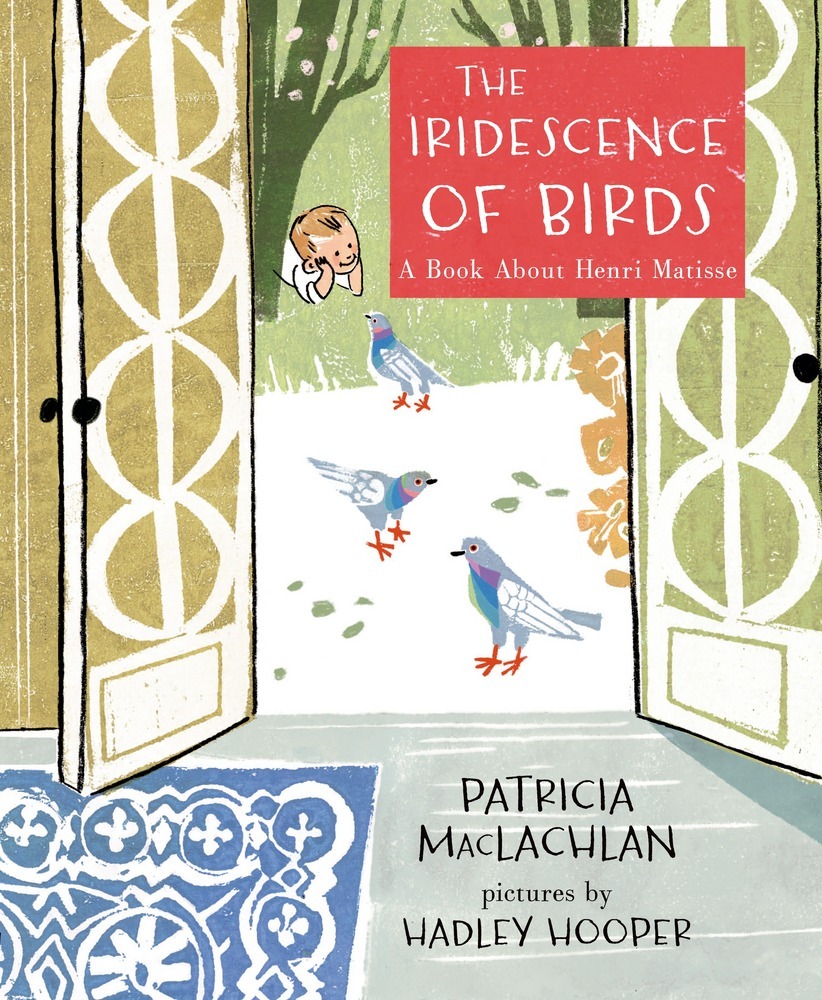
Henri Matisse is another visionary artist who never gave up on his art, despite physical hardships. In The Iridescence of Birds: A Book About Henri Matisse (A Neal Porter Book, Roaring Brook Press, 2014), Patricia MacLachlan poetically relates the origins of Matisse’s vivid colors and natural subjects. Hadley Hooper’s illustrations are saturated with the same monochromatic blues and warm reds, oranges, and golds that Matiesse used in his paintings. Notes are included from both MacLachlan and Hooper, and there is also a list of books for additional reading.

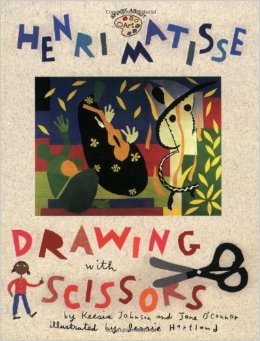
One of those is Henri Matisse: Drawing with Scissors (Grosset & Dunlap, 2002) by Keesia Johnson and Jane O’Connor, with illustrations by Jessie Hartland. This book, from the “Smart About Art” series, is a more complete biography of Matisse, as it might be written by a fourth or fifth grader. It includes information about different phases of Matisse’s career, including his final collages, which he began creating after he became ill and could no longer stand long enough to paint.
51D-PZJBmZL._SX258_BO1,204,203,200_  51Cpy5q47lL

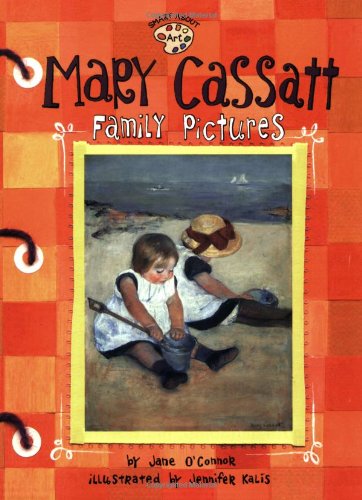
Another volume in this accessible series is Mary Cassatt: Family Pictures (Grosset & Dunlap, 2003), by Jane O’Connor and illustrated by Jennifer Kalis. Children are naturally drawn to Cassatt’s impressionistic paintings of the everyday lives of children and families.

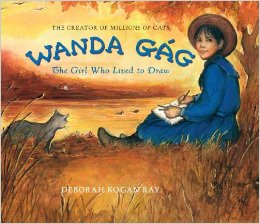
Childhood memories are the inspiration for the work of Wanda Gág, (rhymes with jog, not bag, as I learned in the Author’s Note) author of the beloved picture book, Millions of Cats. Deborah Kogan Ray’s Wanda Gág: The Girl Who Lived to Draw (Viking, 2008), recounts Gág’s life, beginning with her childhood in Minnesota. “A love of art was valued above all else in the Gag home” and Wanda was moved to draw everything around her. Overcoming hardships seems to be a theme among many artists, and Gág is no exception. Like Pippin, Calder, and other, Wanda Gág didn’t give up on her dream of becoming an artist or her father’s advice to “Always look at the world around you in your own way.”
51x2vRI-1lL._SX258_BO1,204,203,200_  9780761316480fc_XLarge

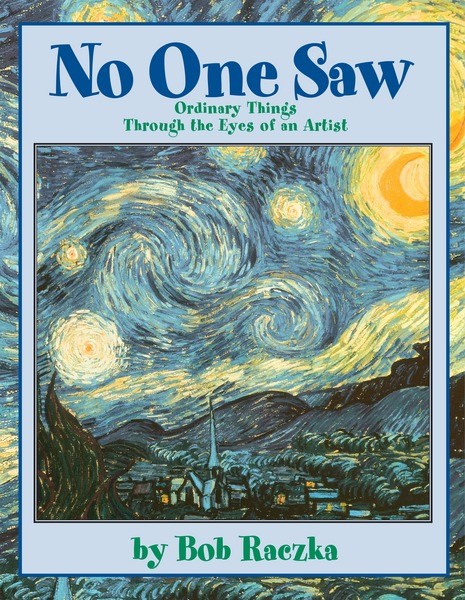
Seeing the world in your own, unique way is the theme of No One Saw: Ordinary Things Through the Eyes of an Artist (Millbrook Press, 2002). Prolific poet Bob Raczka has selected sixteen famous artists and one of their iconic paintings and paired it with a simple sentence such as “No one saw stars like Vincent Van Gogh.” Each large reproduction gives kids a chance to pore over the details of these paintings, observing and noticing the details that make these masterpieces instantly recognizable. The simplicity of this book belies its power, which Raczka sums up perfectly in this final line: “Artists express their own point of view. And nobody sees the world like you.

In this age of standardization, these beautiful books give children the important message that their vision of the world matters. From the lives of these artists, children learn that if they open their imagination to the beauty that surrounds them and follow their dreams, anything is possible.

Nonfiction Picture Book 10 for 10 is a “celebration of nonfiction picture books” organized by Cathy Mere, and Mandy Robek. Thank you, Cathy and Mandy for hosting! Please be sure to visit the Picture Book 10 for 10 Community to find lists of other wonderful nonfiction picture books.
It’s Monday! What Are You Reading?

IMWAYR

My colleagues and I have been busy teaching and revising informational writing units of study. We’ve been concerned, though, about having enough good mentor texts for our Kindergarten through second grade students to emulate. A traditional five-paragraph essay is NOT our goal, yet an organizational structure is needed so they don’t write pages and pages of random facts. This week I found two informational texts with unique structures that will be inspiring mentor texts for young writers.

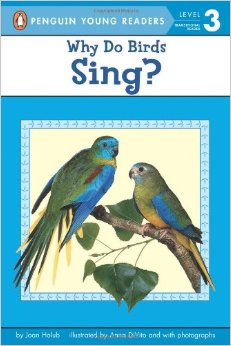
Why Do Birds Sing? (Penguin Young Readers, 2004) by Joan Holub and illustrated by Anna DiVito is a question-and-answer book. Holub anticipates any question kids might have about birds, then responds with brief, informative answers. DiVito’s cartoon-like illustrations are paired with color photos that provide close up views of many familiar species.

51ghouWrrrL._SY344_BO1,204,203,200_

This book is a terrific mentor text. Children have many questions about subjects they’re interested in, and this question-and-answer structure is a perfect way for them to organize their research findings. Text features in Why Do Birds Sing? are limited to photographs and labels, but the photos have been thoughtfully chosen to illustrate and/or support the information being presented.

Holub and DiVito have also teamed up to create Why Do Dogs Bark?, Why Do Cats Meow?, and others that answer these urgent questions that all kids ask.

51zj0DcTTBL._SX258_BO1,204,203,200_

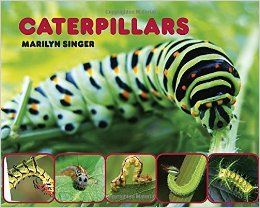
Caterpillars, by Marilyn Singer (EarlyLight Books, 2011) is a fact-filled book lavishly illustrated with close-up color photographs of both familiar and unfamiliar caterpillars. What I really love about this book, though, is its unique structure. Poet Singer (who was recently awarded the National Council of Teachers of English Award for Excellence in Poetry for Children) begins the book with a poem introducing caterpillars. Here is the first stanza:

Caterpillars smooth,

Caterpillars hairy.

Munching in a giant bunch,

Lunching solitary.

The poem is followed by a page devoted to elaborating each line, providing young readers with all sorts of interesting facts. Each page is also filled with gorgeous color photographs showing examples of the species or behavior described in the text. There is also a quiz, a matching game (caterpillar-to-moth/butterfly), glossary, resource list, index, and more.

Caterpillars, which was named a National Science Teachers Association Outstanding Trade Book for Science in 2012, is listed by the publisher as being appropriate for K-2 students. But I think older students would also enjoy Singer’s informative, accessible writing style and have fun creating their own poem to organize their informational writing.

Both of these books are excellent mentors for a whole class book on a single topic, or for individuals writing about a topic of their choice. Best of all, they are engaging nonfiction texts that can be enjoyed as read-alouds or as independent reading by all elementary age students.

Don’t forget to visit Jen at Teach Mentor Texts and Kellee at Unleashing Readers to find out what other people have been reading lately. Thanks, Jen and Kellee, for hosting!

It’s Monday! What Are You Reading?

IMWAYR

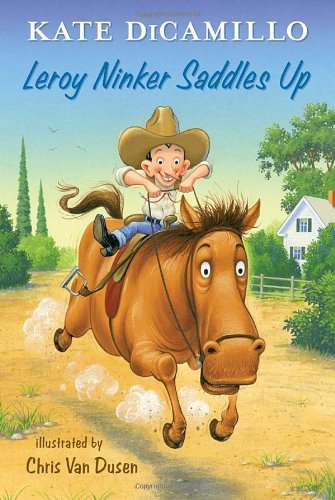
Leroy Ninker Saddles Up (Candlewick Press, 2014) by Kate DiCamillo

Mercy Watson was a staple in my first grade classroom, so I was excited to learn that Leroy Ninker was back with his own adventure. Leroy has repented his thieving ways is now a man with a dream. Inspired by the westerns he watches while working at the Bijou Drive-In Theater, he dreams of being a cowboy. The Bijou’s ticket seller, Beatrice Leapaleoni, encourages Leroy to follow that dream. She urges him to wrestle fate to the ground and get himself a horse.

Leroy does just that. He meets Maybelline, a big horse with a loud whinny, and it’s love at first sight. Silliness ensues, but as in all Kate DiCamillo stories, love overcomes all obstacles. Leroy and Maybelline even end up on Deckawoo Drive for breakfast with Mercy Watson. On the menu? Hot buttered toast, of course.

Leroy Ninker Saddles Up is a perfect read aloud for first or second grade. Mercy Watson fans will enjoy reading Leroy’s adventure with Maybelline on their own. This book is filled with sage advice (“Be a straightforward communicator,” Patty LeMarque tells Leroy.) and self-discovery (Leroy “never imagined he could string so many words together at once.”) But most of all it is a book filled with love, “word after beautiful word…”  

 0763663395.01.LZZZZZZZ  513Q6i-sQFL._SX258_BO1,204,203,200_

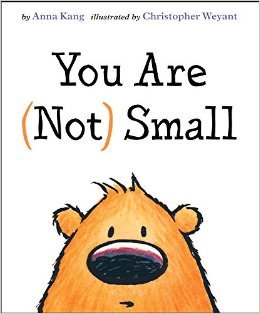
Somehow I missed the debut of You Are (Not) Small (Two Lions, 2014) by Anna Kang and illustrated by Christopher Weyant, last summer. Thankfully, it won the Geisel Award last Monday, so when I saw it at the library over the weekend, I recognized it and brought it home.

Using just a handful of words, Kang’s text and Weyant’s illustrations work together to convey important lessons on differences and perspective. These concepts work on many levels, giving this book wide appeal. Younger readers will easily understand the literal meaning of these differences, and older readers will be able to infer a deeper meaning. Everyone will love that when the characters finally do find common ground, they celebrate by sharing a meal. After all, everyone loves to eat!

In classic picture book fashion, the final page presents a new possibility, opening the door for children to create their own You Are (Not)… story.

Don’t forget to visit Jen at Teach Mentor Texts and Kellee at Unleashing Readers to find out what other people have been reading lately. Thanks, Jen and Kellee, for hosting!

Slice of Life: John Rocco’s Blizzard

11454297503_e27946e4ff_hIt’s been snowing for much of the past week, wreaking havoc with assessment schedules, mid-year goal meetings, and learning in general. On the other hand, I have had plenty of time to read, which is always a good thing.

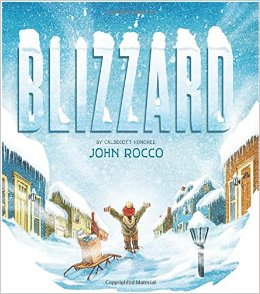
John Rocco’s Blizzard (Disney-Hyperion, 2014) has been out since October, but I didn’t read it until last week. Rocco was ten when the Blizzard of ’78 buried most of southern New England under forty inches of snow. This picture book memoir is an adventure story that all kids will love, whether or not they’ve experienced record-setting snow storms. But as I reread this wonderful story, I realized that this book is a great mentor text, one that will inspire kids to write about their own epic weather adventures.

61TeuiKZunL._SX258_BO1,204,203,200_

The simplicity of Rocco’s language is deceiving. He has done a terrific job choosing just the right word and detail to truly bring this story to life. When John and his sister finally get outside after the snow stops, they realize that walking is “like trying to move through white quicksand.” When John makes his list of necessities before he heads to the store, “candy bar” is the only starred item. And when he returns from his adventure, he tells his family about his “perilous journey.”

Rocco’s word choice also make this book a good choice for an activity like one Lynne Dorfman and Diane Dougherty describe in their recent book, Grammar Matters: Lessons, Tips, and Conversations; Using Mentor Texts, K-6 (Stenhouse, 2014, a must-read for any K-6 teacher). They suggest gathering nouns and the active verbs they’re paired with to spur kids thinking about replacing worn-out words with more vivid choices. Also, Rocco’s uncluttered declarative sentences are perfect for introducing compound and complex sentences. There is even a great example of parallel structure, beginning when John realizes that “I was the only one who had memorized the survival guide.”

The  visual humor of Rocco’s illustrations and his ingenious use of text features give Blizzard an added depth of meaning. The passing days of the week are each spelled out in clever ways that blend into the scenes. “Tuesday,” for example, is spelled out by a squirrel scurrying across the roof. The old-fashioned cash register totals $19.78, and there are clues about John’s fascination with frozen landscapes scattered throughout the book. The fold-out map of John’s trek to the store is a wonder, and I can imagine some kids spending lots of time poring over this winter wonderland.

Blizzard  belongs in every K-3 classroom library, and I can imagine 4th and 5th graders who will love it, too. First and foremost, read this book for the wonderful story that it is. Then go back and take a closer look. You and your students will be richly rewarded. I can’t wait to share this book with my students, if it ever stops snowing!

Thank you to StaceyTaraDanaBetsyAnna, and Beth for this space for teachers and others to share their stories each Tuesday. Be sure to visit Two Writing Teachers to read more Slice of Life posts.

It’s Monday! What Are You Reading?

IMWAYR

Why do we love fantasies? Psychologists have all sorts of explanations about confronting our fears safely, etc., But sometimes it’s simply that a story comes along that just pulls us in and we escape into that world.

9781770495913_p0_v1_s260x420

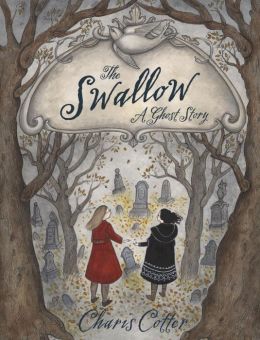
The ability to write such a story is a true gift, a form of magic itself. Charis Cotter has this gift. Her latest book, The Swallow: A Ghost Story (Tundra Books: 2014), is the story of two lonely girls, both of whom introduce themselves by saying they don’t fit in. Polly is eager to be friends with Rose, the new girl next door. Rose, on the other hand, is reluctant to get involved with “one of the dreadful Lacey children who live next door.”

Polly and Rose each narrate their own version of events, and as the book opens, their stories parallel each other. Polly hates having so many brothers and sisters and having to “share everything until there’s nothing left for me. Rose feels she’s “bewitched” because no one, not her parents, teachers or classmates, pays any attention to her. But as Polly and Rose’s friendship deepens, their stories, and their mysteries, become intertwined. Ultimately, they both learn that it’s much easier to face our fears with a friend at our side.

I don’t want to give anything away about the ghost in the title. What I do want to tell you is that this is a beautifully written testament to the power of love and friendship.

21469109

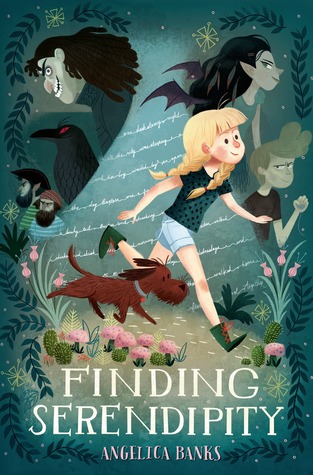
Love and friendship are also at the heart of Angelica Banks new book, Finding Serendipity. (Henry Holt, 2015; Review copy from NetGalley, available February 3, 2015) Summer vacation is just beginning, and Tuesday McGillicuddy is can’t wait for her mother, world-famous author Serendipity Smith, to finish the final adventure of Vivienne Small, a fairy-like creature who lives in the Peppermint Forest and plots “ingenious ways [to] outsmart her archrival, the monstrous Carsten Mothwood.”

Tuesday is worried, though when her mother doesn’t come home for dinner. When she wakes up late at night and realizes Serendipity still isn’t home, she resolves to find her mother. Sitting at her mother’s typewriter trying to find the end of Vivienne’s story, Tuesday begins to write. As she writes her story, a mysterious silver thread begins to spool itself out from the words and wraps itself around Tuesday. Soon, she and her dog, Baxterr, are swept out the window and up into the sky.

Middle grade readers will be swept right along with them. The adventure that follows includes a mysterious fog-filled land, a wise Librarian, near-drownings, and pirates. Along the way, Tuesday learns about being brave and staying true to her friends and herself.

Finding Serendipity is really a love letter to the magic of writing. Angelica Banks (aka Australian authors Heather Rose and Danielle Wood) has created a world where “stories have a power of their own” that take readers and writers on amazing adventures. Readers will discover that writing “might appear to be magical, but the magic comes from nowhere but within you.”

Both of these books do what fantasy does best: expand our horizons and help us see the world in a new way. Both are terrific choices for read-alouds or indpendent reading.

Don’t forget to visit Jen at Teach Mentor Texts and Kellee at Unleashing Readers to find out what other people have been reading lately. Thanks, Jen and Kellee, for hosting!

Slice of Life: Reading Before the Blizzard

11454297503_e27946e4ff_h

Yesterday, in an effort to get everyone home safely before the snow began, we had an early dismissal. Usually this means a four-hour day, but with a blizzard bearing down, the powers that be decided school would end at 11:30, leaving us with a three hours.

What can be accomplished in three hours? With the right book, plenty!

My schedule this week includes introducing the “Contrast & Contradiction” signpost (from Beers & Probst’s excellent Notice & Note: Strategies for Close Reading) to our fourth grade students. Our shortened day gave me just the right amount of time to read Eve Bunting’s One Green Apple, the text we’ll be using in our lessons, to both classes. Despite the excitement generated by the impending storm, the kids were mesmerized as I read this lovely story of a girl who has just arrived in America. Farah doesn’t speak English and is worried about other cultural differences between her and her new classmates. But over the course of the story, she begins to see that there might be a place for her in this strange country. I told the kids ahead of time that I was simply reading the story, that we’d ask questions and share thoughts later. It was such a peaceful way to start the day.

Then I met with a third grade student who is working hard but making s-l-o-w progress. I worry about her every day. Finding books she can read independently that aren’t too babyish is a challenge. I’ve heard much praise for Shannon and Dean Hale’s The Princess in Black lately and knew I had to get this book for this student. So when I saw it on the shelf at Target on Sunday, I snatched it up. Words can’t describe the look on her face when I handed this book to her. As I gave it to her, I said something like, “…if you love it.” Her response? “I love it already.”

There was just enough time to meet with both of my first grade students, and they each read a Rigby leveled reader that was “just right” for them. I watched with pride and respect as they worked through unfamiliar words, using multiple strategies to decode these words. Are they where they “should be” at this point in first grade? No. Will they “meet grade level expectations” in June? Probably not. But they are on their way, and I was happy to give them a chance to practice and polish their skills with an engaging book that pushed them but didn’t frustrate them.

And what did I do when I got home? Read a book, of course!

Thank you to StaceyTaraDanaBetsyAnna, and Beth for this space for teachers and others to share their stories each Tuesday. Be sure to visit Two Writing Teachers to read more Slice of Life posts.

IMWAYR: One Plastic Bag & The Red Bicycle

IMWAYR

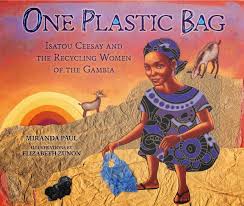
One Plastic Bag: Isatou Ceesay and the Recycling Women of the Gambia (Millbrook Press, 2015; available February 1st) Review copy provided by NetGalley

imgres

Plastic bags are ubiquitous the world over, but in Isatou Ceesay’s village in Gambia they are causing serious problems. Goats eat them, then become ill when they can’t digest them. Water collects in the piles of discarded bags, giving mosquitoes pools for breeding. Isatou comes up with a plan to recycle the bags by crocheting them into purses. Not only is the village clean again, but the purses provide income for the villagers.

Isatou Ceesay is an inspiring role model, and Miranda Paul has done an excellent job making her story accessible to young readers. One Plastic Bag clearly explains the problems caused by discarded plastic bags. Not only will children everywhere be motivated to recycle bags, they’ll be inspired to think outside the box when searching for solutions to problems. Elizabeth Zunon’s collage illustrations, which include pieces of plastic bags, complement the text perfectly.  An Author’s Note includes how Paul came to write One Plastic Bag, as well as a map, timeline, pronunciation guide, and a list of books for further reading.

One Plastic Bag has its own website where you can meet Isatou Ceesay, Miranda Paul, Elizabeth Zunon, and others. You can also learn more at Julie Danielson’s lovely blog, Seven Impossible Things Before Breakfast, which featured an extensive selection of Elizabeth Zunon’s artwork for One Plastic Bag back in November.

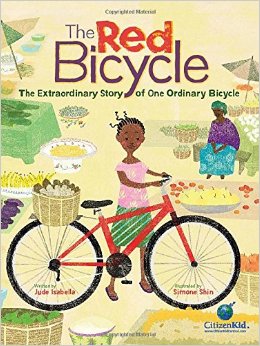
The Red Bicycle: The Extraordinary Story of One Ordinary Bicycle (CitizenKid, division of Kids Can Press, 2015; available March 1st) Review copy provided by NetGalley

6185Q9gFiOL._SY344_BO1,204,203,200_

Jude Isabella and Simone Shin’s “extraordinary story of one ordinary bicycle”  is a perfect book to pair with One Plastic Bag. Young Leo has worked hard and saved his money to buy a bicycle. He rides “Big Red” everywhere and takes such good care of it that even after a few years, it “looks almost brand new.” The problem is that Leo has outgrown his beloved bike, and wants to make sure its new owner will love it as much as he has. The owner of the local bike shop tells Leo about an organization that is collecting bicycles to ship to villages in Africa. Leo gets Big Red ready for its trip across the ocean, shown on a map by a dotted red line. When Big Red arrives in Burkina Faso, Alisetta is excited to get such a beautiful bike. The whole village cheers her on as she joyously learns to ride her new bicycle. Big Red makes life easier for Alisetta and her family by helping them get their sorghum crop to market. After Big Red is damaged in an accident, it’s recycled again. Now an ambulance, Big Red gets health workers to remote villages and sick patients to clinics where they get the care they need.

Readers will be inspired to help get bicycles to African villagers, and information about organizations that collect bicycles or money to transport them is included at the end of the book. Ideas for follow-up activities and facts about Burkina Faso are also included.

Both of these books will be great additions to any K-5 unit on recycling and can be used to inspire opinion writing about the importance of recycling. They will provide children with a look at daily life in Western Africa, increase their  awareness of the importance of recycling, and show them realistic ways they can get involved in these important efforts. 

Don’t forget to visit Jen at Teach Mentor Texts and Kellee at Unleashing Readers to find out what other people have been reading lately. Thanks, Jen and Kellee, for hosting!

Poetry Friday: How I Discovered Poetry

poetry-friday-1-1

Discovery #1 (First in a series in honor of my OLW for 2015: discover.)

How do you decide on which poem to share on Fridays? Does a poem you’ve read during the week resonate so much that it must be shared? Do you write an original poem based on an event or an emotion from the previous week? If you’re like me, the answer is yes and yes. In other words, it depends. But what about those weeks when nothing strikes you, or life in general is so hectic you haven’t had time to sit down and write much of anything that’s worthy of sharing? When this happens to me, as it often does, I head over to Anita Silvey’s excellent blog, The Children’s Book-a-Day Almanac. In a sidebar, Anita offers tidbits such as this: “It’s Bubble Bath Day.” (Now there’s a topic for a poem!) By checking Anita’s blog on Wednesday (you can skip ahead to see what’s coming up), I discovered that today is Connecticut’s birthday. My home state was admitted to the United States on this date in 1788.

Not knowing any poems about Connecticut off the top of my head, I Googled “poems about Connecticut” and quickly learned that Wallace Stevens was an insurance executive who lived in Hartford (surely I knew this and had just forgotten), and that Marilyn Nelson is a professor emeritus of English at the University of Connecticut and was our state’s Poet Laureate from 2001-2006. How had I missed that!?

I have been a fan of Marilyn Nelson’s poetry from many years. Miss Crandall’s Boarding School for Young Ladies and Little Misses of Color, (Wordsong, 2007) cowritten with Elizabeth Alexander, describes an important piece of Connecticut history and is part of our eighth grade’s Civil Rights unit. A Wreath For Emmett Till (Houghton Mifflin, 2005), Nelson’s haunting, magnificent book-length crown sonnet about the murder of Till in 1955 is also included in this unit. On a previous Poetry Friday, I shared Sweethearts of Rhythm (Dial, 2009) the story of “the first integrated all-women swing band in the world.”

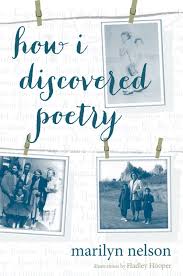
Nelson’s latest book, How I Discovered Poetry, was published last year to universal acclaim and is on many short lists for the upcoming ALA awards. The images Nelson crafts in these poems are stunning and startling. In one poem, she states that “Our leaves/become feathers./With wings we wave good-bye to our cousins.” Another poem is about a birthday party until the very end when, “a jet/made a sonic boom/like a hammer on an iron curtain.”

imgres

In the title poem, Nelson captures that moment when she first glimpsed “the power of words.”

How I Discovered Poetry

It was like soul-kissing, the way the words

filled my mouth as Mrs. Purdy read from her desk.

All the other kids zoned an hour ahead to 3:15,

but Mrs. Purdy and I wandered lonely as clouds borne

by a breeze off Mount Parnassus…

Read the entire poem here.

You can also listen to Ms. Nelson read the poem, as well as several other poems from this lovely book, in an interview that aired last winter on NPR.

Happy Birthday, Connecticut! How lucky we are to count Marilyn Nelson as a citizen of our state!

Be sure to visit Tabatha at The Opposite of Indifference to discover more wonderful poetry.


It’s Monday! What Are You Reading?

IMWAYR

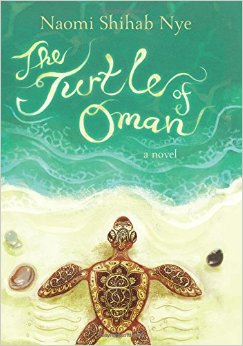
The Turtle of Oman, by poet Naomi Shihab Nye is a beautiful, quiet book about a young Omani boy and his family as they prepare to move to the United States, where his parents will attend graduate school.

516M4hIB1eL._SY344_BO1,204,203,200_
The Turtle of Oman by Naomi Shihab Nye (Greenwillow, 2014)

Aref is bereft at the thought of leaving his home, his friends, and most of all, his grandfather, Sidi. Aref and Sidi are “a Team of Two,” who, “even when they weren’t doing anything special… pretended they were.”

As Aref’s mother is busy packing and preparing their house for cousins to live in for the three years they’ll be gone, she has little time to comfort Aref, who puts off packing and frets about life in the United States. But Sidi, who “always had time for Aref,” takes him on several adventures. These outings distract Aref from his sadness over leaving his “only, number, one, super-duper, authentic, absolutely personal place.”

Aref and his family have a tradition of playing “Discovering Something New Everyday.” They make lists, recording their discoveries: “In your notebook, you wrote down new ideas or even scraps of new information. Nothing was too small.” Each family member constructs lists in their own way, and about topics that interest them. Sidi (who doesn’t make lists; Aref writes down his lists) specializes in geographic information, Aref’s “specialized in animals, his favorite topic.”

Through these lists and Sidi’s and Aref’s adventures, readers learn much about daily life in Oman. Nye’s ability to depict Aref, an ordinary boy, in this exotic location where life is familiar yet so different, seems effortless. Her prose is lyrical throughout, and lines like “your thoughts made falcon moves, dipping and rippling, swooping back into your brain to land,” add depth to Aref’s personality.

In an interview with Roger Sutton, Nye explains that she became interested in Oman as a child after seeing a National Geographic story about the country. She also talks about her longing for a time when people had “less stuff, less clutter, less things in a day, but better relationships with those things. I wanted there to be some sense of that with Aref and Sidi.”

The slow art of The Turtle of Oman is a lovely addition to realistic middle grade fiction. It is an ideal read aloud and will introduce students to a part of the world and a culture they may know little about through the story of a boy they will instantly recognize.

Don’t forget to visit Jen at Teach Mentor Texts and Kellee at Unleashing Readers to find out what other people have been reading lately. Thanks, Jen and Kellee, for hosting!

SOL: At the Library

11454297503_e27946e4ff_h

“Our childhood experience of the world is a deep well that we keep turning to again and again in writing.”

Joyce Sidman

Isn’t it funny how some memories lie buried for months or even years, then suddenly two or three things happen all at once to remind you of some long-forgotten event or person? A visit to the library yesterday started me thinking about going there as a child. Then, this morning, there was a story on NPR about the important role libraries play in helping parents and caregivers develop their children’s early literacy skills, and more memories came flooding back.

I actually don’t remember going to the library before Kindergarten. But I do have very fond memories of the library once I started school, even though our school didn’t have it’s own library. We had something better.

Every week, each class would walk 100 yards or so to the town library next door. There we were greeted by Mrs. Rothschild, a tiny woman with a white bun wrapped tightly on the top of her head. We quickly settled into one of the three or four red-cushioned window seats, or found a spot on a narrow wooden bench. Then Mrs. Rothschild began to read.

She read Where the Wild Things Are and The Little House. As we grew older, she introduced us to Pippi Longstocking and Ramona the Pest. I loved being transported out of our tiny town to the wide world beyond, all while sitting in the cozy children’s room in the basement of the library.

FullSizeRender

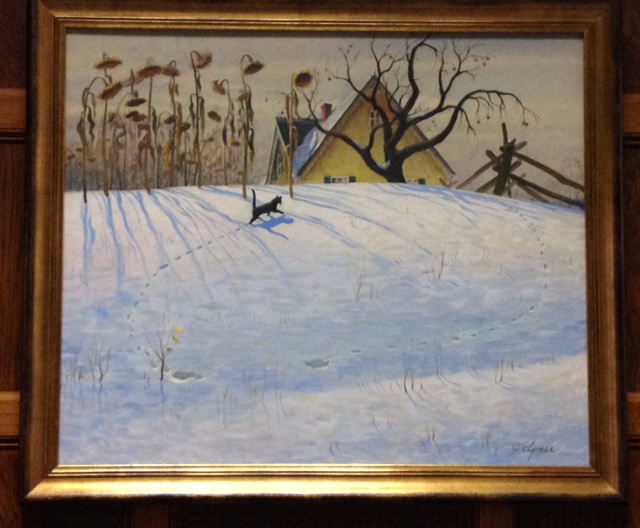
This painting, by John Clymer, was part of the children’s room for as long as I could remember. I confess there were a few times when this cat making tracks through the snow was more interesting to me than Mrs. Rothschild’s read aloud. Where was he going? Where had he been? Was he carrying a mouse home? Where was that house, anyway?

When Mrs. Rothschild was finished reading, we searched the shelves for books to check out for the week. I loved Charlotte’s Web, and was always searching for stories about animals. (Hence the interest in the cat?)

So I was pleasantly surprised to see it hanging over the main circulation desk when I walked into the library yesterday. I immediately thought of Mrs. Rothschild, and the stories she read to us, all those years ago.

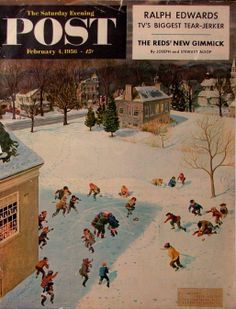
Saturday Evening Post cover by John Clymer, 1956
Saturday Evening Post cover by Bridgewater resident John Clymer, 1956. Burnham School is on the lower left, Burnham Library is the stone building in the center.

Many people read to me throughout my childhood and helped me become the reader I am today. Thank you, Mrs. Rothschild, for being one of them.

Thank you to StaceyTaraDanaBetsyAnna, and Beth for this space for teachers and others to share their stories each Tuesday. Be sure to visit Two Writing Teachers to read more Slice of Life posts.