I originally posted this on December 21, 2012, one week after the tragedy at Newtown. I am posting it again today, in a slightly modified form, in honor of the teachers and children who died that day.
Turn Again to Life
by Mary Lee Hall
If I should die and leave you here awhile,
Be not like others, sore undone, who keep
Long vigils by the silent dust, and weep.
For my sake – turn again to life and smile,
Nerving thy heart and trembling hand to do
Something to comfort other hearts than thine.
Complete those dear unfinished tasks of mine
And I, perchance, may therein comfort you.
Mary Lee Hope
Iain Lees [CC-BY-SA-2.0 (http://creativecommons.org/licenses/by-sa/2.0)%5D, via Wikimedia CommonsWe owe it to the dedicated educators who died to take up their “dear unfinished tasks.” We must do everything in our power to create a world filled with love and joy; a world where all children can grow and flourish into the fullness of themselves.
I finished reading Christopher Lehman and Kate Robert’s new book, Falling in Love With Close Reading(Heinemann, 2013) last week. Kate and Chris have done a terrific job articulating the elements of close reading. At the same time, they encourage teachers to be purposeful about using close reading strategies. Close reading is not something to be done on every page of every book. Their main point it that close reading should be done when there is a deeper understanding to be gained.
All week I’ve been thinking about the application of these ideas in the classroom. I have been looking at texts differently since reading Falling in Love With Close Reading. Noticing patterns I might have skimmed over in the past, or asking myself, “I wonder why the author chose that word.” All this thinking reminded me of “The Secret” by Denise Levertov.
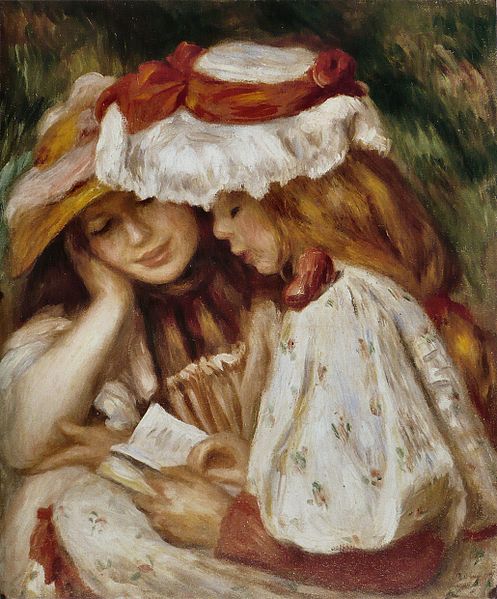
“Two Girls Reading” Pierre-Auguste Renoir [Public domain], via Wikimedia CommonsPlease visit Tabatha at The Opposite of Indifference for the Poetry Friday Round Up.
My head is still full of wisdom and inspiration from NCTE, but thoughts of Christmas are starting to push them away. As I pondered what to share today, my mind kept returning to my family’s Christmas traditions. My search for a poem that matched my thinking led me to this lovely work by Joyce Sutphen, Minnesota’s Poet Laureate.
What the Heart Cannot Forget
by Joyce Sutphen
Everything remembers something. The rock, its firey bed,
cooling and fissuring into cracked pieces, the rub
of watery fingers along its edge.
The cloud remembers being elephant, camel, giraffe,
remembers being a veil over the face of the sun,
gathering itself together for the fall.
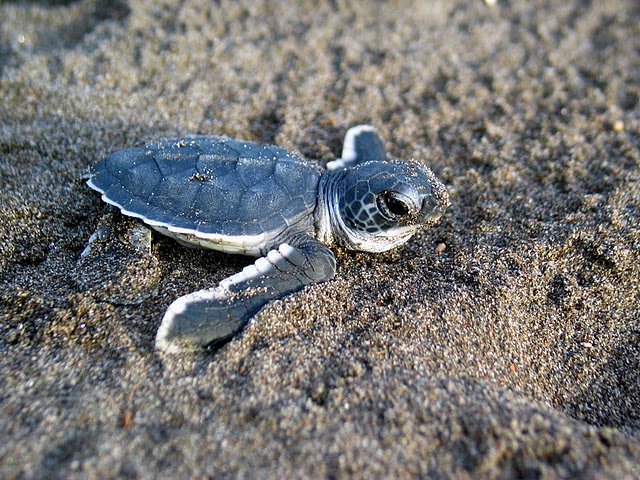
The turtle remembers the sea, sliding over and under
its belly, remembers legs like wings, escaping down
Once I found “What the Heart Cannot Forget” I copied it into my notebook. I suddenly realized I was doing exactly what Linda Rief described during her session with Georgia Heard and Tom Romano at NCTE. Taking Georgia’s “heart maps” a step further, Linda has her students create “heart books.” These books are collections of poems that reflect a topic on their heart maps. (Vicki Vinton describes Linda’s process beautifully at her blog, To Make a Prairie. Linda Baie also wrote about using heart maps with her students at Teacher Dance.)
Maureen Barbieri introduced Linda as a teacher who “encourages her students to share their voices so readers will see the world in new ways.” Joyce Sutphen’s words made me see the world in a new way. More importantly, they spoke to my heart.
Poetry filled the air last weekend at the NCTE Convention in Boston. One of the highlights for me was hearing Georgia Heard, Tom Romano, and Linda Rief speak about the importance of “Keeping Poetry at Our Core.”
Georgia Heard began the session by pointing out that “poetry is in every single strand of the CCSS.” She urged us to grow poetry slowly, not to wait until April, but to make a place for poetry in our classrooms every day. “Poetry changes us,” she said, “it changes our writing and our living.”
With these thoughts about the importance of poetry in mind, Heard went on to give us steps to guide our work. The first step is to “choose poems that are accessible, non-threatening, and relevant” to our students. Once we’ve done this, the next crucial step is to help students connect with a poem by guiding them “toward finding themselves and their lives inside the poem.”
Heard also shared that we have to give our students the tools they need to analyze and interpret poetry. Through close reading and asking questions such as “How does this poem relate to your life?” and “What is the impact of this poem on your life?” students can “unlock the door of a poem.” Then they will be able to analyze the meaning and craft of a poem for other layers of meaning.
Heard inspired me to be even more mindful about helping my colleagues share poetry with students when she closed her part of the session with the wisdom of Matthew Fox:
“The Celtic peoples…insisted that only the poets could be teachers. Why? I think it is because knowledge that is not passed through the heart is dangerous.”
This quote can also be found in Georgia’s book, Awakening the Heart (Heinemann, 1999, pg. 118). As I revisited my copy of this classic, I rediscovered this poem by Roque Dalton, another reminder that poetry is for everyone.
“Like You ”
Like you I
love love, life, the sweet smell
of things, the sky-blue
landscape of January days.
And my blood boils up
and I laugh through eyes
that have known the buds of tears.
I believe the world is beautiful
and that poetry, like bread, is for everyone.
And that my veins don’t end in me
but in the unanimous blood
of those who struggle for life,
love,
little things,
landscape and bread,
the poetry of everyone.
(translated by Jack Hirschman)
Tom Romano and Linda Rief were just as eloquent and inspiring, so, in the weeks to come, they will each have their own well-deserved post. For more inspiring poetry posts, NCTE-related and otherwise, be sure to visit Carol’s Corner, for the Poetry Friday Round Up.
I arrived at the Hynes Convention Center in Boston on Thursday evening for my first NCTE Convention filled with anticipation about the upcoming three days. To say my expectations were fulfilled is an understatement! From meeting authors Jane Yolen, Gae Polisner, and Kate Messner, to having breakfast with fellow Slicers, to learning so much from all the amazing presenters, it was a weekend I will long remember.
My head is still filled with the wise words shared not only by the teachers, authors, and poets in front of the conference rooms, but with everyone I chatted with throughout the day. How to share all these thoughts swirling around my brain, like the leaves on the streets of Boston Sunday morning? As I pored over my notes, a pattern of recurring words and phrases began to emerge, and I “found” this poem:
When I was in college, one of the required classes for English majors was “Introduction to Poetry.” One assignment was to write a sonnet, a challenging form under the best of circumstances. At the time, I had two small children and was working part-time in addition to taking classes. It seemed like there was never a moment to take a deep breath, let alone write a sonnet. The busyness of my life was my muse, and I ended up with a poem that included ringing telephones, crying children, and burnt food. (The poem itself is buried somewhere in my attic; count yourself as lucky that I didn’t have time dig it out of its cardboard sarcophagus.)
I thought about this poem last night while trying to decide what to share for Poetry Friday. Somehow, twenty-five years later, I’m as busy as ever. Last week, we were on our way to Pennsylvania for my niece’s wedding, and although I had an idea of what I wanted to share, I ran out of time and posted nothing. The same thing happened earlier in the week when it was time for It’s Monday! What Are You Reading? and Tuesday’s Slice of Life.
By Aldaron — Aldaron, a.k.a. Aldaron (Flickr) [CC-BY-SA-2.0 (http://creativecommons.org/licenses/by-sa/2.0)%5D, via Wikimedia CommonsThis morning, I woke up determined to share a poem. I googled “poems about being busy” and found I’m not alone in my feelings of frustration at all there is to do. In “Notes on Distraction,” a wonderful post on The New Yorker blog, Giles Harvey writes about noticing a man glance at his watch during a performance of “Einstein on the Beach” as a “vignette of our contemporary busyness.”
Poet Marie Howe has captured this “contemporary busyness” in her poem, “Hurry.”
We stop at the dry cleaners and the grocery store
and the gas station and the green market and
Hurry up honey, I say, hurry, hurry,
as she runs along two or three steps behind me
her blue jacket unzipped and her socks rolled down.
This morning, I stood at my kitchen window for what seemed like minutes, just looking at a maple tree covered with yellow leaves glowing in the morning sun. It was lovely not to feel busy or rushed at that moment, even if it was just for a minute or two. I thought back to the closing lines of Harvey’s essay:
“In a world of speed and distraction, the slow, demanding art work is more indispensable than ever, for it holds out the possibility of those elusive commodities: stillness, clarity, and peace.”
Be sure to visit Diane at Random Noodling for today’s Poetry Round Up. You’ll be sure to find a moment of “stillness, clarity, and peace.”
“Children are made readers on the laps of their parents.”
— Emilie Buchwald
Parents often ask me how they can help their children become readers. I tell them to read to them early and often. There is an extensive research base supporting this advice. (Reach Out & Read and Reading Rockets have thorough summaries.) The National Center for Family Literacy and The Yale Reading Center are just two of the many websites with resources for parents and teachers. And the variety and quality of children’s books being published today is astounding.
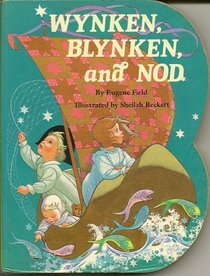
Poetry is especially well suited for little ones. They love the rhythm, rhyme and word play found in nursery rhymes and poems. When my boys were little, we all looked forward to our ritual bedtime reading. We had many Mother Goose collections and rhyming books, and this was one of our favorites.
“Wynken, Blynken, and Nod”
by Eugene Field
Wynken, Blynken, and Nod one night
Sailed off in a wooden shoe–
Sailed on a river of crystal light,
Into a sea of dew.
“Where are you going, and what do you wish?”
The old moon asked of the three.
“We have come to fish for the herring fish
That live in this beautiful sea;
Nets of silver and gold have we!”
Said Wynken,
Blynken,
And Nod.
The old moon laughed and sang a song,
As they rocked in the wooden shoe,
And the wind that sped them all night long
Ruffled the waves of dew.
The little stars were the herring fish
That lived in that beautiful sea–
“Now cast your nets wherever you wish–
Never afeard are we!”
So cried the stars to the fishermen three:
Wynken,
Blynken,
And Nod.
All night long their nets they threw
To the stars in the twinkling foam–
Then down from the skies came the wooden shoe,
Bringing the fishermen home;
‘Twas all so pretty a sail it seemed
As if it could not be,
And some folks thought ‘twas a dream they’d dreamed
Of sailing that beautiful sea—
But I shall name you the fisherman three:
Wynken,
Blynken,
And Nod.
Wynken and Blynken are two little eyes,
And Nod is a little head,
And the wooden shoe that sailed the skies
Is a wee one’s trundle-bed.
So shut your eyes while mother sings
Of wonderful sights that be,
And you shall see the beautiful things
As you rock in the misty sea,
Where the old shoe rocked the fishermen three:
Wynken,
Blynken,
And Nod.
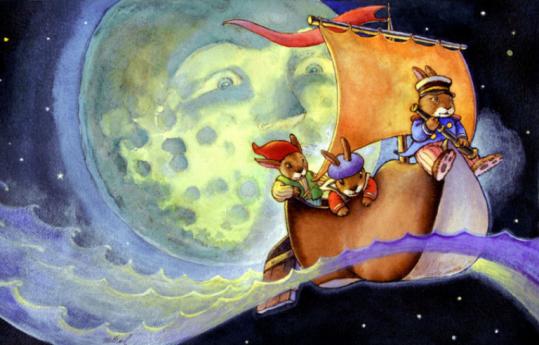
Illustration by David McPhail, from ”Wynken, Blynken, and Nod”
Be sure to visit Irene Latham at Live Your Poem… for the Poetry Friday Round Up.
Kate Roberts and Chris Lehman have just written a new book, Falling in Love With Close Reading. For the past seven weeks, they have been hosting a blog-a-thon to celebrate their book’s publication. Last week, Kate’s contribution on her blog, Indent, was about closely reading her life. She shared a few the insights and revelations she gained by spending one day being truly observant of her actions and reactions. One of her statements resonated with me:
“Chris and I believe that the skill of reading our world closely allows us to live richer, more beautiful lives.”
This line made me think of an episode of Krista Tippett’s On Being which featured an interview with Jon Kabat-Zinn about the science of mindfulness. At the end of the interview, Zinn shared this poem.
“Love after Love”
by Derek Walcott
The time will come
when, with elation,
you will greet yourself arriving
at your own door, in your own mirror,
and each will smile at the other’s
welcome,
and say, sit here. Eat.
You will love again the stranger who was
your self.
Give wine. Give bread. Give back your heart
to itself, to the stranger who has loved you
all your life…
Read the rest of the poem and learn more about Jon Kabat-Zinn here.
Only through knowing ourselves can we be open to the love of others and fully love them in return. Thank you, Kate and Chris, for reminding me of this. Thank you for helping me find my way back to this poem. For poetry is all about reading our world closely. Poetry allows us to live richer, more beautiful lives.
Be sure to visit Cathy Mere at Merely Day by Day for more enriching poetry.
“We must cherish and honor the word free or it will cease to apply to us.”
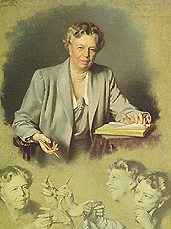
Eleanor Roosevelt was born on this day in 1884 and the United Nations has declared October 11 International Day of the Girl. No date could be more appropriate. After an unhappy childhood, Eleanor Roosevelt became a passionate, dedicated advocate for human rights around the world.
J. Patrick Lewis honored Roosevelt and her spirit in this poem, from his 2005 collection, Vherses: A Celebration of Outstanding Women (Creative Editions).
Many books have been written about Eleanor and her remarkable life. Russell Freedman’s Eleanor Roosevelt: A Life of Discovery is featured today at Anita Silvey’s Children’s Book-a-Day Almanac. Eleanor, Quiet No More: The Life of Eleanor Roosevelt (Disney/Hyperion Books, 2009) is Doreen Rappaport’s picture book biography for younger readers. A list of more titles about Eleanor is available at Through the Looking Glass.
Roosevelt once said “It is better to light candles than curse the darkness.” Eleanor Roosevelt’s inspiring life story is certain to spark the imagination of readers everywhere.
Don’t forget to visit Laurie Purdie Salas at Writing the World for Kids for the weekly round up. Happy Friday, everyone!
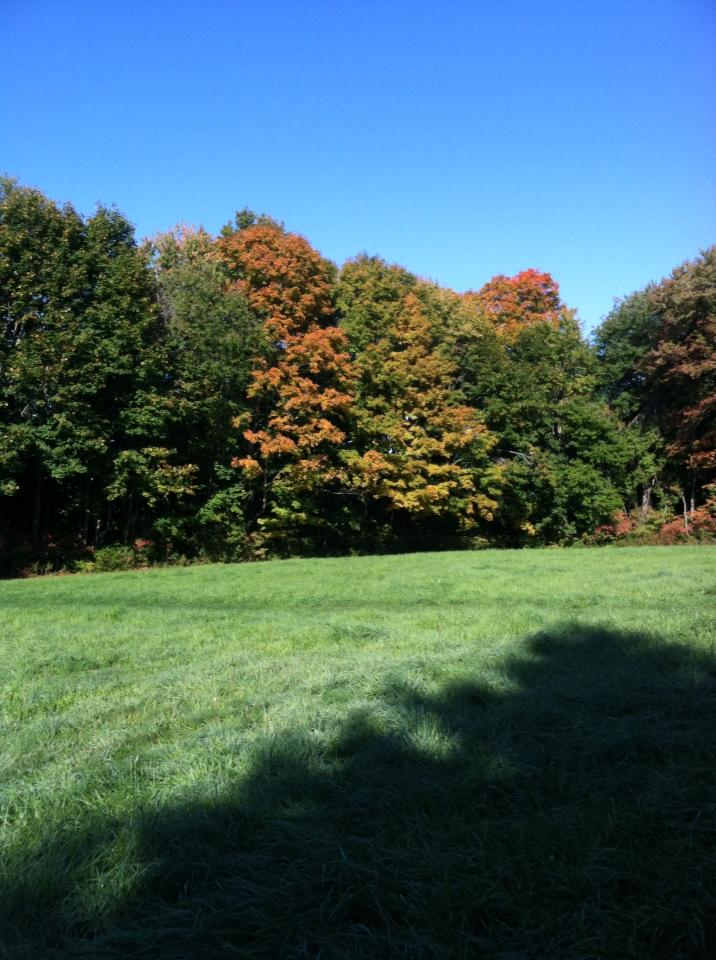
The weather has been spectacular in western Connecticut this week. The leaves have started to turn and the late afternoons have that distinctive glow of autumn, but the temperature has been in the seventies. All these summer-like days reminded me of these lines: “Until they think warm days will never cease, For Summer has o’er-brimmed their clammy cells.”
Unfortunately, these days will soon come to an end. In the meantime, I’m going to savor every warm, sunny day that comes my way.
To Autumn
John Keats
1
Season of mist and mellow fruitfulness,
Close bosom-friend of the maturing sun;
Conspiring with him how to load and bless
With fruit the vines that round the thatch-eaves run;
To bend with apples the mossed cottage-trees,
And fill all fruit with ripeness to the core;
To swell the gourd, and plump the hazel shells
With a sweet kernel; to set budding more,
And still more, later flowers for the bees,
Until they think warm days will never cease,
For Summer has o’er-brimmed their clammy cells.
2
Who hath not seen thee oft amid thy store?
Sometimes whoever seeks abroad may find
Thee sitting careless on a granary floor,
Thy hair soft-lifted by the winnowing wind;
Or on a half-reaped furrow sound asleep,
Drowsed with the fume of poppies, while thy hook
Spares the next swath and all its twined flowers:
And sometimes like a gleaner thou dost keep
Steady thy laden head across a brook;
Or by a cider-press, with patient look,
Though watchest the last oozings hours by hours.
3
Where are the songs of Spring? Aye, where are they?
Think not of them, thou hast thy music too–
While barred clouds bloom the soft-dying day,
And touch the stubble-plains with rosy hue;
Then in a wailful choir the small gnats mourn
Among the river swallows, born aloft
Or sinking as the light wind lives or dies;
And full-grown lambs loud bleat from hill bourn;
Hedge crickets sing; and now with treble soft
The redbreast whistles from a garden-croft;
And gathering swallows twitter in the skies.
Don’t forget to visit Dori at Dori Reads for the weekly round up. Happy Friday, everyone!

![Iain Lees [CC-BY-SA-2.0 (http://creativecommons.org/licenses/by-sa/2.0)], via Wikimedia Commons](https://readingtothecore.com/wp-content/uploads/2013/12/snow_angel_at_blynlee_-_geograph-org-uk_-_1652771.jpg)


![By Aldaron — Aldaron, a.k.a. Aldaron (Flickr) [CC-BY-SA-2.0 (http://creativecommons.org/licenses/by-sa/2.0)], via Wikimedia Commons](https://readingtothecore.com/wp-content/uploads/2013/11/parliament_clock_westminster.jpg)
 Reading to the Core