
 It’s been snowing for much of the past week, wreaking havoc with assessment schedules, mid-year goal meetings, and learning in general. On the other hand, I have had plenty of time to read, which is always a good thing.
John Rocco’s Blizzard (Disney-Hyperion, 2014) has been out since October, but I didn’t read it until last week. Rocco was ten when the Blizzard of ’78 buried most of southern New England under forty inches of snow. This picture book memoir is an adventure story that all kids will love, whether or not they’ve experienced record-setting snow storms. But as I reread this wonderful story, I realized that this book is a great mentor text, one that will inspire kids to write about their own epic weather adventures.
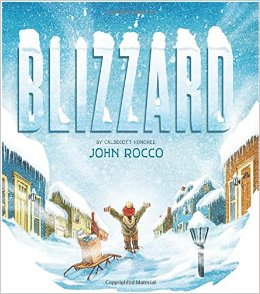
The simplicity of Rocco’s language is deceiving. He has done a terrific job choosing just the right word and detail to truly bring this story to life. When John and his sister finally get outside after the snow stops, they realize that walking is “like trying to move through white quicksand.” When John makes his list of necessities before he heads to the store, “candy bar” is the only starred item. And when he returns from his adventure, he tells his family about his “perilous journey.”
Rocco’s word choice also make this book a good choice for an activity like one Lynne Dorfman and Diane Dougherty describe in their recent book, Grammar Matters: Lessons, Tips, and Conversations; Using Mentor Texts, K-6 (Stenhouse, 2014, a must-read for any K-6 teacher). They suggest gathering nouns and the active verbs they’re paired with to spur kids thinking about replacing worn-out words with more vivid choices. Also, Rocco’s uncluttered declarative sentences are perfect for introducing compound and complex sentences. There is even a great example of parallel structure, beginning when John realizes that “I was the only one who had memorized the survival guide.”
The visual humor of Rocco’s illustrations and his ingenious use of text features give Blizzard an added depth of meaning. The passing days of the week are each spelled out in clever ways that blend into the scenes. “Tuesday,” for example, is spelled out by a squirrel scurrying across the roof. The old-fashioned cash register totals $19.78, and there are clues about John’s fascination with frozen landscapes scattered throughout the book. The fold-out map of John’s trek to the store is a wonder, and I can imagine some kids spending lots of time poring over this winter wonderland.
Blizzard belongs in every K-3 classroom library, and I can imagine 4th and 5th graders who will love it, too. First and foremost, read this book for the wonderful story that it is. Then go back and take a closer look. You and your students will be richly rewarded. I can’t wait to share this book with my students, if it ever stops snowing!
Thank you to Stacey, Tara, Dana, Betsy, Anna, and Beth for this space for teachers and others to share their stories each Tuesday. Be sure to visit Two Writing Teachers to read more Slice of Life posts.
 Reading to the Core